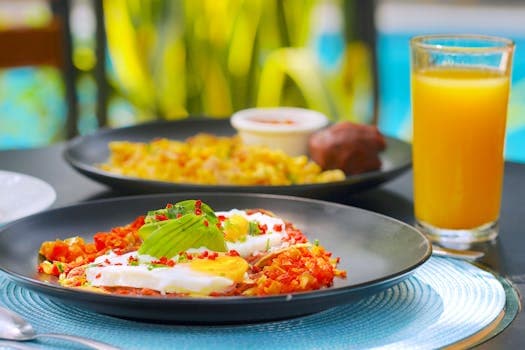
Dominican-style fried eggs with crispy edges, served with salami, cheese and a warm tomato sauce — hearty breakfast comfort.
Huevos a la Dominicana is the Dominican Republic's answer to a proper breakfast. Eggs are fried in hot oil until the whites are crispy at the edges while the yolk remains runny, then served alongside crispy fried Dominican salami (salami Dominicana), melted cheese and a warm, garlicky tomato sauce. It is simple, generous and deeply satisfying — the kind of breakfast that keeps you full until dinner. Serve with fresh-squeezed orange juice and warm mofongo or fried cheese. Rooted in the everyday cooking of Dominican kitchens, Huevos a la Dominicana balances technique and tradition: the fresh eggs is treated with care, drawing on time-honoured ratios that locals have refined across generations. The dish carries an unmistakable sensory signature — aromas that fill the kitchen as it cooks, layered textures that reveal themselves bite by bite, and a depth of flavour that comes from patient seasoning rather than shortcuts. Whether served as a weeknight breakfast or as the centrepiece of a celebratory table, it reflects a regional pantry where local produce, seasoning habits and cooking vessels shape the final result. Home cooks who make this dish often note how forgiving it is once the core method is understood, and how a few small choices — the freshness of the fresh eggs, the order of additions, the resting time at the end — separate a good version from a memorable one. This recipe walks through those choices so the dish arrives with the character it has on its home turf.
Serves 2
Heat 1 tablespoon of oil in a large skillet over medium-high heat. Fry salami slices for 2–3 minutes per side until crispy and slightly caramelised. Remove and set aside.
The salami should be crispy, not just heated through — this brings out its savoury depth.
In the same skillet, fry the queso de freír slices for 1–2 minutes per side until golden and beginning to melt. Remove and set aside on the plate with salami.
Add remaining oil to the skillet and heat until shimmering and very hot. Carefully crack eggs into the pan. Fry for 3–4 minutes until the whites are set and the edges are crispy and brown. The yolk should still jiggle slightly.
Transfer fried eggs to a plate. Arrange salami and fried cheese alongside the eggs. Pour warm tomato sauce over the eggs or serve on the side.
Eat immediately while the eggs and cheese are still hot and crispy. Serve with warm mofongo, fried cheese or avocado on the side.
The key is hot oil — it creates the crispy, lacy edges on the whites.
Queso de freír is a firm cheese that won't melt completely. If unavailable, halloumi works perfectly.
Dominican salami has a unique flavour — do not substitute with Italian salami.
Source the freshest fresh eggs you can find — it is the flavour anchor of the dish.
Season in layers as you go; tasting at each stage prevents a flat or over-salted final result.
With Avocado: serve alongside thick-sliced fresh avocado for a creamy contrast.
Lighter Version: poach the eggs instead of frying for a lower-fat alternative.
Vegetarian: replace the main protein with mushrooms, paneer, tofu or hearty beans for a meat-free version.
Spicier: add fresh chilli, a chilli paste or a pinch of cayenne with the aromatics for a warmer profile.
Lighter: reduce the fat by a third and use stock in its place — flavour stays intact but the dish feels less rich.
Best eaten immediately. Leftovers can be gently reheated, but the texture will not be the same.
Huevos a la Dominicana reflects the Spanish colonial breakfast tradition, adapted with Dominican ingredients like local salami and queso de freír — products that became iconic to Dominican cuisine. Like many Dominican classics it evolved through home kitchens before earning a place on restaurant menus, and regional cooks still argue good-naturedly about the 'right' way to prepare it. The version below reflects the most widely cooked template, with notes where local practice diverges.
Yes — most components hold well in the fridge for a day or two. Reheat gently with a splash of liquid to bring it back to life.
If fresh eggs is hard to find, the closest substitutes share its texture and water content. Adjust seasoning slightly since substitutes often carry less character of their own.
It follows the most widely accepted home-cook template. Regional variants exist and we note the main ones in the variations section.
Usually under-seasoning or rushing the aromatic stage. Build flavour in layers, taste as you go, and finish with a touch of acid or salt to brighten the dish.
Per serving (350g / 12.3 oz) · 2 servings total
Ask our AI cooking assistant anything about this recipe — substitutions, techniques, scaling.
Chat with AI Chef →Join the conversation
Sign in to leave a comment and save your favourite recipes
Have feedback or need help?
We read every email and reply within 1–2 business days.
© 2026 MyCookingCalendar. All rights reserved.