
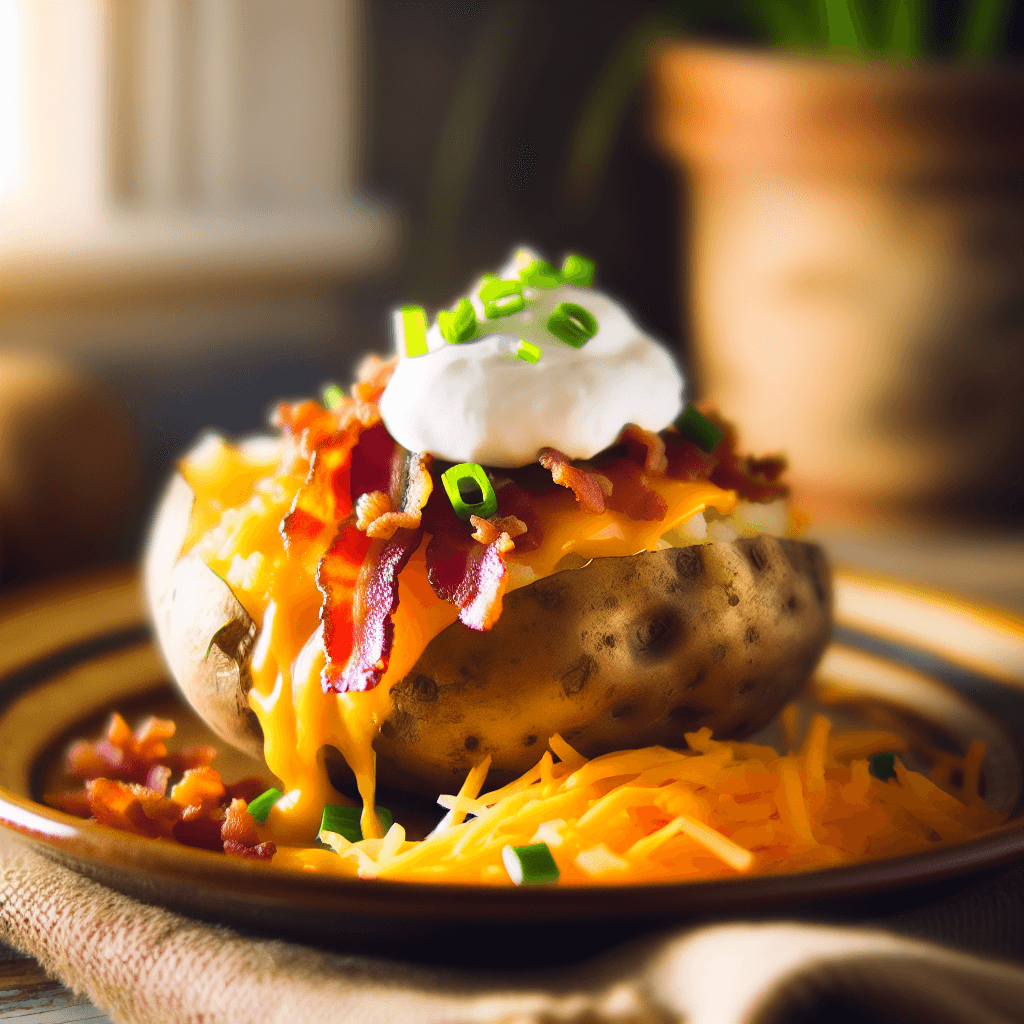
Loaded Baked Potato (Idaho Style)
Fluffy baked potato topped with bacon, cheese, sour cream and chives.
About This Recipe
The baked potato is one of America's most underrated canvas dishes — and an Idaho Russet Burbank, baked properly, is something extraordinary. Idaho's high-altitude volcanic soils and semi-arid climate produce potatoes with exceptionally high starch content and low moisture, which means the flesh bakes up dry, fluffy, and almost rice-like rather than gummy or waxy. This is exactly what you want for a loaded baked potato: a structured, dry interior that absorbs butter like a sponge and holds toppings without collapsing. The Russet Burbank variety has been Idaho's signature potato since the early 20th century, and the Idaho Potato Commission's certification program ensures that only potatoes grown in Idaho's specific conditions carry the 'Idaho Potato' trademark — a detail that matters, because the texture difference is real and noticeable. The technique for a perfect baked potato is more specific than it appears. The skin must be rubbed generously with neutral oil and coarse salt — the oil promotes crisping, the salt seasons the skin and draws out surface moisture. Pricking with a fork all the way around allows internal steam to escape, preventing split potatoes and uneven cooking. The critical mistake most home bakers make is wrapping the potato in foil: foil traps steam, which turns the skin soft and the interior dense and slightly wet. Bake naked, directly on the oven rack, at 200°C (400°F) for 50–60 minutes until the skin is taut and crackling. The loaded toppings — cold sour cream, melted sharp cheddar, crispy bacon, and fresh chives — create a four-temperature, four-texture experience that is one of the simplest and most satisfying things in American cooking.
Ingredients
Serves 2
- 2 largerusset potatoes
- 2 tbspolive oil
- salt and pepper(to taste)
- 6 slicesbacon(cooked and crumbled)
- 100 gcheddar cheese(shredded)
- ¼ cupsour cream
- fresh chiveschopped
- butterfor serving
Instructions
- 1
Prep the potatoes
Scrub the potatoes thoroughly under running water with a vegetable brush — the skin is part of the experience and should be clean enough to eat. Pat completely dry with a towel, then use a fork to prick the potato all over, about 12–15 times, penetrating at least 2 cm deep to allow steam to escape from the interior during baking.
Dry skin is the foundation of crispy skin — moisture on the surface steams rather than crisps in the oven.
- 2
Oil and season the skin
Rub each potato all over with a tablespoon of olive oil, then sprinkle generously with coarse kosher salt on all sides. The salt will pull surface moisture while the oil conducts heat and promotes browning — together they produce a skin that crackles and seasons the flesh at the same time.
- 3
Bake directly on the rack
Place the potatoes directly on the middle oven rack (no foil, no pan, no parchment) and bake at 200°C (400°F) for 50–60 minutes. The potatoes are ready when a fork or skewer slides in with no resistance, the skin looks taut and slightly wrinkled, and you can feel the potato give very slightly when you squeeze it with oven mitts.
The 'squeeze test' is more reliable than timing alone — two equally-sized potatoes can have different water contents and bake at different rates.
- 4
Cook the bacon
While the potatoes bake, cook the bacon slices in a cold skillet over medium heat, turning once, until deeply browned and crispy throughout — about 8 minutes total. Drain on paper towels and crumble into rough pieces when cool enough to handle. Crispy bacon maintains its crunch even as the potato toppings warm it.
- 5
Open and fluff
Cut a deep cross into the top of each potato, cutting about two-thirds of the way through the flesh. Hold the potato with oven mitts and use both thumbs to push the ends toward the centre — the flesh will burst upward and out, creating a fluffy cloud of potato. Add a pat of butter immediately and let it melt into the hot interior while you prepare toppings.
- 6
Load the toppings
Top each potato generously in layers: add the shredded cheddar first over the hot butter so it melts slightly, then a large dollop of cold sour cream in the centre, a scattering of crumbled bacon over everything, and finally a handful of snipped fresh chives. The contrast of hot potato and melted cheese against cold sour cream is essential — serve immediately.
Did you make this?
Rate it and help other cooks find the recipes that actually work.
One tap to sign in, and we'll save the rating you just picked.
Everything you need to plan your week — free
- Meal calendar
- Grocery list
- AI recipe ideas
Track what you eat
Snap your meal to log calories and macros, run fasting timers and track water in the free SnapCal app.
Pro Tips
- →
Never wrap potatoes in foil — foil traps steam and produces soft, pale skin and a slightly gummy interior instead of crisp skin and fluffy flesh.
- →
Use real Idaho Russet Burbank potatoes if available — the high starch content and low moisture content produce dramatically fluffier results than waxy or all-purpose potatoes.
- →
Cook the bacon in the oven on a wire rack set over a sheet pan alongside the potato (add it for the final 20 minutes) to save time and get evenly crispy bacon without standing over a skillet.
- →
Grate the cheddar fresh from a block rather than using pre-shredded — anti-caking coatings on bagged cheese prevent proper melting and leave a slightly gritty texture.
- →
Season the sour cream with a pinch of salt and a squeeze of lemon before dolloping — it brightens the flavour noticeably and rounds out the richness of the cheese and bacon.
Variations
- •
Broccoli and cheese: steam florets of broccoli and pile alongside shredded sharp cheddar, then broil for 2 minutes until the cheese bubbles across the entire surface.
- •
Pulled pork loaded potato: replace bacon with slow-cooked pulled pork shoulder, add pickled jalapeños and a drizzle of tangy BBQ sauce for a full BBQ dinner on a potato.
- •
Southwestern: top with black beans, corn, pickled red onion, chipotle sour cream, and torn cilantro for a vegetarian main-course potato.
- •
Truffle and pecorino: replace the cheddar and sour cream with a shaving of aged pecorino, a drizzle of truffle oil, and a crack of black pepper for a luxe dinner-party version.
Storage
Baked potatoes are at their absolute best straight from the oven; the skin loses its crispness within 30 minutes. Leftover baked potatoes keep refrigerated for up to 3 days — reheat at 200°C (400°F) for 15–20 minutes directly on the oven rack to restore the skin. The microwave reheats the interior quickly but makes the skin rubbery and soft. Add fresh toppings after reheating.
History & Origin
The potato arrived in North America via Spanish explorers returning from the Andes in the 16th century, but it took until the 18th century for it to become a staple crop in the American colonies. Idaho's particular volcanic soils proved ideal for the high-starch Russet Burbank variety developed by horticulturist Luther Burbank in the 1870s, and commercial Idaho potato farming took off after the railroad arrived in the region in the 1880s. The loaded baked potato as a restaurant concept became popular in American steakhouses and casual dining chains in the 1960s and 1970s, where the potato's low cost and high perceived value made it the ideal showpiece side dish.
Frequently Asked Questions
What makes Idaho potatoes different from regular russet potatoes?
The difference is real and protected by trademark. Idaho's combination of high altitude, volcanic soil rich in minerals, long warm days and cold nights, and precise irrigation creates a Russet Burbank potato with significantly higher starch content and lower moisture than russets grown elsewhere. This translates directly into fluffier, drier, more flavourful flesh when baked. Only potatoes grown in Idaho are legally allowed to carry the Idaho Potato label.
Why should I never wrap a baked potato in foil?
Foil traps the steam that naturally escapes from the potato during baking. Trapped steam means the potato effectively steams rather than bakes, resulting in soft, pale skin rather than crackling crisp skin, and a slightly wet, gummy interior rather than the dry, fluffy texture that makes baked potatoes great. Bake them naked on the oven rack every time.
How do I know when a baked potato is fully cooked?
The most reliable test is to insert a fork or thin skewer into the thickest part — it should slide in with absolutely no resistance, as if going through butter. You can also squeeze the potato gently with oven mitts; a done potato gives very slightly under pressure. The skin will look taut, slightly wrinkled, and feel dry. Timing alone is unreliable because potato size varies.
Can I bake the potatoes ahead for a party?
You can bake them up to 4 hours ahead and keep warm in a 90°C (200°F) oven, though the skin will soften somewhat. For the best result, bake them about 30 minutes before serving. Set up a topping station and let guests load their own — this makes for a very easy entertaining format that keeps everything at the right temperature.
Nutrition Facts
Per serving (400g / 14.1 oz) · 2 servings total
Time Summary
Have Questions?
Ask our AI cooking assistant anything about this recipe — substitutions, techniques, scaling.
Chat with AI Chef →Featured in Guides
This recipe is featured in the following curated guides:
More American Recipes
You Might Also Like
Similar dishes from other cuisines around the world.
Browse by Ingredient
More recipes built around the same core ingredients.
Free Kitchen Tools
Calculators and converters that pair with this page — no signup needed.
Put This Into a Plan
Schedule it, shop for it, and track what you already have.
Read Next
Longer reads that go deeper on the ideas behind this dish.
Community
Join the conversation
Sign in to leave a comment and save your favourite recipes