
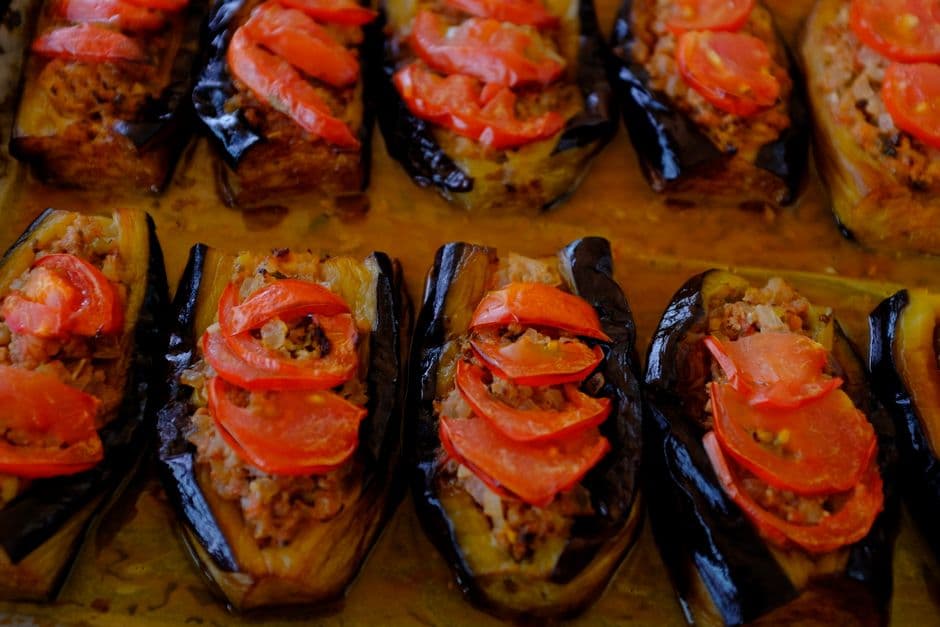
İmam Bayıldı (Braised Stuffed Eggplant)
Whole eggplants braised in olive oil until silky, stuffed with garlicky caramelized onion and tomato — a masterpiece of Ottoman zeytinyağlı (cold olive oil) cooking.
About This Recipe
İmam bayıldı — literally 'the imam fainted' — is one of the most storied and celebrated dishes in Turkish cuisine, belonging to the zeytinyağlı (olive oil-cooked, served cold) category that represents the refined side of Ottoman vegetable cookery. According to popular legend, the name commemorates a Muslim cleric (imam) who fainted, either from delight at the dish's flavor or from shock at the extravagant amount of olive oil used. Both interpretations reflect the dish accurately — the oil is not shy, and the result is extraordinary. The technique distinguishes İmam bayıldı from simpler stuffed eggplant dishes: whole eggplants are first slit lengthwise without separating, then fried or pre-baked until partially collapsed. They are then stuffed with a filling of onions slow-cooked until sweet, garlic, ripe tomatoes, and fresh parsley, then braised in abundant olive oil and tomato liquid in a heavy pot over the lowest possible heat for 45-60 minutes until the eggplant becomes completely silky and the oil and tomato juices form a concentrated, jammy sauce. The dish must be served at room temperature or cold — the olive oil sauce becomes cloudy and the flavors unite beautifully as it cools, making it the quintessential make-ahead meze.
Ingredients
Serves 4
- 4 mediumeggplants (aubergines)(about 300g each)
- 150 mlextra-virgin olive oil(plus extra for frying)
- 4 largeonions(halved and thinly sliced)
- 6 clovesgarlic(thinly sliced)
- 4 largeripe tomatoes(2 grated, 2 sliced)
- 1 bunchflat-leaf parsley(roughly chopped, divided)
- 1 tspsugar
- 1.5 tspsalt
- 1/2 tspblack pepper
- 100 mlwater or tomato juice
Instructions
- 1
Prepare and Salt Eggplants
Peel the eggplants in alternating stripes (zebraing). Make a deep lengthwise slit in each — from top to bottom, without cutting through the ends — to create a pocket. Rub the slit with salt and let stand in cold salted water for 20-30 minutes to draw out bitterness. Drain and pat dry thoroughly.
- 2
Fry the Eggplants
Heat 3-4 tablespoons of olive oil in a wide pan over medium-high heat. Fry the eggplants on all sides until lightly browned and partially softened, about 4-5 minutes per side. Remove and let cool enough to handle. Alternatively, brush with olive oil and bake at 200°C for 20 minutes.
Drying the eggplants thoroughly before frying prevents oil splatter and ensures proper browning.
- 3
Make the Filling
In the same pan with 3 tablespoons olive oil, cook the sliced onions over medium-low heat for 20-25 minutes until completely soft, translucent, and beginning to caramelize. Add garlic and cook 3 more minutes. Add the grated tomatoes, sugar, salt, pepper, and half the parsley. Cook until the mixture is thick and most liquid has evaporated — about 10 minutes.
- 4
Stuff and Braise
Gently open each eggplant's slit with a spoon and fill generously with the onion-tomato filling. Arrange in a single layer in a wide, heavy-bottomed pot or deep pan. Place tomato slices on top. Pour the remaining 100ml of olive oil and the water or tomato juice over and around the eggplants. Cover tightly and cook over the lowest possible heat for 40-50 minutes until the eggplants are completely silky and have absorbed the sauce.
- 5
Cool and Serve
Remove from heat and let cool completely in the pot — at least 2 hours, ideally refrigerate overnight. Serve at room temperature or cold, scattered with the remaining fresh parsley. Accompany with crusty bread to soak up the olive oil sauce.
Did you make this?
Rate it and help other cooks find the recipes that actually work.
One tap to sign in, and we'll save the rating you just picked.
Everything you need to plan your week — free
- Meal calendar
- Grocery list
- AI recipe ideas
Track what you eat
Snap your meal to log calories and macros, run fasting timers and track water in the free SnapCal app.
Pro Tips
- →
The olive oil quantity feels extravagant but is essential — this is a braised dish and the oil is the cooking medium and sauce simultaneously.
- →
İmam bayıldı improves dramatically after refrigeration overnight — the olive oil, tomato, and eggplant flavors unite perfectly when cold.
- →
Low, slow heat during braising is crucial — high heat makes the filling burn and the oil separate rather than emulsify into a silky sauce.
Variations
- •
Fırında imam bayıldı: arrange stuffed eggplants in a baking dish, pour over the oil and tomato sauce, and bake covered at 180°C for 50-60 minutes — a less labor-intensive approach with similar results.
- •
Etli: add 200g of ground lamb or beef to the filling during step 3 for a meat version (karnıyarık).
- •
Soğuk meze: serve in smaller eggplants as part of a full Turkish meze spread.
Storage
İmam bayıldı keeps refrigerated for 4-5 days and genuinely improves over the first 2 days. Serve cold or at room temperature — do not reheat.
History & Origin
İmam bayıldı appears in Ottoman palace cookbooks and culinary records from the 18th century, representing the sophisticated zeytinyağlı tradition of Aegean cooking that flourished under Ottoman patronage. The dish traveled throughout the former Ottoman world and variants appear in Greek, Lebanese, and Syrian cuisines. The name's origin story — whichever version is true — became part of Turkish food culture, and the dish remains among the most internationally recognized recipes of Turkish cuisine.
Frequently Asked Questions
Why is İmam bayıldı served cold or at room temperature?
It belongs to the zeytinyağlı (olive oil) category of Turkish dishes, which are characteristically cooked in olive oil and served cold. The olive oil integrates into a silky emulsion as the dish cools, and the flavors of the tomato, onion, and eggplant meld beautifully over hours. Eating it warm is technically possible but misses the point of the dish.
How do I prevent the eggplant from being bitter?
The salting and soaking step (rubbing the slit with salt and soaking in cold salted water for 20-30 minutes) is the traditional Turkish method for drawing out bitterness. Modern cultivated eggplants are significantly less bitter than older varieties, so this step is optional with good-quality eggplants, but it also firms the flesh and improves frying results.
Nutrition Facts
Per serving (350g / 12.3 oz) · 4 servings total
Time Summary
Have Questions?
Ask our AI cooking assistant anything about this recipe — substitutions, techniques, scaling.
Chat with AI Chef →Featured in Guides
This recipe is featured in the following curated guides:
More Turkish Recipes
You Might Also Like
Similar dishes from other cuisines around the world.
Browse by Ingredient
More recipes built around the same core ingredients.
Free Kitchen Tools
Calculators and converters that pair with this page — no signup needed.
Put This Into a Plan
Schedule it, shop for it, and track what you already have.
Read Next
Longer reads that go deeper on the ideas behind this dish.
Community
Join the conversation
Sign in to leave a comment and save your favourite recipes