ethiopianbreakfast
Injera
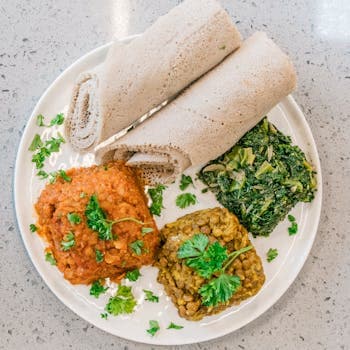
Ethiopia's tangy, spongy sourdough flatbread — the edible plate for all Ethiopian dishes.
Prep
10 min
Cook
30 min
Servings
6
Difficulty
Hard
★★★★★
4.5(540 ratings)#bread#vegan#fermented#gluten-free
About This Recipe
Injera is made from teff flour fermented for 2–3 days to create a sourdough batter that is then poured onto a hot griddle. The bread is uniquely spongy and porous, designed to scoop up stews and salads. The slight sourness complements the rich, spiced dishes of Ethiopian cuisine. Making injera at home is a rewarding project that transforms your Ethiopian cooking.
Ingredients
Serves 6
- 300 gteff flour
- 400 mlwater(room temperature)
- 1 tspactive dry yeast(optional for faster fermentation)
- ½ tspsalt
Instructions
- 1
Mix and ferment
Whisk teff flour with water (and yeast if using) until smooth. Cover loosely with a cloth and leave at room temperature for 2–3 days until bubbly and slightly sour.
In a warm kitchen, 2 days is usually enough. Cold kitchens may need 3 days.
- 2
Prepare the batter
Stir the fermented batter. Season with salt. Add a little water if it looks too thick — it should pour easily like a thin pancake batter.
- 3
Cook
Heat a large non-stick skillet over medium-high heat. Pour in a ladleful of batter in a circular motion from the outside in. Cover with a lid and cook 2–3 minutes until the surface is dry and full of holes. Do not flip.
- 4
Cool
Transfer to a clean cloth to cool. Injera firms up slightly as it cools.
Pro Tips
- →
Teff flour is naturally gluten-free but use certified GF if needed.
- →
Stack cooled injera between cloth pieces to prevent sticking.
Variations
- •
Mix 50/50 with regular flour for milder flavour.
- •
Add a pinch of fenugreek for extra depth.
Storage
Wrap in foil or cloth and refrigerate up to 3 days. Reheat briefly in a dry pan.
History & Origin
Nutrition Facts
Per serving (150g / 5.3 oz) · 6 servings total
Calories160kcal
Protein5g
Carbohydrates32g
Fat1g
Fiber4g
Protein5g
Carbs32g
Fat1g
Time Summary
Prep time10 min
Cook time30 min
Total time40 min
Have Questions?
Ask our AI cooking assistant anything about this recipe — substitutions, techniques, scaling.
Chat with AI Chef →More Ethiopian Recipes
Community
Join the conversation
Sign in to leave a comment and save your favourite recipes