
İskender Kebap (Turkish Lamb on Bread with Tomato Butter)
Thin slices of döner lamb laid over crisped pide bread, drenched in tangy tomato sauce, finished with sizzling foaming butter and a cool dollop of yogurt — the iconic dish of Bursa.
About This Recipe
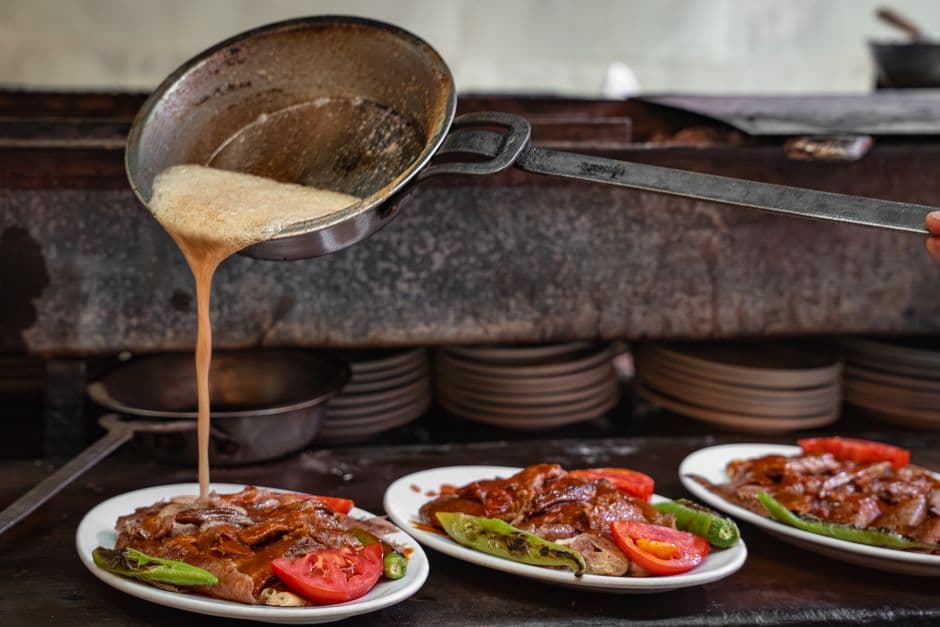
İskender kebap is the proudest culinary export of Bursa, the green Anatolian city at the foot of Mount Uludağ, and arguably the most theatrical kebap in all of Turkish cuisine. Invented in 1867 by İskender Efendi, who turned the traditional horizontal cağ kebap onto its vertical axis to create the modern döner, the dish bearing his name has been served almost unchanged for over 150 years in his family's restaurant on Atatürk Caddesi. The construction is a masterclass in contrast: at the base, pieces of toasted pide bread are laid in a wide shallow dish; over them goes a generous layer of thinly shaved lamb döner, still hot from the rotating spit; on top of the meat goes a ladle of bright, vinegary tomato sauce that the kitchen has been simmering all morning; beside or under everything goes a quenelle of thick strained yogurt; and finally — the showstopper — a small copper pan of foaming brown butter is poured table-side over the whole composition, hissing and sputtering and saturating everything with toasted dairy aromas. The first bite is meant to deliver every flavor and texture at once: crispy bread, savoury lamb, tart tomato, cooling yogurt, nutty butter — five elements that should never work together but, in Bursa, somehow do.
Ingredients
Serves 4
- 800 glamb shoulder or leg, thinly sliced against the grain (substitute for döner)(freeze 30 minutes for easier slicing)
- 3garlic cloves, grated, plus 1 tbsp tomato paste and 1 tsp Turkish red pepper paste (biber salçası)
- 2 tspground cumin, 1 tsp Aleppo pepper, 1 tsp oregano, 1 tsp salt
- 2large pide breads, cut into 4 cm squares (or thick naan/Turkish flatbread)
- 500 mlpassata or sieved tomatoes
- 1 tbsptomato paste and 1 tbsp red wine vinegar (for the sauce)
- 1 tspsugar, plus 1 tsp dried mint and 1/2 tsp Aleppo pepper
- 400 gthick Turkish süzme yogurt or Greek-style yogurt, cold
- 100 gunsalted butter (the finishing butter)
- 2green chillies and 2 tomato halves, charred briefly under broiler to garnish
Instructions
- 1
Marinate the lamb
Combine the sliced lamb with garlic, tomato paste, red pepper paste, cumin, Aleppo pepper, oregano, salt, and 2 tbsp olive oil. Mix thoroughly with your hands so every slice is coated. Marinate refrigerated at least 2 hours, ideally overnight — the longer, the more döner-like the flavor.
- 2
Make the tomato sauce
In a saucepan, warm 2 tbsp olive oil over medium heat. Add the tomato paste and bloom 30 seconds, then add the passata, vinegar, sugar, dried mint, Aleppo pepper, and 1/2 tsp salt. Simmer gently 15 minutes until slightly thickened and glossy. Taste — it should be assertively tangy and slightly sweet. Keep warm.
If the sauce tastes flat, add another splash of vinegar; tartness is the whole point of an İskender sauce.
- 3
Toast the pide
Heat the oven to 200°C / 400°F. Scatter the cubed pide bread on a sheet pan and toast 6–8 minutes, turning once, until golden-crisp on the outside but still chewy inside. Keep warm.
- 4
Sear the lamb
Heat a large heavy skillet (cast iron is ideal) over high heat until smoking. In two batches, add the marinated lamb in a single layer. Sear without moving for 90 seconds, then toss and cook 90 more seconds — you want browned edges and just-cooked interiors. Pile each batch into a warm bowl as you go.
- 5
Char the garnishes
Under a hot broiler or over an open gas flame, char the green chillies and tomato halves until blistered and softened — about 3 minutes. Set aside for plating.
- 6
Assemble the plates
On 4 warm shallow plates, lay a generous bed of toasted pide cubes. Pile the seared lamb on top — about 200 g per plate. Spoon a generous ladle of the warm tomato sauce over the meat, making sure some sauce soaks into the bread underneath.
- 7
Foam the butter
Just before serving, melt the butter in a small saucepan over high heat. Swirl constantly and let it foam, then go nut-brown — about 3 minutes. Pull from heat the instant it smells toasty; it will keep cooking in residual heat.
- 8
The pour and serve
Carry plates to the table. Spoon a generous mound of cold yogurt next to or on top of the lamb. Pour the foaming hot butter over the meat and yogurt — it should sizzle audibly. Garnish with a charred chilli and a tomato half. Eat immediately while the contrast of hot meat, cold yogurt, and sizzling butter is at its peak.
Did you make this?
Rate it and help other cooks find the recipes that actually work.
One tap to sign in, and we'll save the rating you just picked.
Everything you need to plan your week — free
- Meal calendar
- Grocery list
- AI recipe ideas
Track what you eat
Snap your meal to log calories and macros, run fasting timers and track water in the free SnapCal app.
Pro Tips
- →
Süzme (strained) yogurt is essential — runny yogurt will turn the dish into soup. If unavailable, line a sieve with cheesecloth and drain Greek yogurt 1 hour.
- →
Don't skip the table-side butter pour — it's the single defining moment of İskender and you'll regret it if you do it in the kitchen.
- →
Biber salçası (Turkish red pepper paste) is sold in Middle Eastern markets in red jars. It's not interchangeable with harissa — get the real thing if possible.
- →
If you have access to a rotating döner setup, even better; otherwise, very thinly sliced lamb seared hot is the best home approximation.
Variations
- •
Beef İskender — substitute thinly sliced sirloin or top round; cook even more briefly.
- •
Chicken İskender — modern variant with thinly sliced chicken thigh marinated the same way; popular with younger diners.
- •
Garlicky yogurt — stir 1 grated garlic clove and a pinch of salt into the yogurt for extra punch.
- •
Aleppo-style: use harissa-spiked tomato sauce and add a sprinkle of toasted walnuts.
Storage
Components store separately: lamb refrigerated 3 days, sauce 4 days, yogurt 5 days. Reheat lamb in a hot skillet, never the microwave. Assemble fresh; an İskender that has sat assembled is sad and soggy. Freeze cooked lamb up to 2 months.
History & Origin
İskender kebap was invented in 1867 in Bursa by İskender Efendi, who developed the vertical-spit döner specifically to create this dish. His family's restaurant, Kebapçı İskender, still operates on the same street in Bursa and has trademarked the name in Turkey — a rare example of a single family owning the legal rights to a national dish.
Frequently Asked Questions
Can I really make döner at home?
Not the rotating-spit version, no — but very thinly sliced lamb marinated in the same spices and seared hard in a skillet captures 80% of the flavor. Good enough for a fantastic home İskender.
What's the best bread substitute if I can't find pide?
Thick Turkish flatbread, naan, or even toasted ciabatta cubes. Avoid thin lavash or pita — they go soggy under the sauce.
Is İskender served everywhere in Turkey?
Yes, but Bursa is the heartland and the only place where Kebapçı İskender (the original) operates. Many İstanbul and Ankara restaurants serve excellent versions too.
Why is my dish too tangy or too sweet?
Balance the tomato sauce carefully — start with 1 tsp sugar and 1 tbsp vinegar, then adjust. The acid-sugar tension is what defines İskender.
Nutrition Facts
Per serving (460g / 16.2 oz) · 4 servings total
Time Summary
Have Questions?
Ask our AI cooking assistant anything about this recipe — substitutions, techniques, scaling.
Chat with AI Chef →Featured in Guides
This recipe is featured in the following curated guides:
More Turkish Recipes
You Might Also Like
Similar dishes from other cuisines around the world.
Browse by Ingredient
More recipes built around the same core ingredients.
Free Kitchen Tools
Calculators and converters that pair with this page — no signup needed.
Put This Into a Plan
Schedule it, shop for it, and track what you already have.
Read Next
Longer reads that go deeper on the ideas behind this dish.
Community
Join the conversation
Sign in to leave a comment and save your favourite recipes