
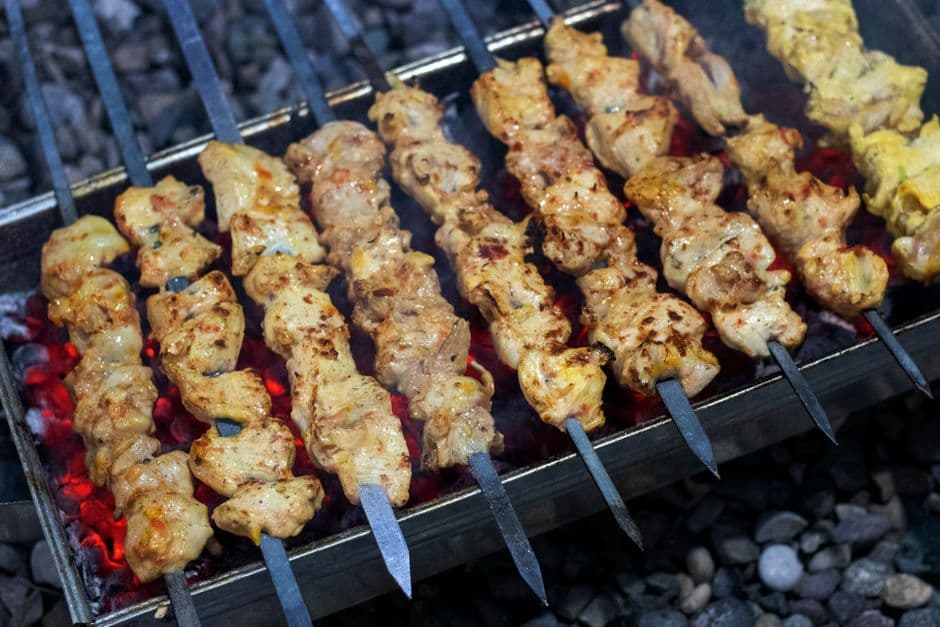
Joojeh Kebab (Persian Saffron Chicken Kebab)
Chicken pieces marinated in saffron, lemon, and yogurt then grilled until charred and golden — the jewel of Iranian kebab tradition, prized for its fragrant, tender result.
About This Recipe
Joojeh kebab (جوجه کباب — literally 'baby chicken kebab') is one of Iran's most beloved kebab preparations and has become popular throughout Turkey and the broader Middle East. Unlike the ground-meat koobideh, joojeh uses bone-in or boneless chicken pieces — traditionally a whole small chicken, butterflied and cut into sections — marinated overnight in a vibrant combination of saffron dissolved in warm water, lemon juice, onion juice, olive oil, and strained yogurt. The saffron is what defines joojeh beyond any other chicken kebab: the golden threads dissolved in warm water produce a marinade that tints the chicken a deep, luminous yellow and imparts the unmistakable floral, slightly medicinal depth that makes saffron worth its considerable expense. The lemon and yogurt tenderize the meat, while the onion juice adds sweetness and further breaks down the proteins. The chicken must marinate for at least 4 hours (overnight is significantly better), then is grilled over charcoal — real charcoal being essential to the recipe's final character, as the smoky heat interacts with the saffron-oil coating to produce blistered, fragrant, slightly charred pieces. In Turkey, joojeh kebab appears on the menus of kebab restaurants that serve both Turkish and Persian preparations, reflecting the centuries of cultural exchange between Anatolia and Persia.
Ingredients
Serves 4
- 1 kgchicken thighs and drumsticks (bone-in) or boneless thighs
- 1/2 tspsaffron threads(dissolved in 3 tbsp warm water)
- 3 tbspfresh lemon juice
- 1 largeonion(grated, liquid squeezed out)
- 3 tbspstrained yogurt (süzme yoğurt)
- 2 tbspolive oil
- 1.5 tspsalt
- 1/2 tspblack pepper
- 1/2 tspturmeric
- 2 tbspbutter(melted, for basting while grilling)
Instructions
- 1
Bloom the Saffron
Dissolve saffron threads in 3 tablespoons of very warm (not boiling) water. Allow to steep for 10-15 minutes until the water turns a deep orange-gold. This step unlocks the saffron's color and aroma compounds.
- 2
Marinate the Chicken
Score the chicken pieces with a sharp knife (3-4 deep slits per piece for bone-in) to allow the marinade to penetrate. Combine the saffron water, lemon juice, onion juice, yogurt, olive oil, salt, pepper, and turmeric. Pour over the chicken and massage into the cuts. Cover and refrigerate for at least 4 hours, ideally overnight.
The overnight marinade is transformative — saffron needs time to fully penetrate the meat.
- 3
Grill Over Charcoal
Remove chicken from the refrigerator 30 minutes before cooking. Grill over medium-hot charcoal for 8-10 minutes per side for bone-in pieces, or 5-6 minutes per side for boneless thighs, until deeply charred in spots and cooked through (75°C internal temperature for bone-in).
- 4
Baste with Saffron Butter
During the final 2-3 minutes of grilling, brush each piece with melted butter mixed with any remaining saffron marinade. This adds a final layer of golden color and buttery richness.
Baste with butter at the end, not earlier — adding butter too early causes flare-ups.
- 5
Serve
Serve immediately with saffron rice (chelow), grilled tomatoes, fresh herbs (basil, mint, tarragon), and lemon wedges. Sumac sprinkled over the finished kebabs is a classic Persian-Turkish accompaniment.
Did you make this?
Rate it and help other cooks find the recipes that actually work.
One tap to sign in, and we'll save the rating you just picked.
Everything you need to plan your week — free
- Meal calendar
- Grocery list
- AI recipe ideas
Track what you eat
Snap your meal to log calories and macros, run fasting timers and track water in the free SnapCal app.
Pro Tips
- →
Use real Persian saffron (the best comes from Khorasan, Iran, or from Spain) — cheap saffron produces neither color nor flavor. Look for it at Middle Eastern grocery stores.
- →
Overnight marinating is critical for joojeh — a 1-2 hour marinade produces thin flavor compared to an overnight soak.
- →
Score the chicken pieces deeply before marinating so the saffron penetrates the meat rather than just coating the surface.
Variations
- •
Boneless breast: use boneless chicken breast for a quicker-cooking, leaner version — reduce grill time to 4-5 minutes per side.
- •
Oven-broiled: broil on the highest oven setting for 10-12 minutes per side as an indoor alternative to charcoal.
- •
Limonlu: double the lemon juice and add lemon zest for a more citrus-forward marinade.
Storage
Cooked joojeh kebab keeps refrigerated for 2 days. Reheat in a 180°C oven for 10 minutes — avoid microwave, which toughens the chicken. The marinated raw chicken can be refrigerated for up to 24 hours before grilling.
History & Origin
Joojeh kebab is a cornerstone of Persian cuisine, with the saffron-marinated chicken tradition documented in Persian cookbooks for centuries. The use of saffron as a luxury cooking spice in Persian royal kitchens is recorded from at least the medieval period, when Iran was the world's primary saffron producer. The kebab spread throughout the former Persian cultural sphere — including Anatolia and Turkey — through trade routes, shared culinary culture, and the historical influence of Persian cuisine on Ottoman palace cooking.
Frequently Asked Questions
How much saffron should I use for authentic joojeh kebab?
A generous pinch — about 1/2 teaspoon of loosely packed threads — is standard for 1kg of chicken. Dissolved in warm water, this amount colors the marinade a deep orange-gold and imparts distinct saffron flavor. Using less produces a pale, mildly flavored result that lacks joojeh's characteristic identity.
Can I make joojeh kebab without a charcoal grill?
Yes — a gas grill works reasonably well, and oven broiling is a good indoor substitute. The charcoal smoke is a distinguishing element of the traditional result, but saffron is so aromatic that joojeh grilled on a gas grill or pan-grilled in a heavy cast-iron grill pan still delivers excellent flavor.
Nutrition Facts
Per serving (280g / 9.9 oz) · 4 servings total
Time Summary
Have Questions?
Ask our AI cooking assistant anything about this recipe — substitutions, techniques, scaling.
Chat with AI Chef →Featured in Guides
This recipe is featured in the following curated guides:
More Turkish Recipes
You Might Also Like
Similar dishes from other cuisines around the world.
Browse by Ingredient
More recipes built around the same core ingredients.
Free Kitchen Tools
Calculators and converters that pair with this page — no signup needed.
Put This Into a Plan
Schedule it, shop for it, and track what you already have.
Read Next
Longer reads that go deeper on the ideas behind this dish.
Community
Join the conversation
Sign in to leave a comment and save your favourite recipes