
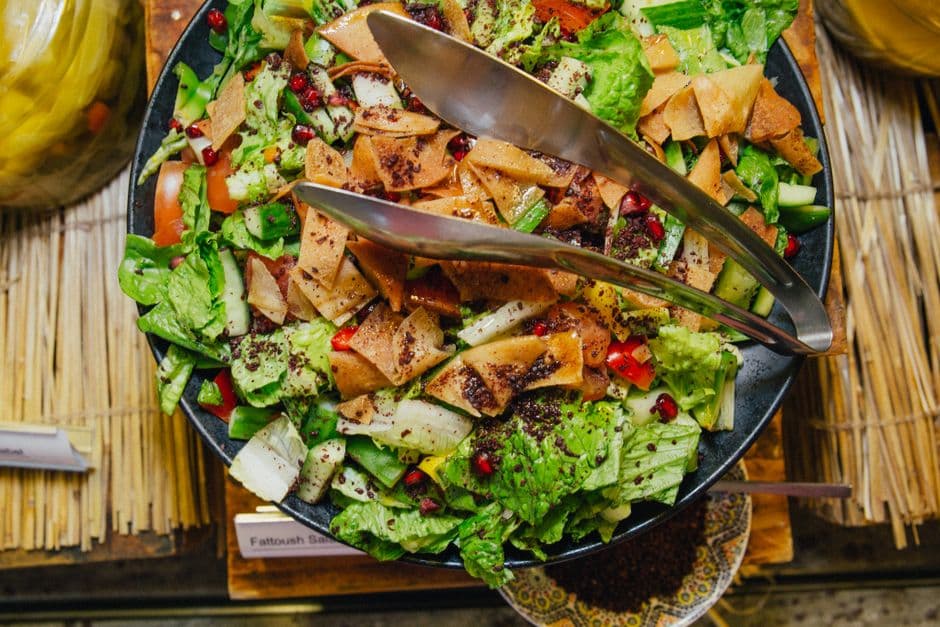
Fattoush Salad
A bright Jordanian salad of crispy flatbread shards, garden vegetables, and fresh herbs in a zingy pomegranate-sumac dressing.
About This Recipe
Fattoush is the Levant's great bread-recycling salad, and the Jordanian version is distinguished by an exceptionally generous hand with sumac and a drizzle of pomegranate molasses in the dressing that gives it a fruity tartness. Torn or fried pieces of khubz flatbread are tossed with chunky tomato, cucumber, radish, spring onion, romaine lettuce, fresh mint, and parsley, then finished with the sumac-heavy dressing. The bread absorbs just enough of the dressing to become tangy and chewy but retains enough crunch to provide texture contrast. It is typically served as part of a mezze spread alongside hummus, baba ghanoush, and grilled meats.
Ingredients
Serves 4
- 2 largekhubz flatbreads
- 3 mediumtomatoes, cut into chunks
- 1 largecucumber, diced
- 6 radishesthinly sliced
- 4 spring onionssliced
- 1 headromaine lettuce, torn
- ½ cupfresh mint leaves
- ½ cupfresh parsley, roughly chopped
- 1 green pepperdiced (optional)
- 4 tbspextra-virgin olive oil
- 3 tbsplemon juice
- 1 tbsppomegranate molasses
- 1½ tspsumac, plus extra to garnish
- 1 clovegarlic, minced
- ½ tspsalt
- oilfor frying bread
Instructions
- 1
Crisp the flatbread
Tear flatbreads into rough bite-sized pieces. Either shallow-fry in 1 cm of oil over high heat until golden and crisp (2 minutes per side), or brush with oil and bake at 200 °C for 8–10 minutes. Drain on paper towels and season lightly with salt.
- 2
Make the dressing
Whisk together olive oil, lemon juice, pomegranate molasses, sumac, minced garlic, and salt until emulsified. Taste — it should be boldly tart and slightly fruity.
- 3
Assemble
In a large bowl, combine tomatoes, cucumber, radishes, spring onions, lettuce, mint, and parsley. Toss with three-quarters of the dressing.
- 4
Add bread and serve
Add the crispy bread pieces and toss gently. Drizzle remaining dressing. Plate immediately and dust with a generous pinch of sumac.
Did you make this?
Rate it and help other cooks find the recipes that actually work.
One tap to sign in, and we'll save the rating you just picked.
Everything you need to plan your week — free
- Meal calendar
- Grocery list
- AI recipe ideas
Track what you eat
Snap your meal to log calories and macros, run fasting timers and track water in the free SnapCal app.
Pro Tips
- →
Toss the bread in at the very last moment to keep it crispy.
- →
Sumac is the defining spice here — be generous; do not substitute.
- →
Room-temperature tomatoes are far more flavourful than cold ones.
- →
Taste and adjust salt at the very end — flavors concentrate as liquids reduce, and a final pinch of flaky salt sharpens the whole dish.
Variations
- •
Add sliced purslane (baqleh) — traditional and adds a pleasant crunch.
- •
Sprinkle crumbled feta for a richer version.
- •
Use whole-grain flatbread for extra nuttiness.
- •
Vegetarian: swap the protein for roasted king oyster mushrooms, smoked tofu or cooked chickpeas — adjust seasoning slightly upward to compensate.
Storage
Dress and assemble only just before serving. Undressed vegetables keep refrigerated for 1 day. Fried bread keeps in an airtight container for 2 days.
History & Origin
Fattoush is a staple of Levantine peasant cooking — born from the need to use stale bread and whatever vegetables the garden provided. The name derives from the Arabic 'fatteh' (to crumble). It spread across the Levant as a refreshing counterpoint to heavier stews and grilled meats. The addition of pomegranate molasses is a Jordanian and Syrian touch that differentiates it from the Lebanese version, which relies purely on lemon.
Frequently Asked Questions
Can I use store-bought croutons?
In a pinch, yes, but plain croutons lack the authentic flavour. Fried or baked Arab flatbread is what gives fattoush its distinctive character.
Can I make this ahead of time?
Yes — most of the components can be prepared up to a day in advance and refrigerated separately. Reheat gently and assemble just before serving so textures stay distinct.
What can I substitute if I don't have all the ingredients?
Stay close to the role each ingredient plays: swap aromatics for similar ones (shallot for onion, lime for lemon), and keep the fat-acid-salt balance intact. Spice blends can usually be approximated with what's in the cupboard.
How do I know it's authentic?
Authenticity sits on a spectrum — what matters more is honoring the technique and balance of flavors. If the dish tastes harmonious and respects how cooks in its home region would build it, you're on solid ground.
Nutrition Facts
Per serving (250g / 8.8 oz) · 4 servings total
Time Summary
Have Questions?
Ask our AI cooking assistant anything about this recipe — substitutions, techniques, scaling.
Chat with AI Chef →More Jordanian Recipes
You Might Also Like
Similar dishes from other cuisines around the world.
Free Kitchen Tools
Calculators and converters that pair with this page — no signup needed.
Put This Into a Plan
Schedule it, shop for it, and track what you already have.
Read Next
Longer reads that go deeper on the ideas behind this dish.
Community
Join the conversation
Sign in to leave a comment and save your favourite recipes