
Kabab Koobideh (Persian Ground Meat Kebab)
Iranian-style ground lamb and onion kebab pressed onto wide flat skewers and grilled over charcoal — the national kebab of Iran, with a distinctive ridged shape and aromatic spicing.
About This Recipe
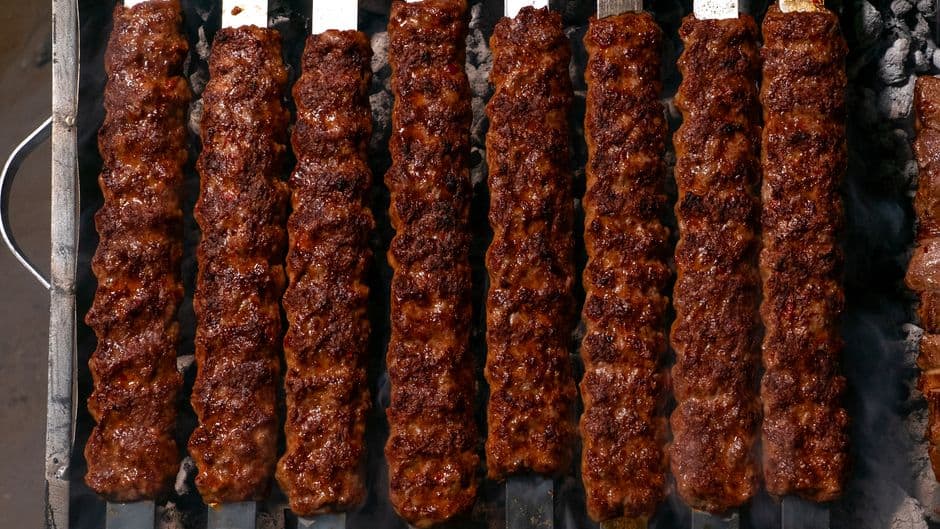
Kabab koobideh (کباب کوبیده — 'pounded kebab') is the quintessential Iranian kebab and arguably the most important single dish in Persian grilling culture. Unlike Turkish köfte kebabı which shares a similar concept, koobideh has several defining characteristics: the meat mixture (lamb or a mix of lamb and beef) is combined with a large quantity of very finely grated or food-processor-pureed onion rather than simply grated, and the ratio of onion is higher than in Turkish versions. The onion must be squeezed of absolutely all liquid, then incorporated to make a paste-like mixture that holds together on the wide, flat skewer characteristic of Iranian kebab preparation. The skewers used for koobideh are notably wider than Turkish varieties — typically 2-3cm wide — which allows the meat to be pressed on in a thick ribbon and creates the characteristic ridged surface pattern as the thumbs and fingers compress the meat at intervals. This creates both the visual identity of koobideh and the technical structure that holds it on the skewer over intense heat. Served on a bed of saffron-rice (chelow) with grilled tomatoes and a raw egg yolk broken over the top rice, koobideh chelow is Iran's most celebrated restaurant dish — a national icon eaten at every level of society. In Turkey it appears at Persian-Turkish restaurants, particularly in Istanbul.
Ingredients
Serves 4
- 600 gground lamb (20% fat)
- 200 gground beef (20% fat)
- 2 largeonions(grated to a paste, ALL liquid squeezed out aggressively)
- 1 tspsalt
- 1/2 tspblack pepper
- 1/2 tspturmeric
- 1/4 tspsaffron(dissolved in 1 tsp warm water (optional but traditional))
- 1 tbspbutter(melted, for basting)
Instructions
- 1
Prepare Onion Paste
Grate the onions very finely or pulse in a food processor to a paste. Place in a clean kitchen cloth and squeeze out EVERY drop of liquid — this may take several minutes of sustained squeezing. The onion paste should be almost dry. This step is the most important in the entire recipe.
Wet onion is the primary reason koobideh falls off the skewer. Squeeze until no more liquid comes out when wrung firmly.
- 2
Mix and Knead
Combine the ground meat, onion paste, salt, pepper, turmeric, and dissolved saffron in a large bowl. Knead vigorously for 7-10 minutes until the mixture is completely smooth, homogeneous, and very sticky — it should pull away from the bowl cleanly. Refrigerate for 1 hour minimum (overnight is better) to firm the mixture.
- 3
Shape on Wide Skewers
Wet your hands. Take a handful of mixture (~150g) and press along the length of a wide flat skewer. Compress the meat firmly, extending it to about 20cm. Use your thumb and forefinger to create uniform ridges at 2cm intervals by pressing in alternating sides — this creates the characteristic koobideh texture and structure.
- 4
Grill Over Hot Charcoal
Grill over very hot charcoal, turning every 2-3 minutes to prevent burning on one side. Total cooking time is 8-12 minutes. The koobideh should be charred in places and no longer pink. Don't move them for the first 2 minutes to allow the surface to set.
- 5
Baste and Serve
In the final minute, brush with melted butter. Serve immediately on flatbread or rice, with grilled tomatoes, fresh herbs (basil, tarragon), sliced raw onion sprinkled with sumac, and lemon wedges.
Did you make this?
Rate it and help other cooks find the recipes that actually work.
One tap to sign in, and we'll save the rating you just picked.
Everything you need to plan your week — free
- Meal calendar
- Grocery list
- AI recipe ideas
Track what you eat
Snap your meal to log calories and macros, run fasting timers and track water in the free SnapCal app.
Pro Tips
- →
Squeeze the onion paste until absolutely no liquid remains — this is the single most important technique in koobideh. Wet onion = kebab falls off the skewer.
- →
The extended kneading (7-10 minutes) develops protein bonds that hold the koobideh together — this step cannot be shortened.
- →
Wide flat skewers (2-3cm wide) are required — round skewers allow the meat to spin rather than hold in place over the fire.
Variations
- •
Barg: use thin-pounded lamb chops instead of ground meat for a more elegant presentation.
- •
Morgh koobideh: use ground chicken with the same onion and spice mixture for a lighter version.
- •
Pan-fried: form into long oval fingers without skewers, refrigerate 30 minutes, and pan-fry in a very hot dry pan for a stovetop version.
Storage
Cooked koobideh keeps refrigerated for 2 days. Reheat in a dry hot pan for 2-3 minutes per side. Raw shaped koobideh on skewers can be refrigerated overnight before grilling.
History & Origin
Kabab koobideh is documented in Persian culinary manuscripts and travel accounts from at least the Qajar dynasty (19th century), though the preparation is certainly older. The word 'koobideh' comes from the Persian verb 'koobishdan' (to pound or mash), referring to the thorough kneading of the meat. The ritual of eating chelow kabab (koobideh with saffron rice) became a central institution of Iranian restaurant culture in Tehran in the 20th century, eventually spreading internationally wherever Iranian communities settled.
Frequently Asked Questions
Why does my koobideh keep falling off the skewer?
The three main causes are: (1) insufficient squeezing of onion liquid — this is the most common failure; (2) insufficient kneading — the protein network must be fully developed; and (3) using round rather than flat wide skewers. Address all three simultaneously for reliable results.
What's the difference between koobideh and Turkish köfte kebab?
Both are ground-meat kebabs on flat skewers, but koobideh uses a higher ratio of grated onion (pureed to a paste rather than coarsely grated), less spice variety, and typically more lamb. Koobideh is also knead for longer to achieve a smoother, more paste-like mixture. Turkish köfte tends to use more herb (parsley) and more complex spicing with cumin and sumac.
Nutrition Facts
Per serving (240g / 8.5 oz) · 4 servings total
Time Summary
Have Questions?
Ask our AI cooking assistant anything about this recipe — substitutions, techniques, scaling.
Chat with AI Chef →Featured in Guides
This recipe is featured in the following curated guides:
More Turkish Recipes
You Might Also Like
Similar dishes from other cuisines around the world.
Browse by Ingredient
More recipes built around the same core ingredients.
Free Kitchen Tools
Calculators and converters that pair with this page — no signup needed.
Put This Into a Plan
Schedule it, shop for it, and track what you already have.
Read Next
Longer reads that go deeper on the ideas behind this dish.
Community
Join the conversation
Sign in to leave a comment and save your favourite recipes