
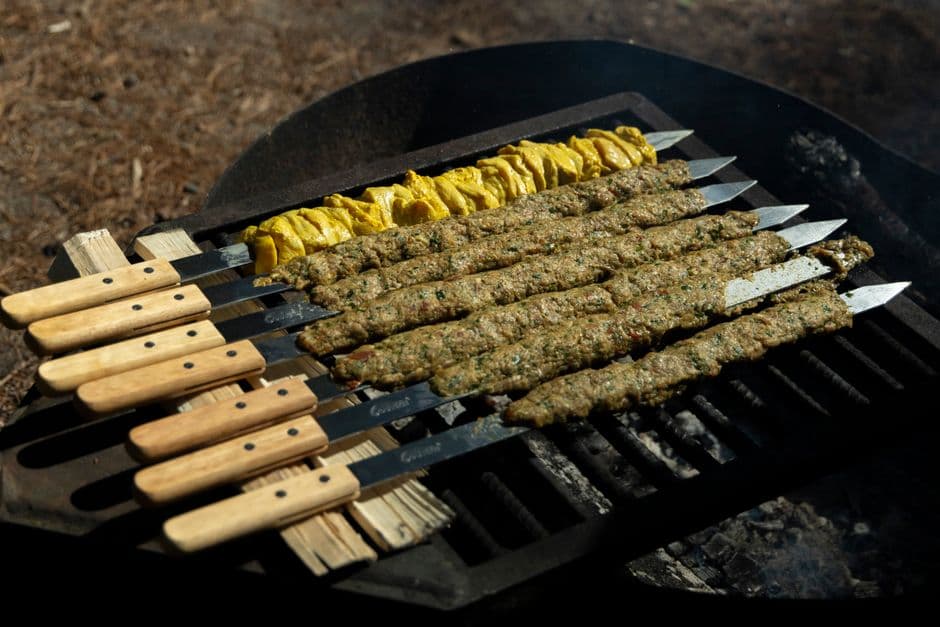
Lula Kebab (Caucasian Ground Meat Kebab)
Minced lamb kebab from the Caucasus tradition — ground meat pressed onto wide skewers with herbs and grilled over charcoal into fragrant, slightly charred rolls.
About This Recipe
Lula kebab (люля-кебаб) is the Central Asian and Caucasian answer to the ground-meat skewer kebab, closely related to the Persian koobideh and the Turkish köfte kebabı but with its own distinct character. The name comes from the Azerbaijani/Turkish word 'lülə' (pipe or tube), describing the cylindrical shape of the meat on the skewer. It is a cornerstone of the cuisines of Azerbaijan, Armenia, Georgia, and their diaspora communities — and has become popular in Turkey, particularly in Istanbul where the large Azerbaijani and Caucasian communities have established restaurants serving their regional specialties. Lula kebab differs from its Persian and Turkish cousins in the use of a higher proportion of tail fat (kuyruk yağı) in the mixture and the inclusion of fresh cilantro (coriander) as a primary herb alongside parsley — a distinctly Caucasian flavor note that appears throughout Georgian and Azerbaijani cooking. The fat keeps the kebab moist and prevents it from becoming dry on the outside of the grill before the center cooks. Like koobideh, the onion must be extremely well squeezed and the mixture kneaded at length — these technical requirements are shared across all high-quality ground-meat kebab traditions from Turkey to Central Asia.
Ingredients
Serves 4
- 600 gground lamb (25% fat, or add 80g of tail fat/suet)
- 1 largeonion(finely grated, all liquid squeezed out)
- 1/4 cupfresh cilantro (coriander)(finely chopped)
- 2 tbspflat-leaf parsley(finely chopped)
- 1 tspsalt
- 1/2 tspblack pepper
- 1/2 tspcumin
- 1/4 tspcoriander powder
Instructions
- 1
Prepare the Mixture
Grate the onion finely and squeeze every drop of liquid out. Combine ground lamb, dry onion, cilantro, parsley, salt, pepper, cumin, and coriander powder in a large bowl. Knead for 6-8 minutes until completely homogeneous and sticky. Refrigerate for 1 hour or overnight.
High-fat lamb (25%+) is essential — lean lamb produces dry, crumbly lula kebab.
- 2
Shape on Skewers
Wet your hands with cold water. Take about 150g of meat and press firmly around the center of a wide flat skewer. Shape into a uniform cylinder about 18-20cm long, pressing evenly to compact it. The meat should feel very firm and attached to the skewer.
- 3
Grill Over Charcoal
Grill over hot charcoal, turning every 2-3 minutes, for a total of 10-12 minutes until charred in spots and cooked through with no pink visible. Do not move the kebab for the first 2 minutes on each side.
- 4
Serve
Serve on flatbread or with pilaf, alongside grilled tomatoes and peppers, fresh herbs, sliced raw onion with sumac, and pickled vegetables (turşu). A squeeze of pomegranate juice or a spoonful of narsharab (pomegranate molasses) is a Caucasian accompaniment.
Did you make this?
Rate it and help other cooks find the recipes that actually work.
One tap to sign in, and we'll save the rating you just picked.
Everything you need to plan your week — free
- Meal calendar
- Grocery list
- AI recipe ideas
Track what you eat
Snap your meal to log calories and macros, run fasting timers and track water in the free SnapCal app.
Pro Tips
- →
Fat content is the critical factor — if using lean ground lamb, add 80g of finely diced lamb tail fat or suet to achieve the necessary 25% fat content.
- →
Cilantro (coriander leaf) is the distinguishing Caucasian herb in lula — if unavailable, double the parsley, but the flavor profile will be different.
- →
Like koobideh, wide flat skewers are essential — round skewers cause the meat to fall off.
Variations
- •
Azerbaijani style: add 1/4 tsp of dried barberry powder (or a few dried barberries) to the mixture for a subtle sour note.
- •
Chicken lula: use ground chicken thigh meat (with skin ground in for fat) for a lighter alternative.
- •
Pan-fried: form into thick sausage shapes without skewers and fry in a dry cast-iron pan — a viable indoor method.
Storage
Cooked lula kebab keeps refrigerated for 2 days. Reheat in a hot dry pan. Raw shaped kebabs can be refrigerated overnight on their skewers.
History & Origin
Lula kebab is a fundamental dish of Azerbaijani and broader Caucasian cuisine, with the preparation common to Azerbaijan, Armenia, and Georgia with regional variations. The dish represents the ancient pastoralist lamb-grilling traditions of the Caucasus region, refined through centuries of cultural exchange with Persian, Ottoman, and Russian culinary influences. The word 'lula' (tube/pipe) in various forms appears across Turkic languages, and the dish traveled with Turkic-speaking communities throughout Central Asia and into Anatolia.
Frequently Asked Questions
What makes lula kebab different from Turkish köfte kebab?
Lula uses a higher fat ratio (traditionally including lamb tail fat), fresh cilantro as a primary herb (which Turkish köfte doesn't typically use), and a slightly simpler spice profile. The mixture is also often wetter and more paste-like than Turkish köfte. The Caucasian serving tradition (with pomegranate molasses, barberries, and fresh herb plates) is distinct from Turkish accompaniments.
Can I use minced beef instead of lamb?
Beef can be substituted but produces a noticeably different flavor — lamb's distinctive fat is integral to the lula kebab experience. A 70:30 mix of lamb to beef is a good compromise, using fattier cuts. Pure beef lula lacks the richness that holds the kebab together and makes it succulent.
Nutrition Facts
Per serving (220g / 7.8 oz) · 4 servings total
Time Summary
Have Questions?
Ask our AI cooking assistant anything about this recipe — substitutions, techniques, scaling.
Chat with AI Chef →More Turkish Recipes
You Might Also Like
Similar dishes from other cuisines around the world.
Browse by Ingredient
More recipes built around the same core ingredients.
Free Kitchen Tools
Calculators and converters that pair with this page — no signup needed.
Put This Into a Plan
Schedule it, shop for it, and track what you already have.
Read Next
Longer reads that go deeper on the ideas behind this dish.
Community
Join the conversation
Sign in to leave a comment and save your favourite recipes