
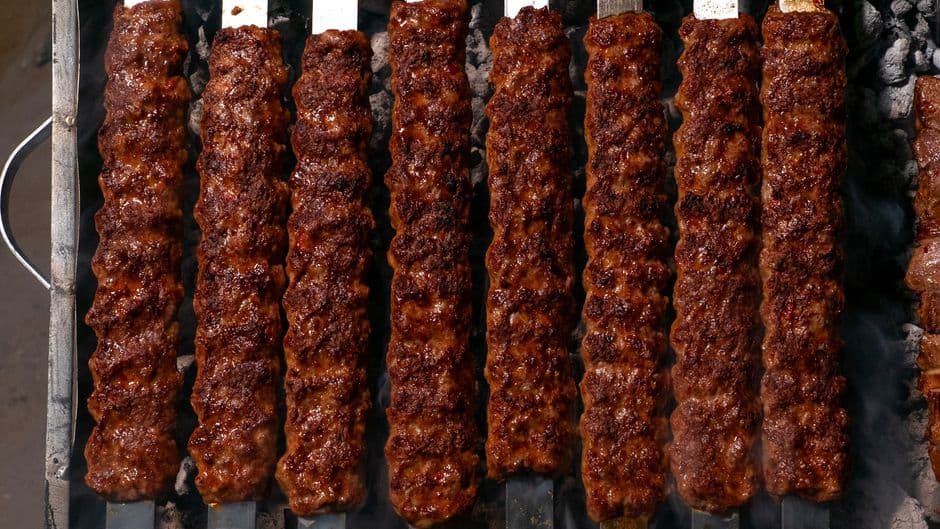
Kabab Tabei (Persian Pan-Fried Kebab)
Ground lamb kebab cooked in a frying pan rather than over charcoal — the ingenious Persian home-cooking solution for kebab without a grill, yielding tender, juicy patties.
About This Recipe
Kabab tabei (کباب تابهای — 'pan kebab') is the Persian home cook's answer to the question of how to achieve the flavors of kebab without a charcoal grill. The word 'tabei' derives from 'tabe' (frying pan or skillet). While grilled koobideh requires charcoal, specific wide skewers, and outdoor cooking equipment, kabab tabei delivers much of the same aromatic ground-meat satisfaction using nothing more than a heavy frying pan. The technique differs from simply pan-frying meatballs: the seasoned ground meat mixture is pressed into a thin, even layer in the pan — sometimes covering the entire bottom — and then cooked in its own rendered fat over medium-low heat until deeply browned on the bottom, then carefully flipped in sections. The result is a large, flat 'kebab' that is scored into portions for serving. The flavor profile is classic Persian kebab: onion-forward, mildly spiced with turmeric and black pepper, optionally tinged with saffron. Kabab tabei is typically served with chelow (Persian rice) or flatbread, grilled tomatoes (which can be cooked in the same pan), and fresh herbs. It's a weeknight staple in Iranian households and has become known in Turkish cities through the Iranian diaspora community.
Ingredients
Serves 4
- 500 gground lamb or beef (20% fat)
- 1 largeonion(grated very finely, liquid squeezed out completely)
- 1/2 tspturmeric
- 1/2 tspsalt
- 1/2 tspblack pepper
- 1/4 tspsaffron(dissolved in 1 tsp warm water, optional)
- 1 tbspolive oil
- 2 wholetomatoes(halved, to cook alongside)
Instructions
- 1
Mix the Meat
Combine ground meat, squeezed onion paste, turmeric, salt, pepper, and dissolved saffron. Knead for 4-5 minutes until smooth and cohesive. The mixture should be sticky and hold its shape. Refrigerate for 30 minutes if time allows.
- 2
Heat the Pan
Heat a large heavy-bottomed skillet or cast-iron pan over medium heat. Add just a tiny amount of oil — the fat in the meat will render out and do most of the cooking. No need to grease heavily.
- 3
Press Meat into Pan
Transfer the meat mixture to the pan and press into an even layer about 1.5-2cm thick using the back of a wet spoon or wet hands. Score the top with a knife into rectangular portions (don't cut all the way through).
The scoring makes it easier to flip portions without the meat breaking apart.
- 4
Cook the First Side
Cook over medium-low heat for 8-10 minutes undisturbed until the bottom is deeply browned and the sides are visibly cooked halfway through. Don't rush this — low and slow is the key to juicy kabab tabei.
- 5
Flip and Finish
Flip the kabab in sections using a wide spatula. Cook the second side for another 8 minutes until browned. Cook halved tomatoes in the same pan alongside. Serve on flatbread or rice with fresh herbs, raw onion with sumac, and lemon.
Did you make this?
Rate it and help other cooks find the recipes that actually work.
One tap to sign in, and we'll save the rating you just picked.
Everything you need to plan your week — free
- Meal calendar
- Grocery list
- AI recipe ideas
Track what you eat
Snap your meal to log calories and macros, run fasting timers and track water in the free SnapCal app.
Pro Tips
- →
Medium-low heat is essential — high heat browns the outside before the inside cooks through, and the fat doesn't have time to render and self-baste the meat.
- →
Squeeze every drop of liquid from the onion — wet onion steams the meat rather than allowing it to brown.
- →
Wet your hands before pressing the meat into the pan to prevent sticking.
Variations
- •
Gojeh farangi: cook the kabab tabei in a shallow layer of tomato sauce for the last 5 minutes, turning it into a braised version.
- •
Shirazi salad pairing: serve with shirazi salad (cucumber, tomato, mint in lemon and olive oil) for a complete Persian meal.
- •
Chicken version: use ground chicken thigh with the same spices — reduce cooking time slightly as chicken cooks faster.
Storage
Kabab tabei keeps refrigerated for 2 days. Reheat in a dry pan over medium-low heat for 3-4 minutes per side.
History & Origin
Kabab tabei is a 20th-century urban adaptation of the ancient Iranian kebab tradition — a home cook's solution developed as apartment living made charcoal grilling impractical in Iranian cities. The dish became a staple of Iranian domestic cooking, particularly in Tehran and other urban centers, and spread internationally with the Iranian diaspora. It represents the ingenuity of Persian home cooking in adapting festive grilling traditions to everyday kitchen contexts.
Frequently Asked Questions
Do I need a special pan for kabab tabei?
A heavy-bottomed skillet or cast-iron pan works best — the mass retains even heat that cooks the kabab uniformly. Non-stick pans work but don't produce as good a browning crust. A 26-28cm pan is ideal for a 4-serving portion.
Can I make kabab tabei ahead of time?
The cooked kabab tabei reheats reasonably well in a dry pan. Prepare the meat mixture the night before and refrigerate — the flavors develop slightly and the mixture binds better. Cook fresh when ready to eat, as freshly cooked produces the best texture.
Nutrition Facts
Per serving (250g / 8.8 oz) · 4 servings total
Time Summary
Have Questions?
Ask our AI cooking assistant anything about this recipe — substitutions, techniques, scaling.
Chat with AI Chef →More Turkish Recipes
You Might Also Like
Similar dishes from other cuisines around the world.
Browse by Ingredient
More recipes built around the same core ingredients.
Free Kitchen Tools
Calculators and converters that pair with this page — no signup needed.
Put This Into a Plan
Schedule it, shop for it, and track what you already have.
Read Next
Longer reads that go deeper on the ideas behind this dish.
Community
Join the conversation
Sign in to leave a comment and save your favourite recipes