
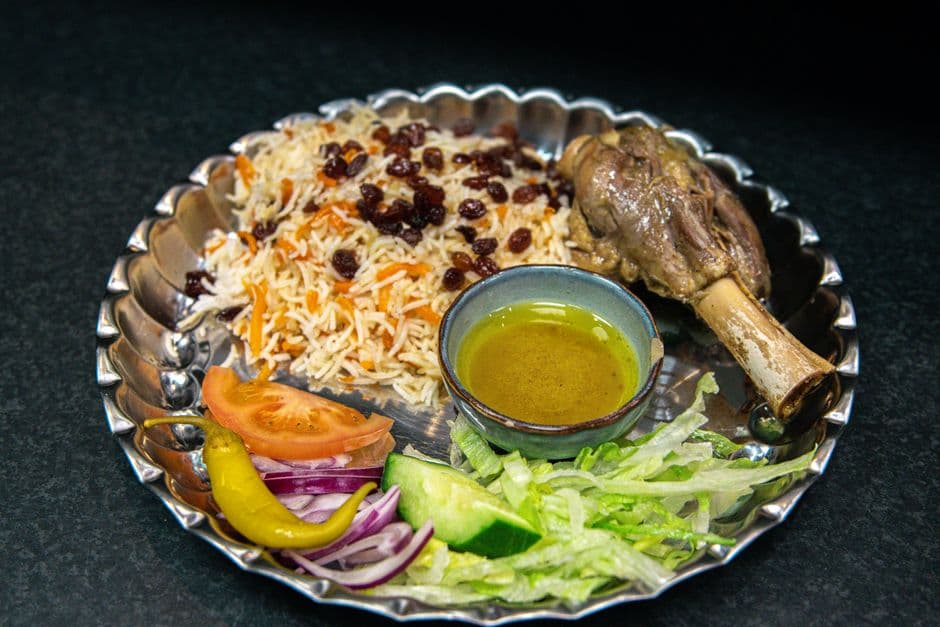
Kabuli Palaw (Afghan Lamb and Rice with Carrots and Raisins)
Afghanistan's national dish: long-grain rice steamed over spiced braised lamb, crowned with caramelized carrots and raisins — a jewel of Central Asian pilaf tradition.
About This Recipe
Kabuli palaw (قابلی پلو) — named after Kabul, Afghanistan's capital — is the national dish of Afghanistan and one of the grand masterpieces of the Central Asian pilaf (osh/palaw/plov) tradition that stretches from Uzbekistan through Afghanistan and into the Caucasus. At its finest, it is a multi-step, technically demanding preparation that produces something transcendent: long-grain basmati rice steamed to perfect individual grain separation atop slow-braised lamb, adorned with caramelized carrots cut in matchsticks and plump, sweet raisins (and sometimes blanched slivered almonds or pistachios), all perfumed with cardamom, cumin, and a gentle warmth of cinnamon. The technical key is the 'dam' steaming method — once the par-cooked rice is layered over the lamb and stock, the pot is sealed tightly (traditionally with a cloth-wrapped lid) and steamed over very low heat for 30-40 minutes. This creates the perfectly dry, separate, fragrant grains that distinguish great palaw from ordinary rice. The caramelized carrot and raisin topping — cooked separately in oil until the carrots soften and the raisins plump — is placed on top and presented dramatically before being mixed in at the table. In Turkey, kabuli palaw is known through the Central Asian diaspora community and at Afghan and Uzbek restaurants in Istanbul.
Ingredients
Serves 6
- 500 gbone-in lamb shoulder or shank
- 400 glong-grain basmati rice
- 1 largeonion(sliced)
- 4 clovesgarlic
- 1 tspcumin seeds
- 1 tspground cardamom
- 1 tspground cinnamon
- 1 tspblack pepper
- 2 tspsalt
- 3 largecarrots(peeled and cut into matchsticks)
- 100 graisins (kişmiş)
- 4 tbspvegetable oil
- 1 tbspsugar
Instructions
- 1
Braise the Lamb
Brown the lamb pieces on all sides in 2 tablespoons of hot oil. Add sliced onion and cook until golden. Add garlic, cumin, cardamom, half the cinnamon, salt, and pepper. Cover with water (about 800ml) and simmer covered for 60-75 minutes until the lamb is very tender. Reserve the braising stock.
- 2
Wash and Par-Cook the Rice
Rinse rice until the water runs clear. Soak in cold salted water for 30 minutes, then drain. Par-cook in a large pot of generously salted boiling water for exactly 7 minutes. The rice should be cooked on the outside but still firm in the center. Drain immediately.
This par-cooking step is essential to the palaw technique — final cooking happens in the steam, not the boil.
- 3
Caramelize the Carrots and Raisins
In a separate pan, heat 2 tablespoons of oil over medium heat. Add carrot matchsticks and cook for 8-10 minutes until softened. Add raisins and sugar, toss for 2-3 minutes until the raisins plump and the carrots caramelize slightly. Season lightly with remaining cinnamon and salt.
- 4
Layer and Steam the Rice
Remove lamb from the braising liquid. In a heavy pot, arrange lamb at the bottom. Mound the par-cooked rice on top. Pour 200-250ml of the reserved lamb stock over the rice. Place carrots and raisins on top. Cover tightly with a lid wrapped in a clean kitchen cloth (to absorb steam). Steam over very low heat for 30-35 minutes.
- 5
Present and Serve
Remove the lid and transfer the rice onto a large platter, placing the lamb pieces and the carrot-raisin topping prominently on top. Serve with fresh yogurt and a simple salad.
Did you make this?
Rate it and help other cooks find the recipes that actually work.
One tap to sign in, and we'll save the rating you just picked.
Everything you need to plan your week — free
- Meal calendar
- Grocery list
- AI recipe ideas
Track what you eat
Snap your meal to log calories and macros, run fasting timers and track water in the free SnapCal app.
Pro Tips
- →
The soaking and par-cooking steps are non-negotiable for the perfect grain separation — never use unsoaked or fully cooked rice in the layering step.
- →
The cloth-wrapped lid is a traditional technique to prevent condensation from dripping back onto the rice — use a kitchen towel folded to cover the underside of the lid.
- →
Using reserved lamb stock rather than water for the final steam adds enormous depth of flavor to the rice.
Variations
- •
With pistachios and almonds: scatter blanched slivered almonds and pistachios over the finished dish for an even more celebratory presentation.
- •
Chicken palaw: substitute the lamb with a whole chicken cut into pieces — reduce braising time to 35-40 minutes.
- •
Vegetarian: use vegetable stock and skip the lamb; add chickpeas to the base for protein.
Storage
Kabuli palaw keeps refrigerated for 2-3 days. Reheat covered with a splash of water in a low oven (160°C) for 20 minutes, or in a pot over very low heat.
History & Origin
Kabuli palaw is considered Afghanistan's national dish and has been central to Afghan hospitality culture for centuries. The pilaf tradition it belongs to — shared with Uzbek osh, Iranian chelow, and Turkish pilav — traces its origins through Persian and Central Asian culinary history, with rice-and-meat layered preparations documented from at least the medieval period across the broader Islamic world. The specific Kabul style, with its characteristic carrot and raisin topping, is documented in Afghan culinary literature from the 19th century onward.
Frequently Asked Questions
What makes kabuli palaw different from other pilafs?
The defining characteristics are the caramelized carrot and raisin topping (which no other rice dish in the region uses in exactly the same way), the multi-step dam (steam) cooking technique that separates grains perfectly, and the specific spice combination of cardamom, cumin, and cinnamon. It's also distinctive for using the lamb braising stock to flavor the final rice steam.
Can I simplify kabuli palaw for a weeknight?
The full traditional method requires 2-3 hours. A simplified version uses pre-cooked or rotisserie lamb mixed with a quick carrot-raisin sauté, layered over par-cooked rice and steamed for 20 minutes. The result is less refined but still captures the essential flavors. The carrot-raisin topping specifically is worth preparing even with shortcuts elsewhere.
Nutrition Facts
Per serving (400g / 14.1 oz) · 6 servings total
Time Summary
Have Questions?
Ask our AI cooking assistant anything about this recipe — substitutions, techniques, scaling.
Chat with AI Chef →Featured in Guides
This recipe is featured in the following curated guides:
More Turkish Recipes
You Might Also Like
Similar dishes from other cuisines around the world.
Browse by Ingredient
More recipes built around the same core ingredients.
Free Kitchen Tools
Calculators and converters that pair with this page — no signup needed.
Put This Into a Plan
Schedule it, shop for it, and track what you already have.
Read Next
Longer reads that go deeper on the ideas behind this dish.
Community
Join the conversation
Sign in to leave a comment and save your favourite recipes