
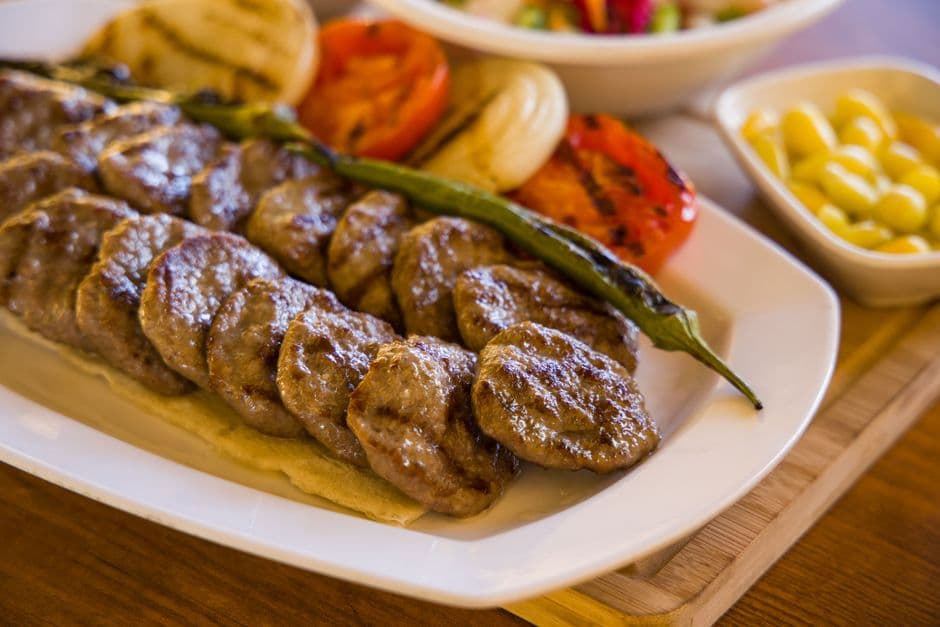
Kafta (Lebanese Ground Meat Kebab with Spices)
Lebanese-style ground lamb or beef kebab seasoned with allspice, cinnamon, pine nuts, and fresh herbs — grilled or pan-cooked into fragrant, aromatic patties.
About This Recipe
Kafta (كفتة) is the Lebanese and broader Levantine name for the ground meat kebab tradition — closely related to the Turkish köfte, Persian koobideh, and Egyptian kufta. What makes the Lebanese kafta distinctive within the family of eastern Mediterranean ground meat preparations is its characteristic spice blend: the 'baharat' spice mix (or at minimum allspice and cinnamon) gives it a warm, sweet-savory depth, while the inclusion of fresh herbs — parsley, onion, and sometimes fresh mint — distinguishes it from the drier Turkish and Persian variants. Some Lebanese recipes also incorporate toasted pine nuts pressed into the surface, adding texture and richness. Kafta is prepared in multiple forms depending on the occasion: pressed onto skewers and grilled over charcoal (kafta mishwiyye), formed into ovals and pan-fried (kafta maqliyye), braised in tomato sauce and tahini (kafta bi tahini), or baked in a tray with potato slices and tomato (kafta bil siniyye). In Turkish cities with Lebanese restaurant communities, kafta appears as part of mixed grill mezes, often served alongside hummus, baba ganoush, and fattoush. The dish represents one of the rich points of culinary overlap between Turkish and Arabic food traditions.
Ingredients
Serves 4
- 500 gground lamb or beef (or mix)
- 1 mediumonion(grated, liquid squeezed out)
- 1/2 cupflat-leaf parsley(very finely chopped)
- 1 tspallspice (baharat)
- 1/2 tspcinnamon
- 1/2 tspcumin
- 1/4 tspnutmeg
- 1 tspsalt
- 1/2 tspblack pepper
- 2 tbsptoasted pine nuts(optional)
Instructions
- 1
Mix and Rest
Combine ground meat, squeezed onion, parsley, all spices, salt, and pepper in a bowl. Knead for 4-5 minutes until smooth and cohesive. Refrigerate for 30 minutes — the resting allows the spices to bloom and the mixture to firm up.
- 2
Shape the Kafta
Form the mixture into elongated oval patties or press onto flat metal skewers. Each portion should be about 80-90g. If using pine nuts, press a few into the surface of each patty.
- 3
Grill or Pan-Fry
Grill over medium-hot charcoal for 3-4 minutes per side, or pan-fry in a very hot dry cast-iron pan for 3-4 minutes per side. The kafta should be charred in spots and just cooked through — avoid overcooking, which makes them dry.
- 4
Serve
Serve immediately with hummus, fresh pita or flatbread, sliced tomatoes, fresh parsley, and tahini sauce or yogurt. Sprinkle with sumac if available.
Did you make this?
Rate it and help other cooks find the recipes that actually work.
One tap to sign in, and we'll save the rating you just picked.
Everything you need to plan your week — free
- Meal calendar
- Grocery list
- AI recipe ideas
Track what you eat
Snap your meal to log calories and macros, run fasting timers and track water in the free SnapCal app.
Pro Tips
- →
Allspice (baharat) is the defining spice of kafta — don't substitute with other spice blends, as the warm sweetness of allspice is what distinguishes Lebanese kafta from its Turkish and Persian cousins.
- →
Fine chopping of parsley (not coarse) is important — large pieces prevent the kafta from holding together on the skewer.
- →
Don't overcook — kafta is best slightly pink in the very center for maximum moisture.
Variations
- •
Kafta bil siniyye: arrange kafta patties in a baking dish with sliced potato and tomato, cover with tahini sauce, and bake at 200°C for 25 minutes.
- •
Kafta bi tahini: braise pan-fried kafta in a sauce of tahini, lemon juice, water, and garlic for 15 minutes.
- •
Kafta with Aleppo pepper: substitute the allspice with pul biber for a Turkish-Lebanese fusion version.
Storage
Cooked kafta keeps refrigerated for 2 days. Reheat in a dry hot pan for 2 minutes per side. Raw shaped kafta can be refrigerated (covered) for 24 hours before cooking.
History & Origin
Kafta and its cognates (kufta, köfte, koofteh) represent one of the oldest prepared meat dishes of the ancient Near East, with ground and seasoned meat preparations documented in Mesopotamian cuneiform tablets. The word derives from the Persian/Arabic root for 'pounded' or 'ground.' Lebanese kafta specifically reflects the Levantine baharat spice tradition (allspice, cinnamon, nutmeg) that distinguishes the Arab-Mediterranean spice palate from the more cumin-forward Turkish and the turmeric-saffron-inflected Persian traditions.
Frequently Asked Questions
What is the difference between kafta, köfte, and kofta?
These are regional variants of the same ancient concept — ground seasoned meat, often shaped and grilled. Kafta (Lebanese/Levantine) uses allspice, cinnamon, and parsley; köfte (Turkish) uses cumin and parsley with less sweet spice; kofta (Indian) uses ginger, garam masala, and sometimes nuts. All share the same ancient roots but have diverged significantly through regional culinary evolution.
Can I use ground chicken for kafta?
Yes — ground chicken works well but requires some adjustments: add 1-2 tablespoons of olive oil to the mixture (chicken is leaner), and reduce cooking time by 1-2 minutes. The result is lighter but still very flavorful with the baharat spice blend.
Nutrition Facts
Per serving (200g / 7.1 oz) · 4 servings total
Time Summary
Have Questions?
Ask our AI cooking assistant anything about this recipe — substitutions, techniques, scaling.
Chat with AI Chef →More Turkish Recipes
You Might Also Like
Similar dishes from other cuisines around the world.
Browse by Ingredient
More recipes built around the same core ingredients.
Free Kitchen Tools
Calculators and converters that pair with this page — no signup needed.
Put This Into a Plan
Schedule it, shop for it, and track what you already have.
Read Next
Longer reads that go deeper on the ideas behind this dish.
Community
Join the conversation
Sign in to leave a comment and save your favourite recipes