
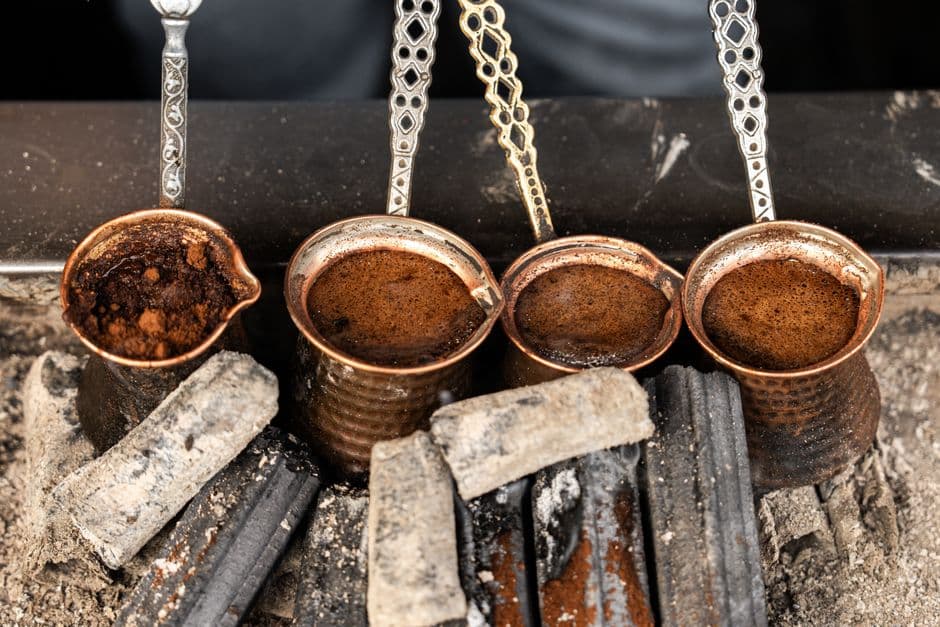
Türk Kahve Likörü Kokteyli (Turkish Coffee Kahlua Cocktail)
Velvety Turkish coffee blended with Kahlua coffee liqueur, a touch of mastic-infused raki, and chilled to a rich, aromatic after-dinner drink that bridges Turkish and global cocktail culture.
About This Recipe
The Turkish coffee cocktail marries one of the world's oldest coffee traditions with contemporary cocktail culture. Turkey's relationship with coffee is profound: Turks introduced coffee to Europe in the 16th century through the Ottoman Empire's trade networks, and Turkish coffee (Türk kahvesi) is still prepared in the traditional cezve (small long-handled copper pot) over sand or direct heat, producing an intensely concentrated, unfiltered brew with a thick, foamy top (köpük) and a sediment layer at the bottom. Using freshly brewed Turkish coffee as the base of a cocktail — combined with Kahlua (Mexico's coffee liqueur, which adds sweetness and a lighter coffee note) and a small measure of raki (Turkey's anise-flavored spirit, which adds a uniquely Turkish anise note) or vodka — creates a drink that tastes simultaneously of the old world and the new. The result is served chilled, over ice or straight up, and makes an outstanding after-dinner drink or late evening cocktail. The mastic-infused character of some premium rakis adds a resinous, piney depth that conventional coffee cocktails lack. This represents the emerging Turkish cocktail bar culture of Istanbul, where traditional ingredients are being reimagined in contemporary cocktail contexts.
Ingredients
Serves 2
- 4 tspvery finely ground Turkish coffee
- 160 mlcold water
- 1 tspsugar(optional — to taste)
- 60 mlKahlua coffee liqueur
- 30 mlraki or vodka(raki gives an authentic Turkish anise note)
- icefor serving
- whipped cream or kaymakfor garnish, optional
Instructions
- 1
Brew Turkish Coffee
Combine cold water, Turkish coffee, and optional sugar in a cezve. Stir to mix, then place over low heat. As the coffee heats, foam (köpük) will begin to rise — just before it boils, remove from heat and spoon the foam into two serving glasses. Return to low heat and allow the coffee to rise once more, then pour carefully (through a strainer if desired) over the foam. Let cool completely — at least 20 minutes.
Never boil Turkish coffee — once it bubbles over, the foam is lost and the flavor becomes harsh.
- 2
Cool the Coffee Completely
The brewed Turkish coffee must be completely cold before combining with the other ingredients. You can speed this up by placing the cezve in a bowl of ice water, stirring gently for 5-7 minutes.
- 3
Mix the Cocktail
Combine the cold Turkish coffee, Kahlua, and raki or vodka in a cocktail shaker or jar. Add a handful of ice and shake vigorously for 15 seconds until well combined and chilled.
- 4
Serve
Strain into chilled cocktail glasses (coupe or martini glasses work beautifully) or pour over ice in rocks glasses. Optionally garnish with a small dollop of whipped cream or a teaspoon of kaymak (Turkish clotted cream) for an indulgent finish.
Did you make this?
Rate it and help other cooks find the recipes that actually work.
One tap to sign in, and we'll save the rating you just picked.
Everything you need to plan your week — free
- Meal calendar
- Grocery list
- AI recipe ideas
Track what you eat
Snap your meal to log calories and macros, run fasting timers and track water in the free SnapCal app.
Pro Tips
- →
The quality of Turkish coffee matters enormously — freshly ground Turkish coffee (fine as flour) from a dedicated Turkish coffee grinder produces incomparably better foam and flavor than pre-ground.
- →
Cool the coffee completely before combining with spirits — warm coffee melts ice rapidly and dilutes the cocktail.
- →
Raki's anise adds an authentically Turkish note that vodka cannot replicate — use Yeni Raki or Tekirdağ brand for the best results.
Variations
- •
Mastic-spiked: add 5ml of mastic-infused raki (or dissolve a tiny piece of mastic resin in the hot coffee) for a distinctly piney, resinous Turkish character.
- •
Soğuk kahve: skip the alcohol and serve the chilled Turkish coffee over ice with Kahlua replaced by a splash of sweetened condensed milk for a non-alcoholic version.
- •
Espresso: substitute the Turkish coffee with a double espresso shot if a cezve isn't available — the result loses authenticity but remains delicious.
Storage
The cocktail is best made fresh. Brewed Turkish coffee can be refrigerated for 24 hours before using in the cocktail.
History & Origin
Coffee arrived in Istanbul in 1555, brought by Ottoman traders from Yemen and Ethiopia, and the first coffeehouses (kahvehane) opened shortly after. Within decades, Istanbul had hundreds of coffeehouses that became centers of intellectual and social life. Turkey introduced coffee to Europe through the 17th century, with coffeehouses opening across Vienna, Paris, and London after the Ottoman siege of Vienna in 1683. Turkish cocktail culture incorporating traditional Turkish coffee is a 21st-century phenomenon emerging from Istanbul's vibrant contemporary bar scene.
Frequently Asked Questions
Can I make this without a cezve?
Yes — while a cezve produces the authentic foam and concentrated Turkish flavor, you can use a small saucepan with any very finely ground coffee. Alternatively, substitute a strong double espresso (30-40ml), which won't have the same unfiltered character but makes an excellent coffee cocktail base.
What does raki add that vodka doesn't?
Raki is an anise-flavored spirit (similar to Greek ouzo or French pastis) that adds a distinctive licorice-anise note. In combination with the intense, slightly bitter Turkish coffee and the sweet Kahlua, the raki's anise creates a more complex, aromatic cocktail. Vodka produces a simpler result but is perfectly acceptable as a substitute.
Nutrition Facts
Per serving (150g / 5.3 oz) · 2 servings total
Time Summary
Have Questions?
Ask our AI cooking assistant anything about this recipe — substitutions, techniques, scaling.
Chat with AI Chef →Featured in Guides
This recipe is featured in the following curated guides:
More Turkish Recipes
You Might Also Like
Similar dishes from other cuisines around the world.
Free Kitchen Tools
Calculators and converters that pair with this page — no signup needed.
Put This Into a Plan
Schedule it, shop for it, and track what you already have.
Read Next
Longer reads that go deeper on the ideas behind this dish.
Community
Join the conversation
Sign in to leave a comment and save your favourite recipes