
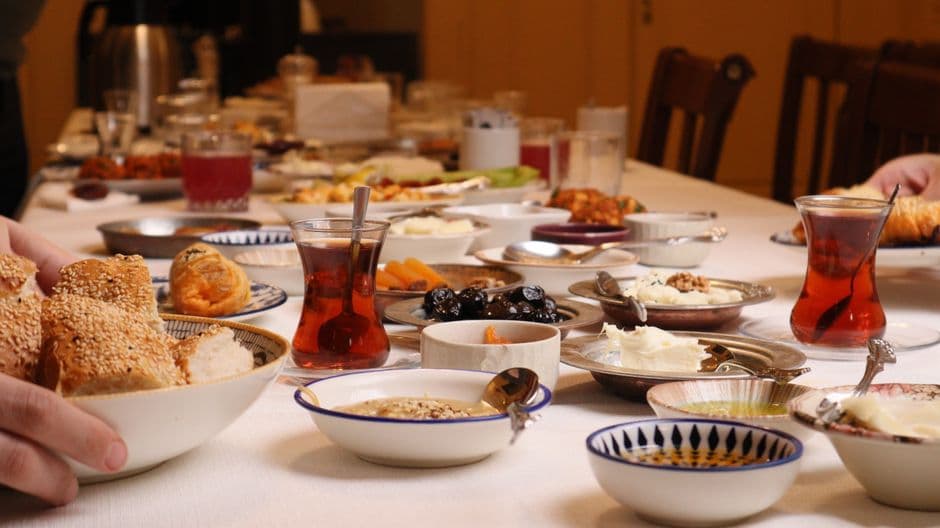
Türk Kahvaltısı (Turkish Breakfast Spread)
The iconic Turkish breakfast table — a lavish spread of cheeses, olives, eggs, tomatoes, cucumbers, honey, clotted cream, and fresh bread assembled for leisurely weekend mornings.
About This Recipe
Kahvaltı (literally 'before coffee' — kahve-altı) is not a single dish but a philosophy of morning hospitality: a generous spread of small plates covering every flavor register, designed for leisurely communal eating over çay (black tea) that stretches across an unhurried weekend morning. The Turkish breakfast table in its fullest expression — particularly the famous Van kahvaltısı from eastern Turkey, which can encompass 20-25 separate dishes — is one of the world's great morning meal traditions. A proper türk kahvaltısı anchors itself around several essential components: beyaz peynir (white brined cheese, sliced), kaşar peyniri (mild yellow cheese), siyah zeytin (black olives, marinated) and yeşil zeytin (green olives), taze domates (ripe sliced tomatoes), salatalık (cucumber), tereyağı (butter), bal (honey — ideally drizzled from the comb), kaymak (Turkish clotted cream, served alongside honey), and eggs in at least one preparation (menemen, fried, boiled, or herbed omelet). Fresh bread — a sesame simit or loaves of taze ekmek — is essential, supplemented by börek or simit. Çay (black tea from Rize province) flows continuously throughout. This recipe guides you through assembling and preparing a complete Turkish breakfast spread for 4-6 people.
Ingredients
Serves 4
- 200 gbeyaz peynir (Turkish white cheese)(or feta)
- 100 gkaşar peyniri (mild yellow cheese)(or aged cheddar)
- 100 gblack olives (siyah zeytin)(marinated in olive oil)
- 100 ggreen olives (yeşil zeytin)
- 3 largetomatoes(sliced)
- 1 largecucumber(sliced)
- 4 largeeggs(for menemen or fried)
- 3 tbspgood honey (ideally from the comb)
- 3 tbspkaymak (Turkish clotted cream)(or crème fraîche)
- 50 gbutter
- 2 wholetomatoes and 2 green peppers(for simple menemen)
- fresh breadsimit or crusty bread, for serving
- black teaRize çayı, brewed strong
Instructions
- 1
Lay Out the Cold Spread
Arrange sliced beyaz peynir and kaşar cheese on separate plates. Place olives (black and green) in small bowls. Slice tomatoes and cucumbers and arrange on a platter. Set out small dishes of honey and kaymak (together — they are always paired for dipping bread or simit). Place butter on a small plate.
The presentation of the kahvaltı table matters — take care to arrange colors attractively. The contrast of white cheese, black olives, red tomatoes, and green cucumber should be visually abundant.
- 2
Brew the Çay
Brew Turkish çay using a double-stacked teapot (çaydanlık): brew strong tea in the upper pot and use the lower pot with boiling water to dilute each cup to taste. Turkish breakfast tea should be strong, dark amber-red, and served in small tulip-shaped glasses. Keep the teapot hot throughout the meal.
- 3
Make Menemen
Heat 1 tbsp olive oil in a small pan. Add finely diced tomatoes and green peppers. Cook for 5 minutes until softened. Season with salt and pul biber. Crack in eggs and stir gently until softly scrambled but still creamy. Serve directly in the pan with a small spoon.
- 4
Warm the Bread
Warm bread or simit in a 180°C oven for 5 minutes or directly over a gas flame for 1 minute per side. Bread should be warm and slightly crusty at the table.
- 5
Serve and Linger
Set everything on the table simultaneously and let everyone eat freely, refreshing tea and bread throughout. A proper Turkish breakfast is not rushed — allow 45-90 minutes. The honey and kaymak are traditionally enjoyed by tearing a piece of warm bread, dipping it in honey, and taking a spoonful of kaymak.
Did you make this?
Rate it and help other cooks find the recipes that actually work.
One tap to sign in, and we'll save the rating you just picked.
Everything you need to plan your week — free
- Meal calendar
- Grocery list
- AI recipe ideas
Track what you eat
Snap your meal to log calories and macros, run fasting timers and track water in the free SnapCal app.
Pro Tips
- →
The beyond peynir should be genuine Turkish white cheese — its specific saltiness and firm-yet-crumbling texture are distinct from Greek feta, which is sharper and wetter.
- →
Honey quality makes a significant difference at the Turkish breakfast table — use a floral, complex honey rather than industrial blended honey.
- →
Strong çay is essential — weak tea is considered a hospitality failure. Brew in a double teapot (çaydanlık) if available.
Variations
- •
Van kahvaltısı style: add herb cheese (otlu peynir), pickled vegetables (turşu), scrambled eggs with bitter cheese, and walnut paste — the Van breakfast is Turkey's most elaborate.
- •
Börekli kahvaltı: add a portion of freshly baked su böreği or sigara böreği to the spread.
- •
Vegan: replace cheese and egg elements with hummus, more olive varieties, and roasted peppers.
Storage
Individual components keep well separately — cheese and olives for several days refrigerated, fresh vegetables for 1 day. Menemen is made fresh immediately before serving.
History & Origin
The Turkish breakfast tradition crystallized as a cultural institution during the late Ottoman period and became deeply embedded in Turkish domestic and café culture in the 20th century. The Van kahvaltısı of eastern Turkey achieved national and international fame in the 2000s through food media, elevating the concept to a cultural export. UNESCO recognized Turkish coffee culture in 2013, and the broader kahvaltı tradition is part of Turkey's rich living food heritage.
Frequently Asked Questions
What are the absolutely essential components of a Turkish breakfast?
The core non-negotiables are: beyaz peynir, black olives, fresh tomatoes and cucumbers, eggs (in some form), butter, honey with kaymak, and fresh bread. Tea (çay) is not optional — it is the organizing principle of the entire meal. Everything else — the additional cheeses, spreads, börek — is enhancement of this foundation.
What is kaymak and what can I substitute if I can't find it?
Kaymak is Turkish clotted cream — similar to British clotted cream but made from buffalo or cow milk, it has a very rich, slightly dense texture and mild flavor. It's traditionally paired with honey at the breakfast table. Clotted cream (Devon cream) is the closest substitute. Crème fraîche works in a pinch but is less rich. Mascarpone is another option.
Nutrition Facts
Per serving (450g / 15.9 oz) · 4 servings total
Time Summary
Have Questions?
Ask our AI cooking assistant anything about this recipe — substitutions, techniques, scaling.
Chat with AI Chef →Featured in Guides
This recipe is featured in the following curated guides:
More Turkish Recipes
You Might Also Like
Similar dishes from other cuisines around the world.
Browse by Ingredient
More recipes built around the same core ingredients.
Free Kitchen Tools
Calculators and converters that pair with this page — no signup needed.
Put This Into a Plan
Schedule it, shop for it, and track what you already have.
Read Next
Longer reads that go deeper on the ideas behind this dish.
Community
Join the conversation
Sign in to leave a comment and save your favourite recipes