
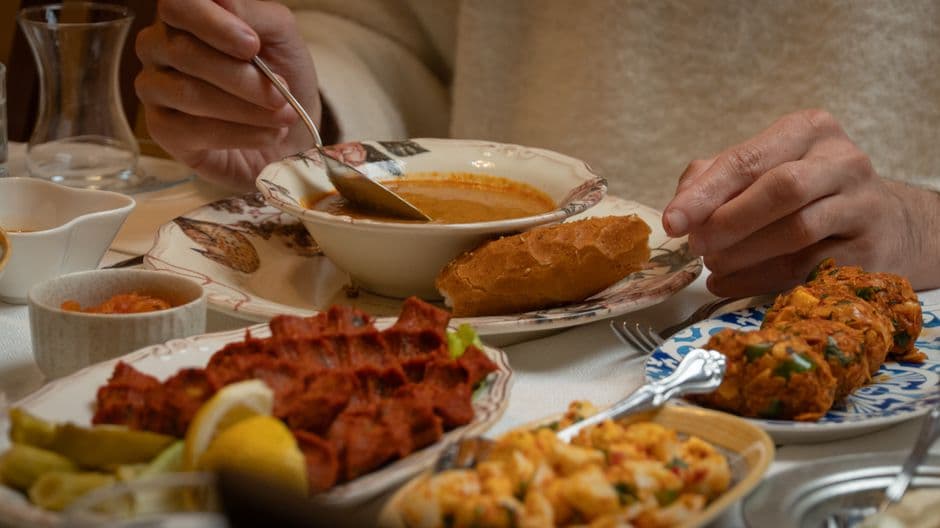
Kaleh Pacheh (Persian Head and Trotter Soup)
A deeply nourishing Persian dawn soup of slow-cooked sheep's head and trotters in a rich, gelatinous broth — one of Iran's most ancient and revered morning foods.
About This Recipe
Kaleh pacheh (کلهپاچه — 'head and feet') is one of the most ancient and culturally significant foods in Iranian and broader Middle Eastern cuisine. This intensely rich, gelatinous soup is made by simmering a sheep's (or lamb's) whole head, brain, and trotters (feet) for 8-12 hours in water with only onion, turmeric, and salt — the long cooking draws out collagen from the bones and connective tissue, creating a broth of extraordinary depth and body that sets solid when chilled. It is traditional eaten at dawn (before the fajr prayer) or for breakfast in Iran, Turkey's southeastern Kurdish regions, and across the former Ottoman world. Kaleh pacheh is not a simple or casual dish — it requires advance planning, specialty butchery, and hours of patient cooking. But for those who love it, it represents something irreplaceable: the profound, savory, mineral-rich quality that only emerges from long-cooked offal and bones. The broth is served with the cooked meats pulled apart and placed in the bowl, dressed with lime juice, dried mint, and crushed garlic. In Turkey, the equivalent dish is known as kelle-paça çorbası and is served by specialty restaurants (işkembeci) that open in the early morning hours for laborers, night-shift workers, and those returning from late evenings. The Turkish version is well-documented in Istanbul's historic food culture.
Ingredients
Serves 6
- 1 wholelamb or sheep's head(cleaned and split by the butcher)
- 4 wholelamb trotters (feet)(cleaned, hair removed)
- 1 largeonion(halved)
- 1 tspturmeric
- 1.5 tspsalt(more to taste at the end)
- 3 clovesgarlic(for serving, crushed)
- 2 wholelimes or lemons(for serving, cut into wedges)
- 1 tspdried mint(for serving)
- fresh flatbreadfor serving
Instructions
- 1
Clean and Blanch
Ensure the head and trotters have been thoroughly cleaned by the butcher (hair burned and removed, inner ear canal cleaned). Blanch in boiling water for 5 minutes, drain, and rinse under cold water to remove any remaining impurities. This initial blanching produces a cleaner, less gamey broth.
Ask your butcher to split and clean the head and clean the trotters — this preparation is beyond a home cook's tools.
- 2
Begin the Long Cook
Place head pieces and trotters in a very large pot. Add onion, turmeric, and enough cold water to cover by 10cm. Bring to a boil, skimming off all the grey foam that rises. Once skimmed clean, reduce to the lowest possible simmer. Partially cover and cook for 8-10 hours (overnight is traditional).
- 3
Add Salt at the End
Do not add salt until the last 30 minutes of cooking — adding salt early inhibits collagen extraction and can toughen the meat. After 8+ hours, the meat should be falling off the bone and the broth should be thick, golden, and deeply aromatic. Season with salt at this point, taste, and adjust.
- 4
Remove and Pick the Meats
Remove all pieces from the broth. Pick the meat carefully from the head bones — cheek meat, tongue, and brain are all included traditionally. Trotters yield gelatinous meat from between the bones. Arrange the picked meats in bowls.
- 5
Serve at Dawn
Ladle the hot broth over the meats in bowls. Accompany with crushed garlic, dried mint, and lime wedges on the side — each person seasons their own bowl according to preference. Serve with fresh flatbread for tearing and dipping. Traditionally consumed as the morning's first meal.
Did you make this?
Rate it and help other cooks find the recipes that actually work.
One tap to sign in, and we'll save the rating you just picked.
Everything you need to plan your week — free
- Meal calendar
- Grocery list
- AI recipe ideas
Track what you eat
Snap your meal to log calories and macros, run fasting timers and track water in the free SnapCal app.
Pro Tips
- →
The overnight cook is genuinely important — 5-6 hours produces an acceptable broth but 10+ hours gives the fully gelatinous, deeply complex result that makes this dish extraordinary.
- →
Skimming the initial foam thoroughly is critical for a clean, non-bitter broth — this stage takes 20-30 minutes of attention.
- →
Use the broth's natural collagen power: cool a small bowl of the broth in the refrigerator — it should set to a soft jelly, confirming proper extraction.
Variations
- •
Paça çorbası: use only trotters (paça) for a somewhat milder, less confrontational version that still produces a beautifully gelatinous broth.
- •
Spiced version: add 2 cinnamon sticks and 4 cardamom pods to the broth for a Persian-style spiced variation.
- •
Turkish işkembeci style: serve alongside a bowl of sheep stomach (işkembe) soup with the same accompaniments.
Storage
The broth and meats keep refrigerated for 4-5 days. The broth will solidify into a rich jelly when cold — gently reheat in a pot. The cold jelly is also considered a delicacy eaten cold with bread in some traditions.
History & Origin
Kelle-paça (kaleh-pacheh) is documented in Turkish and Persian cookbooks from at least the 15th century, and the practice of eating slow-cooked offal soups at dawn is ancient — appearing across Ottoman palace records, traveler accounts of Istanbul's night market, and Persian culinary manuscripts. The dish represents one of the oldest documented approaches to whole-animal cooking: a zero-waste philosophy of extracting maximum nutrition and flavor from every part of the animal. Specialized kelle-paçacı restaurants in Istanbul have operated continuously for centuries.
Frequently Asked Questions
Is kaleh pacheh difficult to make at home?
The cooking itself is simple — just water, low heat, and time. The challenges are sourcing the ingredients (requiring a specialist butcher who can provide cleaned head and trotters), the 8-10 hour cooking time (best done overnight), and the psychological barrier for those unfamiliar with offal cooking. The technique itself is not complicated.
Why is kelle-paça traditionally eaten in the early morning?
The tradition of dawn offal soups appears throughout many food cultures. Practically, these rich, gelatinous, protein-heavy soups were consumed by laborers, butchers, and market workers who started work before dawn. They also gained a reputation as a cure for a late night's excesses — the gelatin and minerals are genuinely restorative. Istanbul's işkembeci restaurants still open at 2-3am to serve this purpose.
Nutrition Facts
Per serving (500g / 17.6 oz) · 6 servings total
Time Summary
Have Questions?
Ask our AI cooking assistant anything about this recipe — substitutions, techniques, scaling.
Chat with AI Chef →More Turkish Recipes
You Might Also Like
Similar dishes from other cuisines around the world.
Browse by Ingredient
More recipes built around the same core ingredients.
Free Kitchen Tools
Calculators and converters that pair with this page — no signup needed.
Put This Into a Plan
Schedule it, shop for it, and track what you already have.
Read Next
Longer reads that go deeper on the ideas behind this dish.
Community
Join the conversation
Sign in to leave a comment and save your favourite recipes