
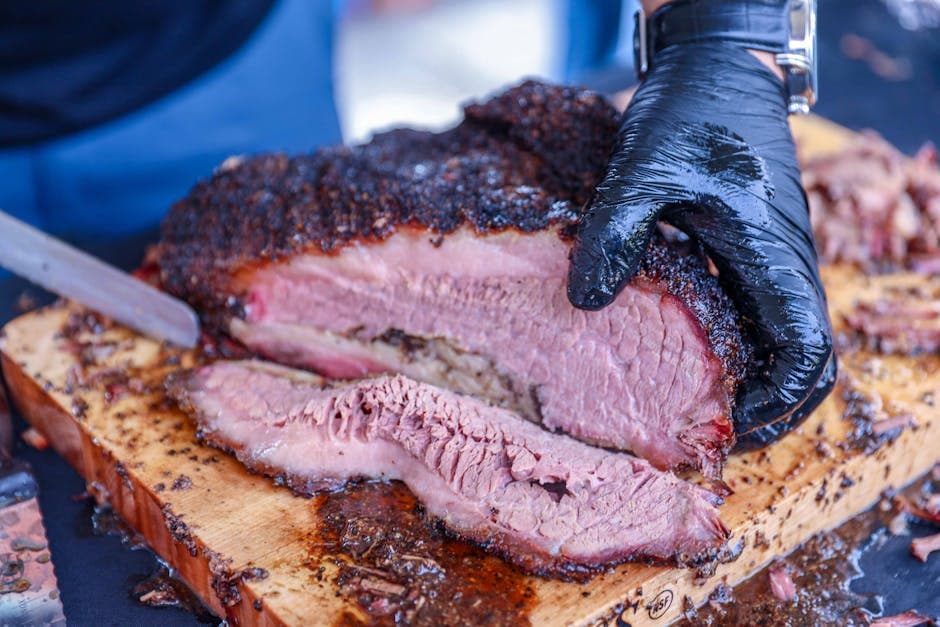
Kansas City Burnt Ends (Twice-Smoked Brisket Point)
Cubes of brisket point smoked, sauced and returned to the smoker until they caramelize into mahogany-glazed candy of beef.
About This Recipe
Burnt ends began as a Kansas City accident: the fatty point end of a smoked brisket was often too rich to slice and serve, so pitmasters at Arthur Bryant's barbecue legend in the 1970s would cube the trimmings, drench them in sauce, and toss them out for customers to nibble on while waiting in line. Calvin Trillin's 1972 Playboy essay declared them the best food in America, and overnight the giveaway scraps became a menu headliner across Kansas City and eventually the country. The modern method is intentional: smoke a whole brisket point (or buy a separate point), cube it after the initial smoke, toss with a brown-sugar barbecue sauce, return to the smoker in a foil pan, and let the sugar caramelize and the fat render further until each cube is mahogany-glazed, jiggly inside and crusty outside. The texture should be near-shreddable but still cube-shaped, the sauce sticky and reduced. Served on butcher paper with white bread and pickles, they're the most decadent thing American barbecue has produced — sweet, smoky, salty, fatty, and impossible to stop eating.
Ingredients
Serves 8
- 2.5 kgbrisket point (or whole packer, point separated after first smoke)
- 3 tbspcoarse kosher salt
- 3 tbspcoarse black pepper
- 2 tbspbrown sugar
- 1 tbspsmoked paprika
- 2 tspgranulated garlic
- 240 mlKansas City-style barbecue sauce (KC Masterpiece, Gates, or homemade)
- 60 mlbeef tallow or rendered brisket fat
- 3 tbsphoney
- 1 tbspapple cider vinegar
Instructions
- 1
Season the point
Combine salt, pepper, brown sugar, paprika and garlic in a shaker. Coat the brisket point heavily on all sides — the sugar adds bark depth here unlike pure central Texas style. Let rest at room temperature 30 minutes while the smoker comes up to heat.
- 2
Smoke the point
Set the smoker to 110°C / 225°F with post oak or hickory. Place the point fat-side up and smoke undisturbed for about 5–6 hours, until the internal temperature reaches 75°C / 167°F and a dark bark has formed. Spritz with apple cider vinegar every hour after the first 3 hours.
- 3
Wrap and push
Wrap the point in pink butcher paper or foil with a splash of beef tallow. Return to the smoker and cook until probe-tender at around 96°C / 205°F internal, usually another 2–3 hours. The connective tissue must be fully rendered for cubing.
If using foil instead of paper, the bark will soften — accept it; the second smoke restores crust.
- 4
Rest briefly
Pull from the smoker and let rest, still wrapped, for 30 minutes. Unlike a sliced brisket, burnt ends don't need a long rest because they'll cook again — but they do need to firm up enough to cube cleanly.
- 5
Cube into burnt ends
Unwrap on a cutting board, reserving any rendered fat. Cut the point into 2.5–3 cm cubes — they'll look enormous, but they shrink dramatically. Pile cubes into a half-sized aluminum foil pan in a single deep layer.
- 6
Sauce generously
In a small saucepan, warm the barbecue sauce with honey, vinegar and the reserved tallow until just liquid. Pour over the cubes and toss gently to coat. Each cube should glisten — sauce-soaked but not swimming.
- 7
Smoke again
Return the uncovered pan to the smoker at 120°C / 250°F for 60–90 minutes. The sauce reduces, the cubes caramelize, and the edges crisp into the namesake 'burnt' candy crust. Toss once at the halfway mark.
- 8
Serve immediately
Pull the pan and let cubes rest 5 minutes — the sauce will thicken to a glaze. Pile onto a piece of butcher paper with white bread, pickles and raw onion. Eat with fingers or a fork; they don't last long enough for plates.
Did you make this?
Rate it and help other cooks find the recipes that actually work.
One tap to sign in, and we'll save the rating you just picked.
Everything you need to plan your week — free
- Meal calendar
- Grocery list
- AI recipe ideas
Track what you eat
Snap your meal to log calories and macros, run fasting timers and track water in the free SnapCal app.
Pro Tips
- →
If your butcher won't sell just the point, buy a whole packer brisket, cook it whole, then separate the point for burnt ends after the first smoke and slice the flat for sandwiches — best of both worlds.
- →
Sweet sauce is traditional in Kansas City — don't substitute a Carolina vinegar sauce here; the caramelization is the point.
- →
Don't skip the second smoke. Saucing alone won't get you the candy bark — only sustained heat over an hour does.
- →
Save any rendered tallow that drips during smoking — it's pure flavor and makes excellent sauce, popcorn topping or sear oil.
Variations
- •
Pork belly burnt ends: substitute 1.5 kg cubed pork belly — much faster (4–5 hours total) and incredibly rich.
- •
Spicy KC: add 2 tsp cayenne and a tablespoon of hot honey to the sauce for heat-forward burnt ends.
- •
Bourbon-glaze: replace honey with 60 ml bourbon and a tablespoon of molasses for a smokier, boozier glaze.
- •
Chuck roast burnt ends ('poor man's'): substitute a 2 kg beef chuck roast — cheaper, slightly less rich but excellent.
Storage
Refrigerate in a sealed container with a splash of sauce for up to 4 days. Freeze in a single layer on a tray, then transfer to a freezer bag for up to 3 months. Reheat in a 160°C / 325°F oven covered with foil for 15 minutes.
History & Origin
Burnt ends were invented at Arthur Bryant's Barbecue in Kansas City in the 1950s–60s as scraps given away to waiting customers, then immortalized by Calvin Trillin's 1972 Playboy essay 'No! One of the Amazing Truths About Kansas City'. They became a menu item nationwide after Joe's Kansas City (then Oklahoma Joe's) popularized them in the 1990s.
Frequently Asked Questions
Do I have to use brisket point?
Point is traditional and ideal because its fat content gives the right texture. Chuck roast is the popular 'poor man's' substitute. Flat alone is too lean and turns dry.
Can I make burnt ends in the oven?
Yes, with compromise. Cook a seasoned point at 135°C / 275°F until probe-tender (6–8 hours), cube and sauce, then finish on a sheet pan at 220°C / 425°F for 20 minutes. You'll miss smoke flavor; add 1 tsp liquid smoke to the sauce to compensate.
Why are my burnt ends dry?
Either you cubed from the flat instead of the point, or you didn't render the connective tissue long enough in the first smoke. The point should probe like soft butter before cubing.
Can I prep ahead?
Smoke the point a day ahead, refrigerate whole and wrapped, then cube cold (easier than warm), sauce, and do the second smoke the day of serving. Restaurant pitmasters often work this way.
Nutrition Facts
Per serving (200g / 7.1 oz) · 8 servings total
Time Summary
Have Questions?
Ask our AI cooking assistant anything about this recipe — substitutions, techniques, scaling.
Chat with AI Chef →Featured in Guides
This recipe is featured in the following curated guides:
More American Recipes
You Might Also Like
Similar dishes from other cuisines around the world.
Browse by Ingredient
More recipes built around the same core ingredients.
Free Kitchen Tools
Calculators and converters that pair with this page — no signup needed.
Put This Into a Plan
Schedule it, shop for it, and track what you already have.
Read Next
Longer reads that go deeper on the ideas behind this dish.
Community
Join the conversation
Sign in to leave a comment and save your favourite recipes