
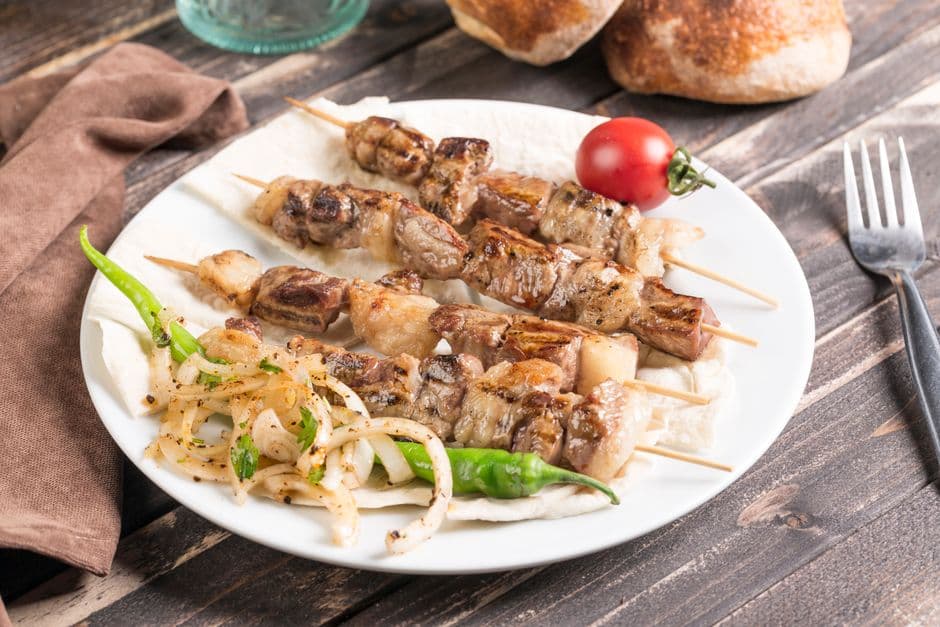
Kapama (Turkish Slow-Braised Lamb with Spring Onions)
Whole pieces of lamb braised with spring onions, herbs, and white wine until falling-tender — a festive Ottoman braising dish made at Hıdrellez and spring celebrations.
About This Recipe
Kapama (from the Turkish 'kapamak' — to cover, to seal) is a traditional Turkish braising technique and dish name: meat and vegetables sealed in a pot and slow-cooked until everything inside becomes deeply tender and fragrant from their own steam and juices. The spring lamb kapama is the most celebrated version, traditionally prepared at Hıdrellez (the Turkish-Balkan spring festival celebrated on May 6) when lamb and spring onions are both at their peak. The technique is essentially Turkish braising at its most elemental: a whole leg or shoulder of young lamb is placed in a heavy pot with abundant spring onions (yeşil soğan), fresh dill, and sometimes a handful of fresh mint. A small amount of liquid — traditionally white wine (particularly in the Balkans and Aegean), or water with lemon — is added. The pot is sealed tightly (traditionally with a flour-and-water paste around the lid, giving kapama its name from the sealing action) and placed over low heat or in a moderate oven for 2-3 hours until the lamb is extraordinarily tender. The spring onions almost dissolve into the braising juices, creating a light, herbaceous sauce. The dish captures the essence of spring: tender young lamb, fresh green onion, and aromatic dill.
Ingredients
Serves 6
- 1.5 kgbone-in lamb shoulder or leg(cut into large pieces or left whole)
- 3 large bunchesspring onions (yeşil soğan)(trimmed, whole)
- 1 large bunchfresh dill(roughly chopped)
- 1/2 bunchfresh mint(optional)
- 100 mldry white wine or water with 2 tbsp lemon juice
- 3 tbspolive oil or butter
- 1.5 tspsalt
- 1/2 tspblack pepper
- 1/2 tspallspice
Instructions
- 1
Brown the Lamb
Season lamb pieces generously with salt, pepper, and allspice. Heat olive oil in a large heavy-bottomed pot or Dutch oven over medium-high heat. Brown the lamb on all sides until deep golden — about 10-12 minutes total. Remove and set aside.
- 2
Build the Bed of Onions and Herbs
In the same pot, lay the whole spring onions in a single even layer at the bottom. This creates a fragrant bed that prevents the lamb from scorching and flavors the braising juices.
- 3
Layer and Seal
Place the browned lamb on top of the spring onions. Scatter the dill (and mint if using) over and around the lamb. Pour in the wine or lemon water. Cover tightly with the lid. For extra authenticity, press a ring of soft flour dough around the pot-lid join to seal it — kapama means 'sealed.'
The sealed pot technique ensures all the steam stays inside, self-basting the lamb throughout the long cook.
- 4
Slow Braise
Cook over the lowest possible stovetop heat for 2-2.5 hours, or in a 160°C oven for 2.5 hours. Do not open the lid during cooking. The lamb is ready when it is completely falling off the bone and the onions have dissolved into the juices.
- 5
Rest and Serve
Let the kapama rest, still sealed, for 10 minutes before opening. Serve directly from the pot, with the collapsed spring onions and fragrant green-tinged braising juices poured over the lamb. Accompany with rice pilav or bread.
Did you make this?
Rate it and help other cooks find the recipes that actually work.
One tap to sign in, and we'll save the rating you just picked.
Everything you need to plan your week — free
- Meal calendar
- Grocery list
- AI recipe ideas
Track what you eat
Snap your meal to log calories and macros, run fasting timers and track water in the free SnapCal app.
Pro Tips
- →
Young spring lamb (kuzu) specifically is traditional — the meat is more tender and has a milder, sweeter flavor than older lamb.
- →
The sealing technique (wrapping flour dough around the lid) is a genuine technique that traps all steam and flavors inside — worth trying for a special occasion.
- →
Resist the urge to open the lid during cooking — every opening releases steam and flavor that won't return.
Variations
- •
Chicken kapama: use a whole chicken on a bed of spring onions and dill — reduce cooking time to 60-70 minutes in a 180°C oven.
- •
Kereviz kapama: make a vegetarian version with celeriac (kereviz), spring onions, olive oil, and lemon — a classic zeytinyağlı preparation.
- •
Hıdrellez style: serve outdoors with bread and yogurt as part of a spring picnic — the traditional occasion for this dish.
Storage
Kapama keeps refrigerated for 3 days and reheats beautifully — the braising juices become even more concentrated and flavorful. Reheat covered over low heat with a splash of water.
History & Origin
Kapama appears in Ottoman court and household cookbooks from the 17th century onward, and the spring lamb version is specifically associated with Hıdrellez — the Turkish-Balkan and Romani celebration of spring on May 5-6. The name and technique reflect the Ottoman-Balkans culinary tradition, and versions of kapama appear in Turkish, Bulgarian, and Macedonian cuisines. The sealing of the pot with dough is a technique documented in Ottoman palace kitchen records, where it was used for elaborate braised preparations.
Frequently Asked Questions
Can I make kapama in a slow cooker?
Yes — a slow cooker is ideal for kapama. Brown the lamb in a pan first for flavor, then transfer to the slow cooker with the spring onions, herbs, and liquid. Cook on LOW for 6-8 hours. The natural seal of the slow cooker lid achieves the same effect as the traditional flour-paste sealing technique.
What makes kapama different from regular braised lamb?
The defining features are the bed of whole spring onions (which essentially dissolve and form the sauce), the abundance of fresh dill as the primary herb, and the sealed-pot technique. Most braised lamb recipes use carrots, onion, and garlic. Kapama's spring onion-and-dill profile gives it a distinctly fresh, green, seasonal character.
Nutrition Facts
Per serving (360g / 12.7 oz) · 6 servings total
Time Summary
Have Questions?
Ask our AI cooking assistant anything about this recipe — substitutions, techniques, scaling.
Chat with AI Chef →Featured in Guides
This recipe is featured in the following curated guides:
More Turkish Recipes
You Might Also Like
Similar dishes from other cuisines around the world.
Browse by Ingredient
More recipes built around the same core ingredients.
Free Kitchen Tools
Calculators and converters that pair with this page — no signup needed.
Put This Into a Plan
Schedule it, shop for it, and track what you already have.
Read Next
Longer reads that go deeper on the ideas behind this dish.
Community
Join the conversation
Sign in to leave a comment and save your favourite recipes