
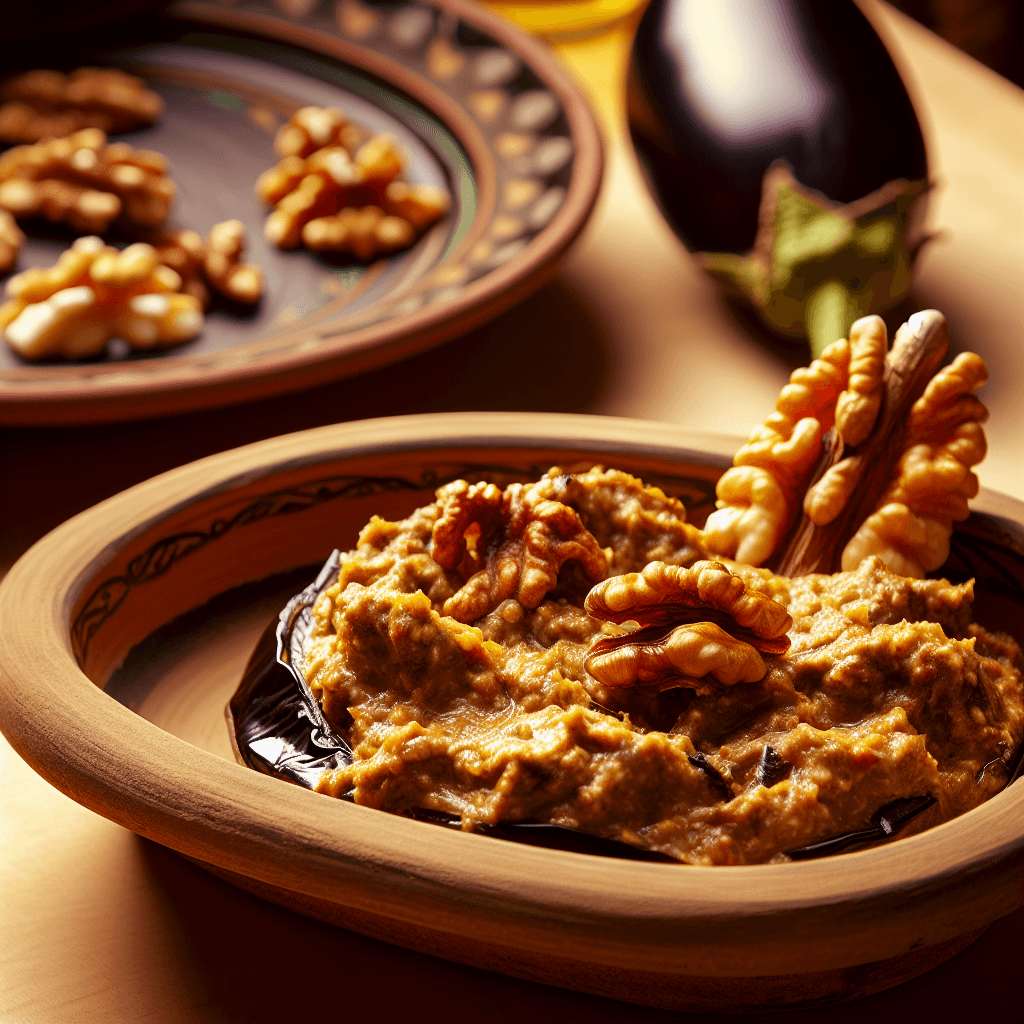
Kashk-e Bademjan Dip
Persian eggplant dip with walnut and kashk — smoky, tangy, complex.
About This Recipe
Kashk-e bademjan — literally 'whey with eggplant' — is one of Iran's most beloved appetizers, a warm, smoky dip that turns two humble ingredients into something genuinely luxurious. Eggplants are roasted until their flesh collapses into silk, then mashed with deeply caramelized onions, garlic, and walnuts. The defining ingredient is kashk, a thick fermented whey with a salty, intensely savory tang somewhere between sour cream and aged cheese; swirled in, it lifts the sweet eggplant and onion into sharp relief. The finished dip is crowned with more golden onions, a drizzle of mint-infused oil, and ribbons of kashk, then scooped up with warm lavash or sangak bread. It appears at Iranian parties, restaurants, and family sofrehs alike.
Ingredients
Serves 6
- 4 largeeggplants
- 1/2 cupkashk or Greek yogurt
- 2 largeonions, sliced
- 1/4 cupoil
- 4 clovesgarlic, minced
- 1/4 cupwalnuts, chopped
- 1 tspdried mint
- 1 tspsalt
Instructions
- 1
Roast the eggplant
Pierce the eggplants several times with a fork and roast at 200°C (400°F) for about 40 minutes, turning once, until the skins are blistered and the flesh has completely collapsed. Let them cool slightly, then scoop out the soft flesh and roughly chop it, discarding the skins.
For real smokiness, char the eggplants directly over a gas flame or grill before finishing in the oven.
- 2
Caramelize the onions
Fry the sliced onions in oil over medium heat, stirring often, for a patient 20–25 minutes until deeply golden brown and sweet — not just softened. Stir in the garlic for the final 2 minutes. Reserve half the onion mixture for topping.
The onions should be the color of dark honey; this slow caramelization is the dip's flavor foundation.
- 3
Combine and cook
Return the remaining onions to the pan with the eggplant flesh and walnuts. Mash everything together with a fork or potato masher and cook over low heat for 5–10 minutes so the flavors marry. Stir in most of the kashk, reserving a spoonful for garnish, and season with salt.
Kashk is salty — taste before adding more salt.
- 4
Garnish and serve
Briefly sizzle the dried mint in a spoonful of hot oil — just 10–15 seconds so it doesn't burn. Spread the warm dip on a plate, top with the reserved fried onions, the mint oil, a drizzle of kashk, and extra walnuts. Serve warm with lavash or any flatbread.
Did you make this?
Rate it and help other cooks find the recipes that actually work.
One tap to sign in, and we'll save the rating you just picked.
Everything you need to plan your week — free
- Meal calendar
- Grocery list
- AI recipe ideas
Track what you eat
Snap your meal to log calories and macros, run fasting timers and track water in the free SnapCal app.
Pro Tips
- →
Charring the eggplant over an open flame before roasting adds the smoky depth Iranians prize in this dish.
- →
Take the onions to a true deep gold — pale onions make a flat, one-dimensional dip.
- →
Kashk is quite salty on its own, so always taste before seasoning.
- →
Fry the dried mint in oil for only a few seconds; burnt mint turns bitter and dark.
- →
Serve the dip warm rather than cold — gentle heat brings the eggplant and kashk flavors alive.
Variations
- •
Scatter pomegranate seeds over the top for bursts of sweet-tart contrast against the rich dip.
- •
Add a pinch of saffron bloomed in hot water to the kashk drizzle for a more festive presentation.
- •
Make a lighter version with thick Greek yogurt instead of kashk for a milder, fresher tang.
- •
Halve and fry the eggplants instead of roasting them for the richer, restaurant-style texture.
Storage
Refrigerate in an airtight container for up to 4 days; the flavor actually deepens by the second day. Reheat gently in a pan or microwave and refresh the garnishes — fried onion, mint oil, and a new drizzle of kashk — before serving.
History & Origin
Kashk-e bademjan has deep roots in Iranian cooking, where both eggplant — cultivated in Persia for over a millennium — and kashk, the preserved whey of nomadic dairy tradition, are ancient staple ingredients. Kashk allowed herders to keep dairy through long winters, and pairing it with eggplant became a classic of the home kitchen. Today the dip is a fixture of Iranian restaurant menus and party spreads, served warm as a starter before kebabs and stews.
Frequently Asked Questions
What is kashk and where do I find it?
Kashk is a thick, fermented dairy product made from drained yogurt or whey, with an intensely savory, salty tang unlike anything in Western dairy aisles. It's sold in jars (liquid) or hard dried balls at Persian and Middle Eastern grocery stores; the liquid form is easiest to use. Dried kashk must be soaked and blended with hot water until smooth before being stirred into the dip.
What can I substitute for kashk?
Nothing replicates kashk exactly, but good approximations exist. Thick Greek yogurt mixed with a teaspoon of crumbled feta gets close to the salty-tangy profile, and sour cream with a little grated parmesan is another workable stand-in. The dip will be milder and creamier than the original, but still delicious — just remember to compensate with a bit more salt.
Should kashk-e bademjan be served hot or cold?
Warm is traditional and noticeably better. Gentle heat loosens the texture, amplifies the smoky eggplant, and softens kashk's sharpness into something rounder and more savory. Straight from the refrigerator the dip tastes muted and stiff. Reheat leftovers in a pan over low heat with a splash of water, then re-garnish with fried onions and mint oil before serving.
How is this different from baba ganoush?
Both are mashed roasted-eggplant dips, but they diverge sharply in flavor. Baba ganoush is Levantine, served cold or room temperature, and built on tahini, lemon, and raw garlic for a bright, nutty profile. Kashk-e bademjan is Iranian, served warm, and layered with caramelized onions, walnuts, fried mint, and fermented kashk — deeper, richer, and more savory-funky than its Arab cousin.
Nutrition Facts
Per serving (250g / 8.8 oz) · 6 servings total
Time Summary
Have Questions?
Ask our AI cooking assistant anything about this recipe — substitutions, techniques, scaling.
Chat with AI Chef →Featured in Guides
This recipe is featured in the following curated guides:
More Persian Recipes
You Might Also Like
Similar dishes from other cuisines around the world.
Browse by Ingredient
More recipes built around the same core ingredients.
Free Kitchen Tools
Calculators and converters that pair with this page — no signup needed.
Put This Into a Plan
Schedule it, shop for it, and track what you already have.
Read Next
Longer reads that go deeper on the ideas behind this dish.
Community
Join the conversation
Sign in to leave a comment and save your favourite recipes