
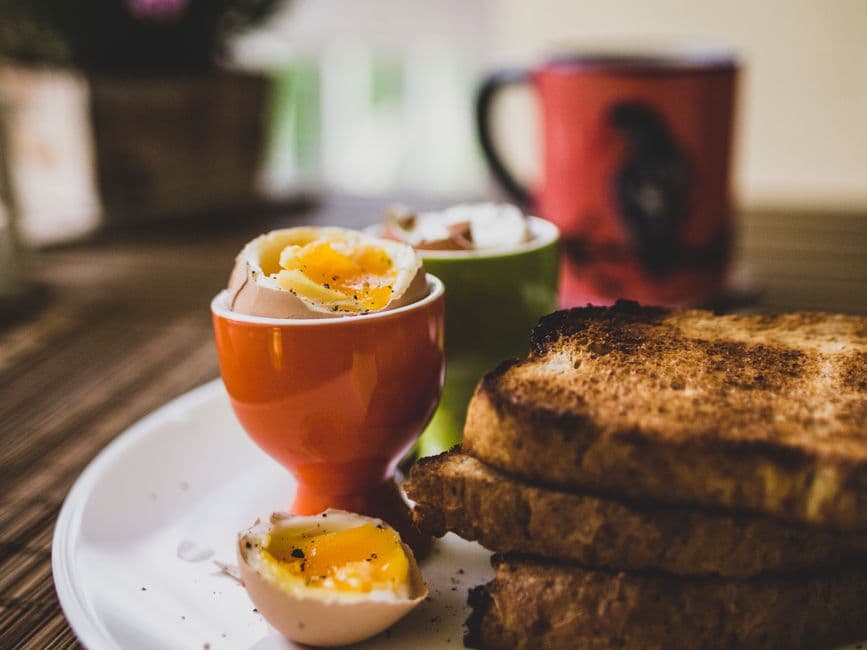
Singaporean Kaya Toast Breakfast (Coconut Jam Toast with Soft Eggs & Kopi)
Singapore's national breakfast — crisp toasted bread sandwiching cold butter and emerald coconut-pandan kaya jam, served with soft-cooked eggs in soy and white pepper, and strong kopi coffee.
About This Recipe
Kaya toast is the morning ritual of Singapore — a breakfast set so beloved and codified that it is served at kopitiams (traditional coffee shops) and Ya Kun Kaya Toast outlets across the island, eaten by office workers in suits and grandmothers in cotton pajamas alike. The set is unwavering in its composition: two thin slices of toasted white bread sandwiching a thick smear of kaya (a custardy jam made from coconut milk, eggs, sugar and pandan leaves, with a vivid green color and a tropical, almost caramel sweetness) and a thick slab of cold salted butter that doesn't melt but sits in cool ribbons against the warm toast. Alongside come two soft-cooked eggs — boiled or steamed for exactly 6 minutes so the whites barely set and the yolks remain liquid — cracked into a small bowl, splashed with dark soy sauce and a generous dust of ground white pepper, and eaten with a small spoon. To drink, kopi: thick, sweet, condensed-milk coffee made from beans roasted with sugar and margarine for that signature smoky-bitter Singaporean depth. The order is part of a ritual: the toast goes into the kaya, the egg goes into the soy, the kopi sits steaming, and the breakfast is eaten in any order you like — but most regulars dip a corner of the buttered kaya toast into the soft egg, creating a kind of accidental ice-cream-sandwich of breakfast flavors. It is the kind of dish that defines a city, and any visitor to Singapore who skips it has missed the point.
Ingredients
Serves 2
- 4 thin slicessoft white sandwich bread (Gardenia or similar), 1 cm thick
- 60 gcold salted butter, sliced into 4 thick slabs
- 8 tbspkaya jam (pandan or Hainanese style)(Yeo's, Glory, or homemade — see history below)
- 4 largevery fresh eggs, room temperature
- 2 tspdark soy sauce (kicap manis or thick Singapore-style)(or regular dark soy)
- ground white pepper, to dust the eggs
- 4 tspinstant or strong brewed coffee
- 4 tbspsweetened condensed milk
- 400 mlvery hot water, for the kopi
Instructions
- 1
Cook the soft eggs
Bring a small saucepan of water to a gentle boil. Place the eggs in a heatproof bowl and pour the just-boiled water over them to fully submerge. Cover the bowl with a plate and let sit for exactly 10 to 11 minutes — this Singapore-style steam-poach gives the signature barely-set white and runny golden yolk. Do not boil the eggs on a hard simmer; the gentle heat is the whole technique.
- 2
Toast the bread
Toast the bread slices in a toaster, on a grill, or over an open flame until the surface is crisp and lightly golden on both sides but the interior is still soft — about 90 seconds per side under a grill. Traditionalists use a charcoal-fired bread toaster for a smokier crust; at home, a good toaster oven works.
- 3
Build the toast sandwich
While the toast is still hot, lay 2 slices on a board and immediately spread each with a thick layer of kaya — about 2 tablespoons per slice, going right to the edges. Lay 2 cold butter slabs on top of the kaya on each base slice. The butter should not melt; it should sit as cool ribbons against the warm bread, providing temperature and textural contrast.
- 4
Close the sandwich
Top with the second slice of toast, kaya-side facing down toward the butter. Press lightly. Cut each sandwich into 3 finger-shaped strips for easy dipping (the traditional kopitiam presentation). The finished toast should feel substantial — warm bread, cool butter, sweet jam — with no slice ever soaking through.
- 5
Crack and season the eggs
Crack each soft-cooked egg into a small bowl or saucer — there should be 2 eggs per person in a single bowl. The whites should be just-set with a wobble, the yolks bright and liquid. Drizzle ½ teaspoon dark soy sauce over each bowl and shake a generous dust of white pepper across the top. Do not stir; the soy and pepper should sit in pools.
- 6
Make the kopi
In each of two coffee cups or mugs, add 2 teaspoons of strong coffee (or instant) and 2 tablespoons of sweetened condensed milk. Pour over 200 ml of very hot water and stir until the condensed milk is fully dissolved. Authentic kopi uses Robusta beans roasted in butter and sugar (look for Killiney or Yeo's brand); regular dark roast works for the home version.
- 7
Plate the breakfast
Arrange each setting with the strips of kaya toast on one side of the plate, the bowl of soft eggs alongside, and the cup of hot kopi positioned to the right. The egg bowl traditionally comes with a small spoon; the toast is eaten with the hands.
- 8
Eat in the Singapore way
Dip a finger of kaya toast directly into the soft eggs, letting the yolk and soy coat the bread — the sweet kaya and savory egg are the magic combination. Alternate bites with sips of strong, sweet kopi. The whole breakfast should be eaten in about 10 minutes, the eggs while still warm, the toast while still crisp.
Did you make this?
Rate it and help other cooks find the recipes that actually work.
One tap to sign in, and we'll save the rating you just picked.
Everything you need to plan your week — free
- Meal calendar
- Grocery list
- AI recipe ideas
Cook this hands-free
Get AI meal plans, step-by-step cooking mode, and your saved recipes in the free Bento app.
Pro Tips
- →
The butter must be cold and thick — soft melted butter ruins the temperature contrast that defines kaya toast. Slice it ahead and keep refrigerated until the moment of assembly.
- →
Cook the eggs by steam-poaching in just-boiled water rather than hard-boiling — the residual heat sets the whites without overcooking the yolks. Set a precise timer; 10 to 11 minutes is the sweet spot.
- →
Dark soy sauce — thick, slightly sweet, often labeled 'kicap manis' or 'dark mushroom soy' — is the right finish for the eggs. Regular soy is too thin and salty.
- →
Homemade kaya is dramatically better than store-bought if you have the time — it takes about 90 minutes of slow stirring over a double boiler. Many recipes online; pandan leaves are essential for the green color and aromatic flavor.
Variations
- •
Hainanese kaya toast: uses brown-sugar caramelized kaya without pandan — a darker, more caramel-flavored version popular at Ya Kun outlets.
- •
Steamed kaya toast: instead of toasting, the bread is steamed soft and the kaya melts into it — a Killiney-style alternative for those who find the toast too crisp.
- •
Add a slice of cured ham (Bak Kwa, sweet Singaporean pork jerky) between the kaya layers for a sweet-savory upgrade.
- •
Modern Singapore cafés serve kaya toast on brioche or French toast for a richer, dessert-leaning version.
Storage
Assembled kaya toast must be eaten immediately — the butter will melt and the toast will go soggy within minutes. Kaya jam keeps refrigerated 2 weeks (homemade) or up to the use-by date if commercial. Soft eggs are made fresh; they don't reheat. The whole set is a 15-minute commitment that should be done all at once.
History & Origin
Kaya toast originated in the Hainanese community of British colonial Singapore in the early 20th century. Hainanese cooks who worked in British households learned to make western-style toast and bread, and adapted it for Hainanese-style breakfast by spreading it with kaya — a coconut-egg jam they had brought from southern China and refined with the Southeast Asian pandan leaf. Coffee shops opened by Hainanese immigrants codified the breakfast set with kopi and soft eggs, and chains like Ya Kun Kaya Toast (founded 1944) and Killiney Kopitiam (founded 1919) elevated it to a national institution. Today kaya toast is one of Singapore's most recognized culinary exports and has spread to Malaysia, Indonesia and the global Singaporean diaspora.
Frequently Asked Questions
What does kaya taste like?
Sweet, custardy, coconutty, with a tropical depth from the pandan leaf — like a coconut-vanilla custard meets caramel. The Hainanese style (without pandan) tastes more like a brown-sugar coconut custard, deeper and less floral.
Can I make kaya at home?
Yes — combine 5 egg yolks, 200 g sugar, 250 ml coconut milk and 4 pandan leaves (knotted) in a double boiler, and stir constantly over low heat for 60 to 90 minutes until thick and creamy. The slow cook is essential to prevent scrambling. Discard the pandan and store refrigerated.
Why white pepper on the eggs and not black?
White pepper is the Southeast Asian default for breakfast eggs — milder, less floral, with a clean spice that doesn't fight the egg. Black pepper would feel coarse and aggressive in this context.
Is the butter really meant to stay cold?
Yes — that is the signature textural contrast. Hot toast, sweet kaya, cold butter. Singapore kopitiams keep their butter very cold and slice it just before serving for exactly this reason.
Nutrition Facts
Per serving (380g / 13.4 oz) · 2 servings total
Time Summary
Have Questions?
Ask our AI cooking assistant anything about this recipe — substitutions, techniques, scaling.
Chat with AI Chef →Featured in Guides
This recipe is featured in the following curated guides:
More Singaporean Recipes
You Might Also Like
Similar dishes from other cuisines around the world.
Free Kitchen Tools
Calculators and converters that pair with this page — no signup needed.
Put This Into a Plan
Schedule it, shop for it, and track what you already have.
Read Next
Longer reads that go deeper on the ideas behind this dish.
Community
Join the conversation
Sign in to leave a comment and save your favourite recipes