
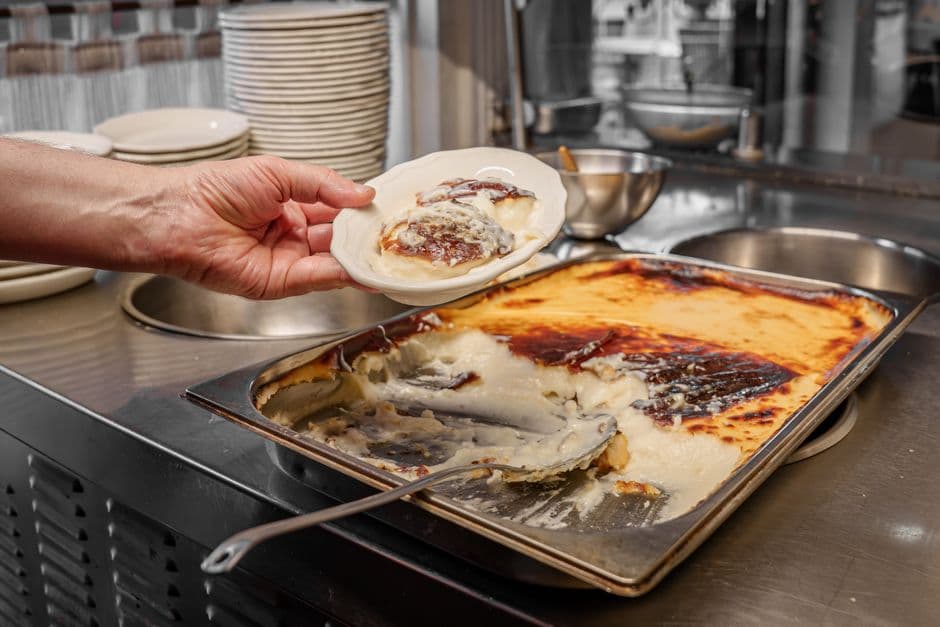
Kazandibi
Turkey's extraordinary burnt milk pudding — a silky, rose-scented rice flour custard with a signature caramelised, almost charred underside.
About This Recipe
Kazandibi — literally 'bottom of the cauldron' — is one of the most intriguing and distinctive desserts in Turkish cuisine. It is a member of the muhallebi family of milk puddings, distinguished by an intentionally burnt, caramelised base that gives the dessert its name and defining character. The pudding itself is a smooth, starchy custard of milk, rice flour and sugar, subtly perfumed with rose water. It is cooked in a pan until thick, then pressed into a well-greased baking tin and placed under a very hot grill to develop the blackened bottom. When inverted, the charred surface becomes the dramatic, toffee-dark top of each portion. The bitterness of the caramel contrasts beautifully with the sweet, creamy pudding.
Ingredients
Serves 8
- 1 litrewhole milk
- 120 gcaster sugar
- 80 grice flour
- 30 gcornstarch
- 1 tablespoonrose water
- 40 gunsalted butter(for greasing the pan)
- 4 tablespoonscaster sugar(for caramelising the base)
Instructions
- 1
Make the pudding base
Whisk together the rice flour and cornstarch with 200 ml of the cold milk until completely smooth. Pour the remaining milk into a heavy saucepan with the 120 g sugar. Heat over medium heat, stirring, until the sugar dissolves and the milk is warm. Add the rice flour mixture in a thin stream, whisking constantly.
- 2
Cook until thick
Continue to cook, stirring constantly with a wooden spoon or heatproof spatula, over medium heat for 15–20 minutes until the pudding thickens to a consistency that coats the spoon thickly and pulls away slightly from the sides of the pan. Remove from heat and stir in the rose water.
- 3
Prepare the caramel base
Grease a 30 x 20 cm baking tin generously with butter. Sprinkle the 4 tablespoons of sugar evenly over the base. Place the tin directly over medium-high heat on the hob or under a very hot grill until the sugar melts and caramelises to a deep amber-brown, even slightly blackened in places — this is intentional and traditional.
Watch the sugar carefully — the difference between ideal caramelisation and an acrid burn is seconds. You want dark amber, not charred black.
- 4
Add the pudding
Immediately pour the hot pudding over the caramelised sugar base in the tin, spreading it level. Leave to cool to room temperature.
- 5
Chill and invert
Refrigerate for at least 3 hours until fully set and cold. To serve, run a spatula carefully around the edges. Invert portions onto plates so the caramelised base becomes the top. The dark caramel surface is the hallmark of the dish.
Did you make this?
Rate it and help other cooks find the recipes that actually work.
One tap to sign in, and we'll save the rating you just picked.
Everything you need to plan your week — free
- Meal calendar
- Grocery list
- AI recipe ideas
Track what you eat
Snap your meal to log calories and macros, run fasting timers and track water in the free SnapCal app.
Pro Tips
- →
Stir the pudding constantly as it thickens to prevent it catching and burning on the base of the pan.
- →
The caramelised base should be genuinely dark — do not be timid. The bitterness is part of the flavour.
- →
Rose water can be substituted with a small piece of mastic resin dissolved in the warm milk for a more traditional flavour.
- →
Kazandibi is traditionally served cold and keeps refrigerated for up to 3 days.
Variations
- •
Chicken breast kazandibi (tavuk göğsü style): add 80 g of very finely shredded, poached chicken breast to the pudding — a classic and surprising Turkish combination.
- •
Mastic kazandibi: add 2–3 pieces of ground mastic resin to the warm milk for a piney, resinous aroma.
- •
Cinnamon version: dust the finished pudding generously with ground cinnamon before serving.
- •
Vegetarian: swap the protein for roasted king oyster mushrooms, smoked tofu or cooked chickpeas — adjust seasoning slightly upward to compensate.
Storage
Refrigerate, covered, for up to 3 days. Kazandibi is always served cold.
History & Origin
Kazandibi is a variant of muhallebi, Turkey's ancient milk pudding tradition dating back to the Ottoman court kitchens. The intentionally scorched base was likely born from a happy accident — a pudding left too long on the heat — that turned out to be so delicious it became a dish in its own right.
Frequently Asked Questions
Is the burnt base really meant to taste bitter?
Yes — the slight bitterness of the caramelised base is an intentional and essential flavour contrast. It should be dark but not acridly black.
Can I make this in individual ramekins?
Yes — divide the caramel between individual ramekins and add the pudding on top. Cooking time for the caramel remains the same; the pudding will set faster in smaller portions.
Can I make this ahead of time?
Yes — most of the components can be prepared up to a day in advance and refrigerated separately. Reheat gently and assemble just before serving so textures stay distinct.
What can I substitute if I don't have all the ingredients?
Stay close to the role each ingredient plays: swap aromatics for similar ones (shallot for onion, lime for lemon), and keep the fat-acid-salt balance intact. Spice blends can usually be approximated with what's in the cupboard.
Nutrition Facts
Per serving · 8 servings total
Time Summary
Have Questions?
Ask our AI cooking assistant anything about this recipe — substitutions, techniques, scaling.
Chat with AI Chef →Featured in Guides
This recipe is featured in the following curated guides:
More Turkish Recipes
You Might Also Like
Similar dishes from other cuisines around the world.
Browse by Ingredient
More recipes built around the same core ingredients.
Free Kitchen Tools
Calculators and converters that pair with this page — no signup needed.
Put This Into a Plan
Schedule it, shop for it, and track what you already have.
Read Next
Longer reads that go deeper on the ideas behind this dish.
Community
Join the conversation
Sign in to leave a comment and save your favourite recipes