
Kelaguen
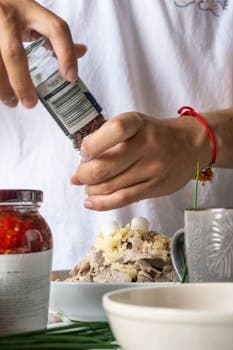
Chamorro grilled chicken salad cured with lemon juice and fresh coconut.
About This Recipe
Kelaguen is the most celebrated dish of Chamorro cuisine — the indigenous food culture of Guam and the Northern Mariana Islands. At its core, it is a ceviche-adjacent preparation: grilled chicken is finely chopped, then tossed with fresh lemon juice, which continues the 'cooking' process by denaturing proteins on the surface of the meat while imparting a bright, acidic flavour. Freshly grated coconut, thinly sliced green onions, and fiery donne' sali chillies round out the mixture into something aromatic, complex, and refreshingly different from anything else in the Pacific cuisine canon. The dish is deeply embedded in Chamorro social life. No fiesta (the Chamorro word for a large communal celebration, typically tied to a Catholic saint's day) would be complete without a large bowl of kelaguen on the table, often made by extended family members working together, chopping and seasoning in the kitchen while the grill burns outside. It appears at fandanggo wedding feasts, birthday parties, and church celebrations throughout the year, and is considered the dish that most clearly defines Chamorro food identity. Two elements determine quality: the chicken must be grilled rather than boiled or baked (the smokiness and char are non-negotiable), and the coconut must be freshly grated from a mature coconut (desiccated or canned coconut produces a completely different texture and flavour). The fineness of the chop matters too — authentic kelaguen is chopped almost to a mince, so the lemon juice penetrates every surface, and the mixture has a cohesive rather than chunky consistency. The lemon juice should be freshly squeezed; bottled juice is detectably flat and is not used in traditional Chamorro cooking.
Ingredients
Serves 4
- 600 gboneless chicken thighs
- 1/2 cupfresh lemon juice
- 1/2 cupfreshly grated coconut
- 3 stalksgreen onions, finely chopped
- 1-2 wholehot peppers (donne' sali), minced
- 1 tspsalt
Instructions
- 1
Grill the chicken
Season the chicken thighs lightly with salt and grill over high direct heat — charcoal preferred, gas or stovetop grill pan acceptable. Cook for 6–7 minutes per side until the internal temperature reaches 75 °C and the exterior is charred in places. Let cool on a board for 10 minutes before handling.
Bone-in thighs are ideal for grilling but boneless thighs are easier to chop finely. If using bone-in, remove the bones after grilling and before chopping.
- 2
Chop finely
Using a sharp chef's knife or cleaver, chop the grilled chicken very finely on a large cutting board — aim for pieces no larger than 5 mm, almost at the level of a coarse mince. Include any charred, crispy bits from the skin and edges; these add critical smokiness and texture to the finished kelaguen. The finer the chop, the better the lemon juice penetrates the meat.
- 3
Combine with lemon juice
Transfer the chopped chicken to a large mixing bowl. Pour the freshly squeezed lemon juice over the chicken immediately and toss to coat every piece. You should hear a gentle sizzle as the acid hits the hot, freshly chopped meat — this is the curing action beginning. The chicken will lighten slightly in colour as the acid denatures the outer proteins.
- 4
Add aromatics
Add the freshly grated coconut, finely chopped green onions, minced donne' sali chilli, and salt to the bowl. Toss everything together thoroughly until evenly combined. The mixture should be moist from the lemon juice, with the white coconut strands visible throughout.
- 5
Rest and taste
Allow the kelaguen to rest at room temperature for 10–15 minutes — this resting time allows the lemon juice to fully penetrate the chicken and the flavours to meld. Taste and adjust: add more lemon juice if it needs brightness, more salt if flat, or more donne' sali if you want additional heat.
Do not rest for more than 30 minutes at room temperature — after that, refrigerate if not serving immediately.
- 6
Serve
Transfer to a serving plate or bowl and serve at room temperature alongside warm titiyas (Chamorro flatbread) or steamed white rice. Kelaguen is traditionally eaten by scooping it with pieces of titiyas — the flatbread acts as both utensil and vehicle, picking up the mixture and absorbing the lemon-coconut juices.
Did you make this?
Rate it and help other cooks find the recipes that actually work.
One tap to sign in, and we'll save the rating you just picked.
Everything you need to plan your week — free
- Meal calendar
- Grocery list
- AI recipe ideas
Cook this hands-free
Get AI meal plans, step-by-step cooking mode, and your saved recipes in the free Bento app.
Pro Tips
- →
Use only freshly squeezed lemon juice — bottled juice contains preservatives and lacks the volatile aromatic compounds that make freshly squeezed lemon so bright and alive. In Guam, local calamansi (Philippine lime) is sometimes used in place of lemon for a more complex citrus note.
- →
The coconut must be freshly grated from a mature coconut — the dry, papery texture of desiccated coconut completely changes the character of the dish. Fresh coconut provides moisture, sweetness, and a clean flavour that cannot be replicated.
- →
Chop the chicken as finely as you can — the 'kelaguen chop' is a skill that Chamorro cooks practise for years. The finer the pieces, the more surface area the lemon juice can penetrate, and the more cohesive the finished dish feels.
- →
Donne' sali chilli is the authentic Chamorro heat source — it is fiercely hot (comparable to habanero) and has a fruity, almost floral quality behind the heat. Thai bird's eye chilli is the closest widely available substitute.
- →
For parties, make kelaguen at most 2 hours ahead and refrigerate — the coconut starts to lose its fresh snap after a day.
Variations
- •
Shrimp kelaguen (kelaguen uhang): replace chicken with grilled medium shrimp (tails removed, finely chopped) — the most popular variation after chicken and considered equally traditional.
- •
Venison kelaguen: traditionally made with grilled venison in the Northern Mariana Islands — the gamey flavour pairs beautifully with the acid and coconut.
- •
Beef kelaguen: use thinly sliced grilled flank steak chopped finely — a more filling, restaurant-popular version.
- •
Raw shrimp kelaguen: some versions cure raw shrimp entirely in lemon juice for 20–30 minutes (ceviche-style) without pre-cooking — the shrimp turns opaque and 'cooks' in the acid.
Storage
Kelaguen is best eaten within 2 hours of making at its peak freshness, when the lemon is bright and the coconut is at its crispest. It keeps refrigerated for up to 2 days — the coconut will soften and the flavours meld more deeply, which some people prefer. Do not freeze. Bring to room temperature for 15 minutes before serving from the fridge.
History & Origin
Kelaguen is believed to predate Spanish colonisation of Guam in 1668, rooted in the ancient Chamorro practice of using citrus juices (originally from the native mansanita fruit, later lemons introduced by Europeans) to 'cook' and preserve protein. The dish's use of coconut and fresh chilli reflects the broader Pacific island culinary tradition of combining starchy, fatty, and acidic elements in balance. Spanish colonisation introduced the large-scale cultivation of lemon trees, which amplified the dish's acidity and helped it evolve into its current form. It has remained largely unchanged for at least 300 years and is recognised as a UNESCO intangible cultural heritage candidate for Guam.
Frequently Asked Questions
Can I use rotisserie chicken to save time?
Yes — rotisserie chicken is a perfectly acceptable shortcut and produces a very good kelaguen. The main thing you lose is the smokiness and char from the grill, which is a significant flavour component. To partially compensate, briefly sear the chicken pieces on a very hot grill pan before chopping, just to develop some surface colour and flavour.
What is donne' sali and what can I substitute?
Donne' sali (Chamorri for 'bird chilli') is a tiny, intensely hot chilli that grows wild and cultivated on Guam and the Marianas. It has a fruity, slightly floral quality behind ferocious heat, comparable to a small habanero. Thai bird's eye chilli is the most widely available substitute with a similar heat level; alternatively use 1/4 of a habanero (seeds removed if you want slightly less heat). Do not substitute with jalapeño — it is far too mild and lacks the right flavour profile.
Does the lemon juice fully 'cook' the chicken?
In kelaguen, the chicken is grilled first and already fully cooked before the lemon juice is added. The lemon juice acts as a secondary flavour-building step that brightens and tenderises the surface of the already-cooked chicken, similar to how a ceviche treatment affects raw fish. There is no food-safety concern with properly grilled chicken treated with lemon juice.
Can I make kelaguen ahead for a party?
Yes, but with limits. Make it up to 2 hours before serving and keep refrigerated. Beyond that, the fresh coconut begins to absorb the lemon juice and loses its texture, and the bright citrus notes flatten. For a large party, prepare the grilled and chopped chicken up to a day ahead and refrigerate, then toss with lemon juice, coconut, and aromatics within 1–2 hours of serving.
Where can I find fresh coconut?
Mature fresh coconuts are sold in many Asian grocery stores, Latin American markets, and increasingly in mainstream supermarkets. To grate at home, crack the coconut, prise the flesh from the shell, peel the brown skin with a vegetable peeler if desired, and grate on the fine side of a box grater. Alternatively, some Asian stores sell freshly grated coconut in the refrigerated section.
Nutrition Facts
Per serving (200g / 7.1 oz) · 4 servings total
Time Summary
Have Questions?
Ask our AI cooking assistant anything about this recipe — substitutions, techniques, scaling.
Chat with AI Chef →More Micronesian Recipes
You Might Also Like
Similar dishes from other cuisines around the world.
Free Kitchen Tools
Calculators and converters that pair with this page — no signup needed.
Put This Into a Plan
Schedule it, shop for it, and track what you already have.
Read Next
Longer reads that go deeper on the ideas behind this dish.
Community
Join the conversation
Sign in to leave a comment and save your favourite recipes