
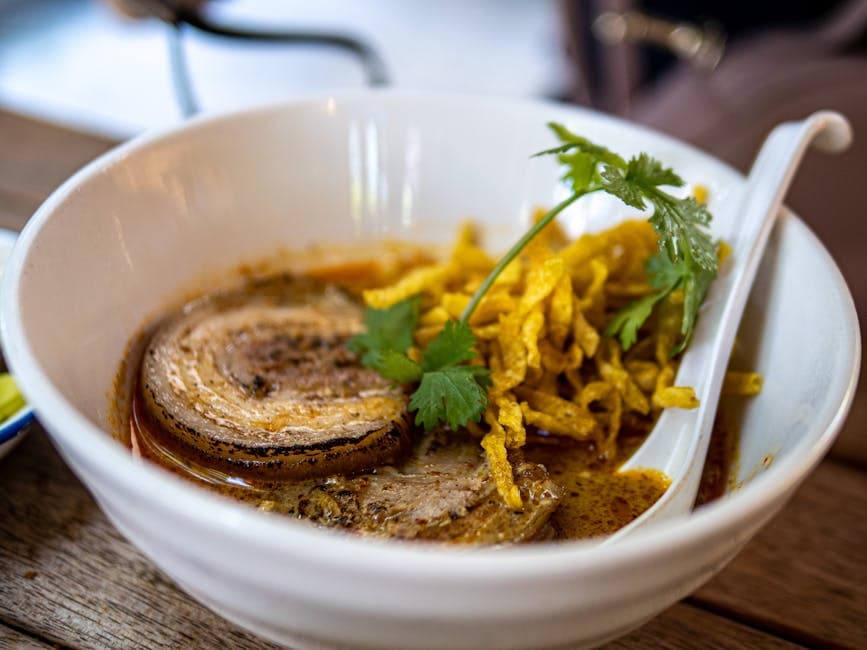
Khao Soi Gai (Northern Thai Coconut Curry Noodles)
Chiang Mai's beloved bowl — golden coconut curry over soft egg noodles topped with crispy noodles and chicken thigh.
About This Recipe
Khao soi is the soul of Northern Thai cooking — a Chiang Mai street-food bowl that fuses Burmese curry tradition with Yunnanese Muslim noodle technique and the coconut richness of central Thai curries. The dish is built around fresh yellow egg noodles served two ways: most of them are boiled and submerged in a glossy, golden-orange coconut curry broth heavy with khao soi paste (turmeric, dried chili, coriander, cumin, cardamom, ginger, garlic, shallot), and a small handful are deep-fried into crispy birds-nests piled on top. A whole bone-in chicken thigh, simmered in the broth until falling-tender, is the traditional protein. The bowl is served with a saucer of accompaniments — pickled mustard greens, shallots, a squeeze of lime, and chili oil — that diners adjust to taste. The Yunnanese influence shows in the egg noodles and the fried-noodle topping; the Burmese influence in the curry's deep yellow color and warm spice; the Thai contribution is the coconut richness, the freshness of the garnishes, and the umami of fish sauce.
Ingredients
Serves 4
- 4 largebone-in skin-on chicken thighs
- 500 gfresh thin egg noodles (Hong Kong style or Chinese wonton noodles)
- 400 mlfull-fat coconut milk (do not shake the can — see step 3)
- 400 mlchicken stock
- 5 tbspkhao soi curry paste (Mae Ploy or homemade — see notes)
- 2 tbspfish sauce, plus more to taste
- 1 tbsppalm sugar or brown sugar
- 1 tbspsoy sauce
- 1 tspground turmeric
- 2 tbspneutral oil
- 500 mlneutral oil for deep-frying noodle topping
- 150 gpickled mustard greens (mu chua / dua cai chua), drained and chopped
- 4 smallThai shallots, thinly sliced
- 2limes, cut into wedges
- 1 smallbunch fresh cilantro, chopped
- 2 tbspThai chili oil or chili crisp, to serve
Instructions
- 1
Fry the noodle topping first
Take about a third of the fresh noodles (150 g) and pat dry. Heat 500 ml oil to 180°C. Drop noodles in small handfuls — they will puff and crisp in 20 seconds. Fish out with a spider, drain on paper towels, and salt lightly. Reserve.
Crispy noodle nests are non-negotiable for visual and textural authenticity.
- 2
Bloom the curry paste
Heat 2 tbsp neutral oil in a heavy pot over medium. Add the khao soi paste and turmeric. Fry, stirring constantly, for 3 minutes until intensely fragrant and the oil turns deep orange — this is the most important flavor step.
- 3
Add the coconut cream
Skim 4 tbsp of thick coconut cream from the top of the unshaken can and add to the paste. Cook 4 minutes, stirring, until the cream splits and oil pools — this is called 'cracking' the curry. The smell will be intoxicating.
- 4
Add chicken and simmer
Stir in the remaining coconut milk, chicken stock, fish sauce, palm sugar, and soy sauce. Add the chicken thighs. Bring to a gentle simmer, partially cover, and cook 30 minutes until the chicken is tender and the broth has reduced slightly.
- 5
Taste and adjust
The broth should taste rich, slightly sweet, salty, and warmly spiced. Adjust with more fish sauce, sugar, or a squeeze of lime as needed. Skim any excess fat from the surface — but leave most for richness.
- 6
Boil the soft noodles
About 5 minutes before serving, bring a separate pot of water to a boil. Cook the remaining fresh noodles per package instructions — usually 2 minutes. Drain and rinse briefly to remove starch.
- 7
Assemble each bowl
Mound a portion of warm cooked noodles in each deep bowl. Place a chicken thigh on top. Ladle the hot golden curry broth generously over everything. Crown each bowl with a tangled handful of the crispy fried noodles.
- 8
Serve with accompaniments
On a small plate alongside, serve mounds of pickled mustard greens, sliced shallots, lime wedges, cilantro, and chili oil. Diners build their own bowl — most add everything.
Did you make this?
Rate it and help other cooks find the recipes that actually work.
One tap to sign in, and we'll save the rating you just picked.
Everything you need to plan your week — free
- Meal calendar
- Grocery list
- AI recipe ideas
Track what you eat
Snap your meal to log calories and macros, run fasting timers and track water in the free SnapCal app.
Pro Tips
- →
Khao soi paste is the entire dish — Mae Ploy brand is widely available and excellent. To make from scratch: pound dried Thai chili, coriander seed, cardamom, turmeric, ginger, shallot, garlic, and shrimp paste in a mortar.
- →
Crack the curry paste in coconut cream until oil pools — Thai cooks call this the difference between curry that tastes alive and curry that tastes muddled.
- →
Pickled mustard greens are essential, not optional — their sour crunch cuts the richness of the coconut. Asian markets sell them in jars; sauerkraut is a distant emergency substitute.
Variations
- •
Khao soi neua: substitute beef shank, simmered 90 minutes.
- •
Khao soi muslim style (Chiang Rai): more cardamom and cinnamon, no soy sauce.
- •
Vegetarian: substitute fried tofu and use mushroom soy + miso for the fish sauce.
Storage
Broth keeps refrigerated 4 days and improves overnight. Noodles must be cooked fresh per serving. Crispy noodle topping does not store — fry that day.
History & Origin
Khao soi entered Northern Thailand via the Yunnanese Muslim Chinese traders (Haw or Chin Haw) who traveled the trade routes between China, Burma, and Siam in the 19th and early 20th centuries. The word 'khao soi' itself comes from Burmese 'khauk swè' (noodles). The dish was adapted in Chiang Mai with local coconut milk and palm sugar to become the distinctive Northern Thai bowl known today.
Frequently Asked Questions
What if I can't find khao soi paste?
Make your own by blending: 6 dried Thai chilies (soaked), 4 shallots, 6 garlic cloves, a thumb of ginger, a thumb of turmeric, 1 tsp coriander seed, 4 cardamom pods, 1 tbsp shrimp paste, and 2 tbsp lemongrass. Pulse to a paste. Or substitute Thai yellow curry paste plus extra turmeric — different but workable.
Why does my coconut curry look thin and watery?
You didn't 'crack' the coconut cream — you must fry the thick top layer separately with the paste until oil pools before adding the rest of the milk. Shaking the can ruins this technique.
Is khao soi the same as Burmese ohn no khao swè?
They are close cousins — both are coconut-curry noodle soups from the same regional family. Burmese ohn no uses more chickpea flour for thickening and is heavier with shallot. Khao soi has more fish sauce, palm sugar, and the distinctive crispy noodle topping.
Can I use canned curry paste instead of homemade?
Absolutely — Mae Ploy or Mae Anong khao soi paste is what most Chiang Mai noodle shops actually use as a base. Just bloom it well in oil for the first 3 minutes before adding liquids.
Nutrition Facts
Per serving (580g / 20.5 oz) · 4 servings total
Time Summary
Have Questions?
Ask our AI cooking assistant anything about this recipe — substitutions, techniques, scaling.
Chat with AI Chef →Featured in Guides
This recipe is featured in the following curated guides:
More Thai Recipes
You Might Also Like
Similar dishes from other cuisines around the world.
Browse by Ingredient
More recipes built around the same core ingredients.
Free Kitchen Tools
Calculators and converters that pair with this page — no signup needed.
Put This Into a Plan
Schedule it, shop for it, and track what you already have.
Read Next
Longer reads that go deeper on the ideas behind this dish.
Community
Join the conversation
Sign in to leave a comment and save your favourite recipes