
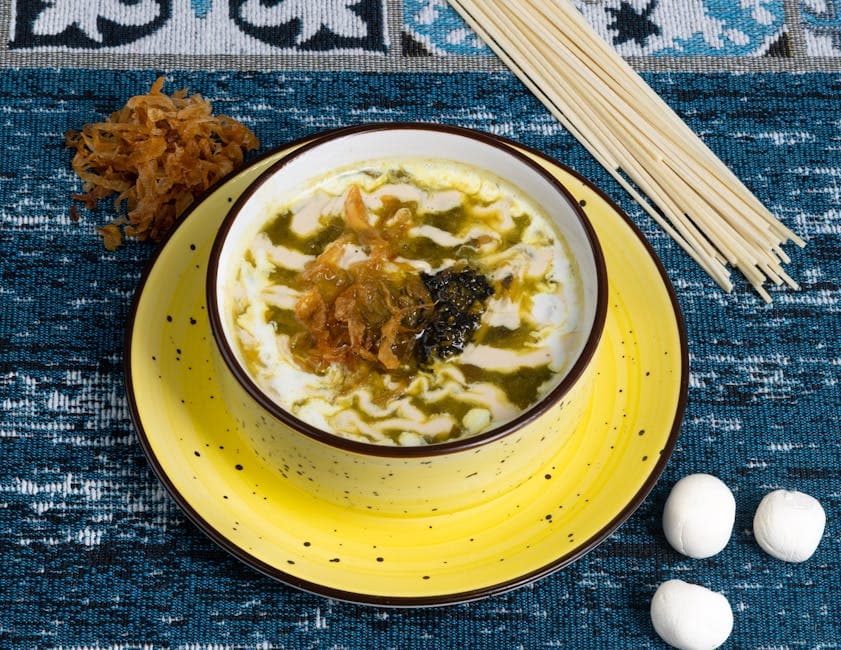
Khoresh Bademjan
Persian lamb and eggplant stew with saffron and tomatoes — a rich, silky classic.
About This Recipe
Khoresh Bademjan belongs to the great family of Persian khoresh — slow, layered stews always served over chelow rice — and it may be the most sensuous of them all. Lamb is braised with caramelized onion, turmeric, tomato, and saffron until tender, then crowned with fried eggplant that softens into the sauce without dissolving, lending it a silky, almost buttery richness. A sour note from lemon or unripe grapes (ghooreh) cuts the richness, the signature Persian balance of fat and acid. In Iran it is everyday food and company food at once: humble enough for a weeknight, elegant enough that no guest ever refuses a second helping over saffron rice.
Ingredients
Serves 4
- 500 glamb shoulder, cubed
- 3 largeeggplants, sliced and salted
- 2 mediumtomatoes, diced
- 1 largeonion, thinly sliced
- 1 pinchsaffron, bloomed in hot water
- 1 tspturmeric
- 1/2 tspcinnamon
- 2 tbsptomato paste
- 2 tbsplemon juice
- 4 tbspoil for frying
- 1 tspsalt
Instructions
- 1
Fry eggplant
Rinse the salted eggplant slices and pat them completely dry — wet eggplant spatters and absorbs more oil. Fry in batches in hot oil until deeply golden on both sides, about 3–4 minutes per side, then drain on paper towels.
Salting for 30 minutes beforehand draws out bitterness and collapses the cell structure so the eggplant drinks less oil.
- 2
Brown lamb
In a heavy pot, slowly caramelize the sliced onion in oil over medium heat until golden and sweet, 10–12 minutes. Add the lamb cubes with turmeric and cinnamon and brown on all sides, letting the spices toast in the fat to release their aroma.
- 3
Simmer
Stir in the tomato paste and fry it for a minute until it darkens, then add diced tomatoes, saffron water, lemon juice, and just enough water to barely cover the meat. Bring to a gentle simmer, cover, and cook 1 hour until the lamb is tender and the sauce has body.
Frying the tomato paste before adding liquid removes its raw, tinny edge and deepens the color of the khoresh.
- 4
Add eggplant
Lay the fried eggplant gently on top of the stew — do not stir, or it will break apart. Spoon a little sauce over the slices, then simmer uncovered for 20 minutes so the sauce reduces and the eggplant absorbs the saffron broth. Taste, adjust salt and lemon, and serve over basmati rice.
A khoresh is done when the oil rises to the surface — Iranians call this 'ja oftadan', the stew settling into itself.
Did you make this?
Rate it and help other cooks find the recipes that actually work.
One tap to sign in, and we'll save the rating you just picked.
Everything you need to plan your week — free
- Meal calendar
- Grocery list
- AI recipe ideas
Track what you eat
Snap your meal to log calories and macros, run fasting timers and track water in the free SnapCal app.
Pro Tips
- →
Salting and frying the eggplant first prevents it from becoming soggy and oily in the stew.
- →
Saffron is non-negotiable — it gives the khoresh its golden color and floral depth.
- →
Don't stir after adding the eggplant; spoon sauce over the top instead to keep the slices intact.
- →
The stew is ready when the oil separates and pools on the surface — the Persian sign of a properly settled khoresh.
- →
Add a few unripe grapes (ghooreh) or extra lemon at the end if you like the traditional sour edge.
Variations
- •
Use beef stew meat instead of lamb; add 15–20 minutes to the braising time.
- •
Make it vegetarian with browned mushrooms and a handful of toasted walnuts for body.
- •
Add ghooreh (unripe sour grapes) in place of lemon juice for the classic Tehran version.
- •
Use chicken thighs for khoresh bademjan ba morgh, reducing the initial simmer to 30 minutes.
Storage
Refrigerate up to 4 days in an airtight container; like all khoresh, the flavor noticeably improves overnight. Freezes well for 2 months, though the eggplant softens further on thawing — reheat gently without stirring.
History & Origin
Eggplant has been called 'the potato of Iran' for its central place in the cuisine, and khoresh bademjan appears in Persian cookery manuals dating back to the Safavid court kitchens. The dish exemplifies the Persian khoresh tradition — meat, fruit acid, and vegetables in slow harmony — that spread along imperial and trade routes to influence stew cooking from the Caucasus to Mughal India. It remains one of the first stews Iranian cooks learn from their mothers.
Frequently Asked Questions
Can I bake the eggplant instead of frying?
Yes — brush the slices with oil and roast at 220°C for about 25 minutes, turning once, until golden. You'll use far less oil and the eggplant still holds its shape in the stew. The flavor is slightly less rich than fried, but most home cooks find the trade-off worthwhile.
Why is my khoresh watery?
It needs more uncovered reduction. A proper khoresh is thick enough to coat rice, with oil visibly risen to the surface. Simmer uncovered for the final 20–30 minutes, and avoid adding too much water at the start — the liquid should barely cover the meat, never drown it.
What do I serve with khoresh bademjan?
Always over Persian steamed rice (chelow), ideally with tahdig. Traditional accompaniments include a plate of fresh herbs (sabzi khordan), shirazi salad of cucumber and tomato, torshi pickles, and plain yogurt. The rice-and-khoresh pairing is the structural heart of the Persian main meal.
Which eggplants work best?
Long, slender Italian or Chinese eggplants have fewer seeds and silkier flesh, making them ideal. Large globe eggplants work too — slice them lengthwise and salt thoroughly, as they carry more bitterness and water. Avoid very seedy, overmature fruit, which turns mushy and bitter in the stew.
Nutrition Facts
Per serving (400g / 14.1 oz) · 4 servings total
Time Summary
Have Questions?
Ask our AI cooking assistant anything about this recipe — substitutions, techniques, scaling.
Chat with AI Chef →Featured in Guides
This recipe is featured in the following curated guides:
More Persian Recipes
You Might Also Like
Similar dishes from other cuisines around the world.
Browse by Ingredient
More recipes built around the same core ingredients.
Free Kitchen Tools
Calculators and converters that pair with this page — no signup needed.
Put This Into a Plan
Schedule it, shop for it, and track what you already have.
Read Next
Longer reads that go deeper on the ideas behind this dish.
Community
Join the conversation
Sign in to leave a comment and save your favourite recipes