
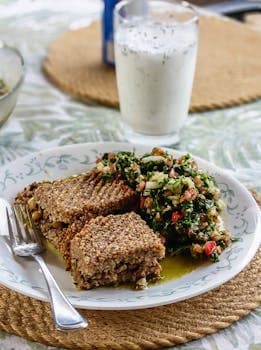
Kibbeh bil Sanieh
Baked Lebanese kibbeh layered with spiced meat and pine nuts — the celebratory version.
About This Recipe
Kibbeh bil Sanieh is kibbeh for feeding a crowd — the laborious hand-shaped torpedoes traded for a baking tray, without sacrificing an ounce of grandeur. Two layers of silky bulgur-and-lamb paste sandwich a rich hashweh filling of browned meat, caramelized onions, and toasted pine nuts; the top is scored into the traditional diamond lattice, anointed with olive oil, and baked until deeply bronzed. It is Sunday-lunch and holiday food, always served with cold yogurt or a cucumber salad against the warm spices. The craft points are few but firm: process the shell mixture until genuinely smooth, press the layers with ice-water-dipped hands, and score deep enough to define the diamonds but never through to the filling.
Ingredients
Serves 8
- 500 gvery lean lamb, finely ground
- 2 cupsfine bulgur (#1), soaked and squeezed dry
- 1 mediumonion, grated
- 1 tspLebanese seven-spice
- 1/2 tspcinnamon
- 300 gground lamb or beef (for filling)
- 2 largeonions, thinly sliced (for filling)
- 1/4 cuppine nuts, toasted
- 3 tbspolive oil
- 1 tspsalt
Instructions
- 1
Make kibbeh shell
Process the lean lamb, soaked and squeezed bulgur, grated onion, seven-spice, cinnamon, and salt in a food processor in batches, scraping down often, until the mixture becomes a smooth, cohesive paste with no visible grain — 2–3 minutes per batch. Add a tablespoon of ice water if it resists coming together. Divide into two equal portions and keep cold.
The smoother the paste, the more tender the baked shell — coarse mixture bakes up crumbly and dry.
- 2
Cook filling
Cook the sliced onions in olive oil over medium heat for 12–15 minutes until soft and golden — their sweetness defines the hashweh. Add the ground meat, raise the heat, and brown it well, breaking it fine, about 8 minutes. Season with salt and a pinch each of seven-spice and cinnamon, stir in the toasted pine nuts, and cool slightly.
- 3
Assemble
Oil a 30 cm round or similar baking dish. With hands dipped in ice water, press half the kibbeh paste into an even 1 cm layer across the bottom. Spread the filling evenly over it. Flatten handfuls of the remaining paste between wet palms into patties and lay them over the filling, smoothing the seams together with wet fingers into one continuous top layer.
Patching the top from flattened pieces is far easier than spreading one mass — wet hands erase every seam.
- 4
Score and bake
Run a knife around the edge, then score the top in the classic diamond lattice, cutting deep but not into the filling. Press a shallow hole in the center with your finger — the traditional vent and signature. Drizzle the surface generously with olive oil and bake at 190°C for 40–45 minutes, until deep golden brown and pulling slightly from the dish edges.
- 5
Serve
Rest the kibbeh 10 minutes so the layers set, then cut along the score lines and lift out the diamonds. Serve warm with cold yogurt, cucumber-mint salad, or fattoush — the cool, tangy sides are considered essential against the warm spiced meat.
Did you make this?
Rate it and help other cooks find the recipes that actually work.
One tap to sign in, and we'll save the rating you just picked.
Everything you need to plan your week — free
- Meal calendar
- Grocery list
- AI recipe ideas
Track what you eat
Snap your meal to log calories and macros, run fasting timers and track water in the free SnapCal app.
Pro Tips
- →
Ice water is your tool throughout — dip your hands constantly when pressing the layers and the paste will obey instead of sticking.
- →
Use genuinely lean lamb for the shell (fat belongs in the filling); ask the butcher for trimmed leg, ground fine.
- →
Score deep enough to define the diamonds but stop short of the filling so the pieces lift out clean.
- →
A generous final drizzle of olive oil — some cooks add knobs of butter — is what produces the burnished, crisp top.
- →
Rest 10 minutes after baking; cutting immediately collapses the neat layers.
Variations
- •
Pumpkin kibbeh bil sanieh: replace the meat shell with a pumpkin-bulgur paste and fill with spinach, chickpeas, and walnuts for the Lenten vegan classic.
- •
Potato kibbeh: a mashed potato-bulgur shell, popular in the south, for a lighter dish.
- •
Yogurt-baked: serve the diamonds in warm, stabilized cooked yogurt (kibbeh bil laban) for the celebrated sauced version.
- •
Add a tablespoon of pomegranate molasses and raisins to the filling for a sweet-sour northern touch.
Storage
Refrigerate baked kibbeh, covered, for up to 3 days and reheat at 180°C for 10–12 minutes to revive the crust — the microwave softens it. It also freezes excellently, baked and cut into portions, for up to 3 months; reheat from frozen, covered, then uncovered to crisp.
History & Origin
Kibbeh is so central to Lebanese identity that it is widely called the national dish, with dozens of regional forms — raw, fried, grilled, in yogurt, and this baked tray version that made the feast achievable on a Sunday scale. The marriage of pounded meat and bulgur is ancient in the northern Levant, shared with Syria where Aleppo alone claims dozens of kibbeh varieties. The sanieh format, scored with its lattice and center vent, remains the centerpiece of Lebanese family gatherings at home and across the diaspora.
Frequently Asked Questions
Is the kibbeh shell raw when assembled?
Yes — the bulgur-and-meat paste goes into the dish raw and cooks fully during the 40–45 minute bake, emerging firm, sliceable, and completely cooked through. Only kibbeh nayyeh, a separate dish made under strict freshness rules, is eaten raw. If you are unsure, check that the center of the tray reads at least 72°C.
Can I make it ahead?
Kibbeh bil sanieh is excellent make-ahead food. Assemble the whole tray, cover, and refrigerate up to 24 hours before baking (add about 5 minutes to the time), or freeze the assembled unbaked tray for up to 2 months and bake from frozen, covered for the first half hour. Baked leftovers reheat well in the oven for days afterward.
My shell mixture won't hold together — what went wrong?
Usually the bulgur was too wet or the mixture under-processed. The soaked bulgur must be squeezed almost dry, fistful by fistful, and the paste needs real processor time until it is smooth and tacky like a fine sausage farce. A tablespoon or two of ice water during processing helps it bind; meat that is too coarsely ground also prevents cohesion.
Can I use beef instead of lamb?
Yes — lean beef works in both shell and filling and is common in diaspora kitchens; choose very lean cuts like top round for the shell and add a little extra olive oil to compensate for lamb's richness. The flavor is milder and less traditional, but the technique is unchanged. Many families use a lamb-beef blend as a middle path.
Nutrition Facts
Per serving (300g / 10.6 oz) · 8 servings total
Time Summary
Have Questions?
Ask our AI cooking assistant anything about this recipe — substitutions, techniques, scaling.
Chat with AI Chef →More Lebanese Recipes
You Might Also Like
Similar dishes from other cuisines around the world.
Browse by Ingredient
More recipes built around the same core ingredients.
Free Kitchen Tools
Calculators and converters that pair with this page — no signup needed.
Put This Into a Plan
Schedule it, shop for it, and track what you already have.
Read Next
Longer reads that go deeper on the ideas behind this dish.
Community
Join the conversation
Sign in to leave a comment and save your favourite recipes