
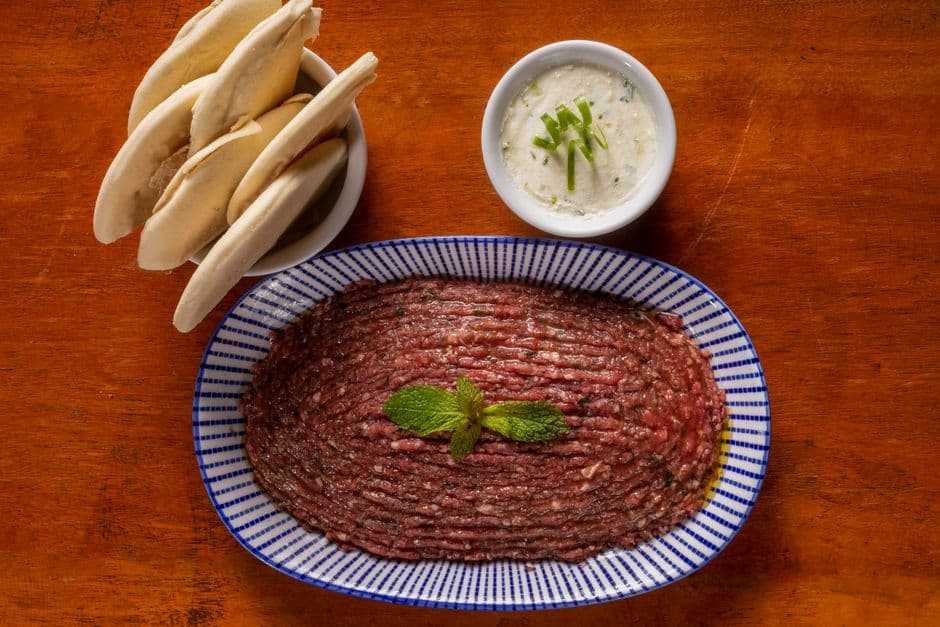
Kibbeh Nayyeh (Lebanese Raw Meat Kibbeh)
Delicate Syrian-Lebanese raw lamb and bulgur paste seasoned with cinnamon and allspice, served with olive oil and mint.
About This Recipe
Kibbeh nayyeh (also spelled kibbeh nayye or kibbeh nayeh) is the raw version of kibbeh, a dish of finely ground lamb mixed with bulgur (cracked wheat), aromatic spices, and herbs, served at room temperature or chilled. The preparation is technically simple but requires excellent ingredients and precise technique: the lamb must be the finest quality (absolutely fresh, from a trusted butcher), ground twice to a paste-like consistency, and mixed thoroughly with bulgur that has been soaked and squeezed dry. The spicing is characteristic of Levantine cuisine: cinnamon, allspice, black pepper, and sometimes a hint of cayenne. The finished kibbeh nayyeh is shaped into a small mound, drizzled generously with green olive oil, and garnished with pomegranate seeds, fresh mint, and sometimes toasted pine nuts. It is served as a meze (appetizer) with flatbread, olives, cheese, and other small dishes. Kibbeh nayyeh is eaten by tearing off pieces of bread, spreading a small amount of kibbeh on it, and eating immediately. The dish is traditionally associated with Lent and special occasions, as preparing it raw was often reserved for celebrations. It requires complete confidence in the quality of the meat — food safety and sourcing are paramount.
Ingredients
Serves 6
- 400 glamb (preferably from the loin or leg), very finely ground twice
- 100 gbulgur (cracked wheat), medium grade
- 1 smallonion, finely minced
- 1 tspground cinnamon
- 1 tspground allspice
- 1 pinchfreshly ground black pepper
- 1 pinchcayenne pepper (optional)
- 1 pinchsea salt
- 100 mlextra-virgin green olive oil (or fruity, peppery oil)
- 2 tbsppomegranate molasses or lemon juice
- 1 small bunchfresh mint, finely chopped
- 2 tbsppomegranate seeds (arils)
- 2 tbsptoasted pine nuts (optional)
- to servesoft flatbread (pita or Lebanese bread), olives, fresh cheese, fresh vegetables
Instructions
- 1
Prepare the bulgur
Soak bulgur in cold water for 10 minutes until slightly softened. Transfer to a fine-mesh strainer and squeeze very hard to remove all excess water. The bulgur should be moist but not wet.
- 2
Prepare the lamb
Ask your butcher to grind the lamb twice (for a very fine, paste-like consistency). The meat should be very finely ground — this is not optional. Handle the meat minimally to keep it cold. Use within 2 hours of grinding.
- 3
Combine ingredients
In a clean bowl, combine the finely ground lamb, soaked and squeezed bulgur, minced onion, cinnamon, allspice, black pepper, cayenne (if using), and salt. Mix with a fork (not your hands to keep the mixture cold) until completely combined. The mixture should hold together but remain loose and paste-like.
- 4
Taste and adjust
Take a small spoon and taste a tiny amount. The flavor should be aromatic and spiced, with a clean lamb taste. Adjust cinnamon, allspice, or salt as needed.
- 5
Shape
Turn the kibbeh nayyeh onto a serving plate and shape into a small mound or oval (about the size of a small fruit). Do not pack it tightly — it should look rustic and loose.
- 6
Finish
Make a shallow well in the top of the mound with the back of a spoon. Pour green olive oil into the well and drizzle around the edges. Sprinkle with pomegranate molasses or lemon juice, scatter mint leaves, pomegranate seeds, and toasted pine nuts on top.
- 7
Serve immediately
Serve immediately, chilled or at room temperature, with soft flatbread and an array of vegetables, olives, and cheese (feta, halloumi, or fresh cheese). Eat by tearing off bread, spreading a small amount of kibbeh on it, and eating immediately.
Did you make this?
Rate it and help other cooks find the recipes that actually work.
One tap to sign in, and we'll save the rating you just picked.
Everything you need to plan your week — free
- Meal calendar
- Grocery list
- AI recipe ideas
Track what you eat
Snap your meal to log calories and macros, run fasting timers and track water in the free SnapCal app.
Pro Tips
- →
The lamb must be extremely fresh and ground twice. Ask your butcher to do this and use it within 2 hours. The fresher the meat, the safer the dish.
- →
The bulgur must be squeezed very dry — excess water dilutes the flavor and changes the texture. Squeeze hard, then squeeze again.
- →
Do not use your hands to mix — keep everything cold. Use a fork to combine the ingredients.
- →
Kibbeh nayyeh is traditionally served chilled. You can refrigerate it for up to 2 hours, but serve within a few hours of making.
Variations
- •
With roasted garlic — add 2–3 cloves of roasted garlic to the mixture for extra depth.
- •
With sumac — replace pomegranate molasses with sumac for a different tang.
- •
With increased spices — add a pinch of clove or nutmeg for more warmth.
- •
Kibbeh Arbia (cooked version) — shape the mixture into ovals, pan-fry briefly until golden (not cooked through), and serve warm.
Storage
Kibbeh nayyeh is meant to be eaten fresh, within 2–3 hours of making. It can be refrigerated for up to 4 hours, covered. Do not freeze. The dish is best when cold or at room temperature, never hot.
History & Origin
Kibbeh nayyeh is a traditional dish of the Levant (Syria, Lebanon, Palestine) with roots in nomadic Arab cuisine. The dish was often prepared for special occasions and religious celebrations (particularly Lent) when meat was being honored or when there were enough guests to justify its preparation. The spicing is characteristic of Arab cuisine and reflects the region's connection to spice routes. Today, kibbeh nayyeh is found in Lebanese restaurants worldwide and is a symbol of authentic Levantine cooking.
Frequently Asked Questions
Is it safe to eat raw lamb?
Only if the lamb is absolutely fresh and sourced from a trusted butcher. Ask the butcher when the animal was slaughtered and ground. Do not attempt this with supermarket ground lamb. Pregnant women, young children, and immunocompromised individuals should avoid raw meat.
Can I use beef instead of lamb?
Traditionally, no — lamb is essential to the flavor. Some modern versions use beef, but the character of the dish changes.
What if I'm uncomfortable with raw meat?
You can pan-fry the kibbeh nayyeh briefly (kibbeh Arbia) until lightly browned, or use the same mixture to make traditional baked kibbeh (shaped and baked at 180°C for 25–30 minutes).
Where do I find pomegranate molasses?
Middle Eastern and specialty markets sell bottled pomegranate molasses. You can substitute lemon juice or pomegranate juice reduced with a bit of sugar.
Nutrition Facts
Per serving (160g / 5.6 oz) · 6 servings total
Time Summary
Have Questions?
Ask our AI cooking assistant anything about this recipe — substitutions, techniques, scaling.
Chat with AI Chef →More Lebanese Recipes
You Might Also Like
Similar dishes from other cuisines around the world.
Browse by Ingredient
More recipes built around the same core ingredients.
Free Kitchen Tools
Calculators and converters that pair with this page — no signup needed.
Put This Into a Plan
Schedule it, shop for it, and track what you already have.
Read Next
Longer reads that go deeper on the ideas behind this dish.
Community
Join the conversation
Sign in to leave a comment and save your favourite recipes