
Kimbap (Korean Rice Roll)
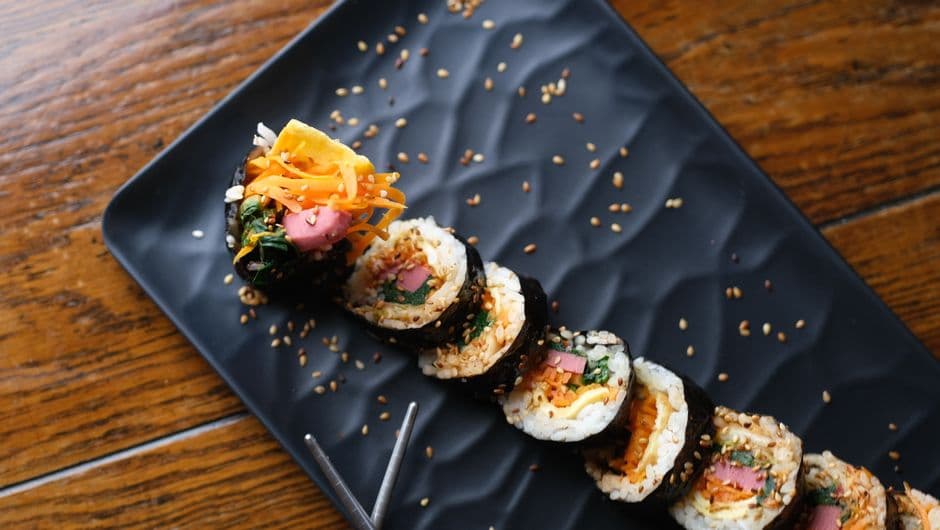
Gimbap — a Korean rolled rice dish with vegetables, eggs, and meat, wrapped in seaweed and served in slices.
About This Recipe
Kimbap (also spelled gimbap) is a Korean rolled rice dish that resembles sushi but is distinctly Korean in flavor and filling. The dish consists of a thin sheet of nori (seaweed), spread with cooked rice seasoned with sesame oil and salt, topped with an array of fillings (cooked vegetables, fried egg strips, beef, and sometimes crab or fish), rolled tightly, and sliced into rounds. Kimbap is eaten cold or at room temperature, often as a packed lunch, picnic food, or side dish. Unlike sushi, kimbap uses cooked rice and cooked fillings, making it more substantial and less dependent on raw fish. The variety of fillings makes kimbap customizable — each region and each cook has a preferred combination. Kimbap is simple to make at home but does require a bit of prep: cooking and seasoning the rice, preparing multiple fillings, and practicing the rolling technique. The result is a beautiful, colorful, and delicious spiral that's as visually appealing as it is tasty.
Ingredients
Serves 2
- 300 gcooked short-grain rice, cooled to room temperature
- 2 tbspsesame oil
- 1 tspsalt
- 1 tbspsugar
- 2sheets of nori (seaweed), toasted
- 100 gbeef (or cooked chicken), thinly sliced and marinated in soy sauce
- 2 largeeggs, beaten and fried into thin sheets (gyeran mari)
- 1 mediumcarrot, cut into thin matchsticks and lightly cooked or raw
- 1 smallcucumber, cut into thin matchsticks
- 100 gfresh spinach (or other leafy greens), blanched and squeezed dry
- 100 gpickled radish (danmuji) or pickled vegetables, cut into thin strips
- 2 tbspsesame seeds (for garnish)
- 1 tbspvegetable oil (for frying egg)
- salt to tastesalt (for vegetables)
Instructions
- 1
Season the rice
While the rice is still warm (or cool it to room temperature first), add sesame oil, salt, and sugar. Mix gently with a wooden spoon or rice spatula, being careful not to mash the grains. The rice should glisten with sesame oil and taste slightly salty and sweet.
- 2
Prepare the fillings
Prepare all fillings ahead: marinate thinly sliced beef in a bit of soy sauce and sesame oil; fry egg sheets and cut into strips; blanch and dry spinach; cut cucumber, carrot, and pickled radish into thin matchsticks. All fillings should be at room temperature.
- 3
Lay out the nori
Place one sheet of nori on a bamboo sushi mat (makisu) with the shiny side facing down. The sheet should align with the bottom edge of the mat.
- 4
Add the rice
Spread about 150g of seasoned rice evenly over the nori, leaving a 1 cm border at the top. The rice layer should be about 1 cm thick. Wet your hands to prevent sticking.
- 5
Arrange the fillings
In a horizontal line across the middle of the rice (about 2 cm from the bottom), arrange a small amount of each filling in a row: beef, egg, carrot, cucumber, spinach, and pickled radish. Don't overfill — the roll will be hard to close if too full. Each filling should be visible in the final cross-section.
- 6
Roll tightly
Using the bamboo mat, roll the nori and rice over the fillings, pressing gently as you roll to keep everything tight and in place. Roll away from you, using the mat as a guide. Keep rolling until the nori is fully wrapped around the fillings.
- 7
Seal the edge
The exposed edge of nori (at the top) should stick to the roll slightly from moisture. If it doesn't seal, wet your finger and brush the edge lightly with water, then press to seal.
- 8
Slice
Using a sharp, wet knife (wet it between each cut), slice the roll into 8–10 rounds, about 2 cm wide. Wiping the knife between cuts prevents the rice from sticking.
- 9
Serve
Arrange the slices on a plate cut-side up so the spiral is visible. Sprinkle with additional sesame seeds. Serve at room temperature or chilled with a small dish of soy sauce for dipping.
Did you make this?
Rate it and help other cooks find the recipes that actually work.
One tap to sign in, and we'll save the rating you just picked.
Everything you need to plan your week — free
- Meal calendar
- Grocery list
- AI recipe ideas
Track what you eat
Snap your meal to log calories and macros, run fasting timers and track water in the free SnapCal app.
Pro Tips
- →
All fillings should be cooked and cooled — raw vegetables are fine, but proteins should be cooked. Fillings should be at room temperature, never hot.
- →
Don't overfill the roll — too many fillings make it hard to roll and slice. A thin line of each ingredient is enough.
- →
Slice with a very sharp, wet knife. A dull knife will smash the rice; water prevents sticking.
- →
Arrange fillings in the same order each time so the cross-section looks beautiful — organization matters.
Variations
- •
With crab or fish cake — add imitation or real crab, or sliced fish cake for protein variation.
- •
With mayo filling — some versions include a thin line of mayo for creaminess.
- •
Vegetarian kimbap — omit the beef and use only vegetables and eggs.
- •
With different vegetables — use mushrooms, zucchini, or other vegetables depending on season and preference.
Storage
Kimbap is best eaten the day it's made, at room temperature or chilled. It can be wrapped in plastic wrap and refrigerated for up to 24 hours, though the nori will soften slightly. Do not freeze — the texture of the rice deteriorates.
History & Origin
Kimbap is a Korean dish that likely emerged from the use of leftover rice and ingredients, rolling them together for a convenient, portable meal. Unlike sushi, kimbap uses cooked ingredients and is seasoned more heavily, reflecting Korean flavor preferences. The dish became popular as a packed lunch, picnic food, and casual meal, and is now served in homes, restaurants, and from street carts throughout Korea.
Frequently Asked Questions
What's the difference between kimbap and sushi?
Sushi uses raw fish and raw vegetables with unseasoned rice. Kimbap uses cooked rice seasoned with sesame oil, cooked fillings, and is more heavily flavored. They're completely different dishes.
Can I make kimbap ahead?
Yes, make it up to 8 hours ahead and wrap in plastic wrap. The nori will soften slightly as it sits, but it's still delicious.
Do I need a bamboo mat?
It helps tremendously, but you can roll by hand with practice. A bamboo mat costs a few dollars and makes rolling much easier.
What if my roll doesn't stay sealed?
Wet the exposed edge of nori with a bit of water on your finger and press firmly. If this doesn't work, the nori might be old and losing its stickiness.
Nutrition Facts
Per serving (280g / 9.9 oz) · 2 servings total
Time Summary
Have Questions?
Ask our AI cooking assistant anything about this recipe — substitutions, techniques, scaling.
Chat with AI Chef →Featured in Guides
This recipe is featured in the following curated guides:
More Korean Recipes
You Might Also Like
Similar dishes from other cuisines around the world.
Browse by Ingredient
More recipes built around the same core ingredients.
Free Kitchen Tools
Calculators and converters that pair with this page — no signup needed.
Put This Into a Plan
Schedule it, shop for it, and track what you already have.
Read Next
Longer reads that go deeper on the ideas behind this dish.
Community
Join the conversation
Sign in to leave a comment and save your favourite recipes