
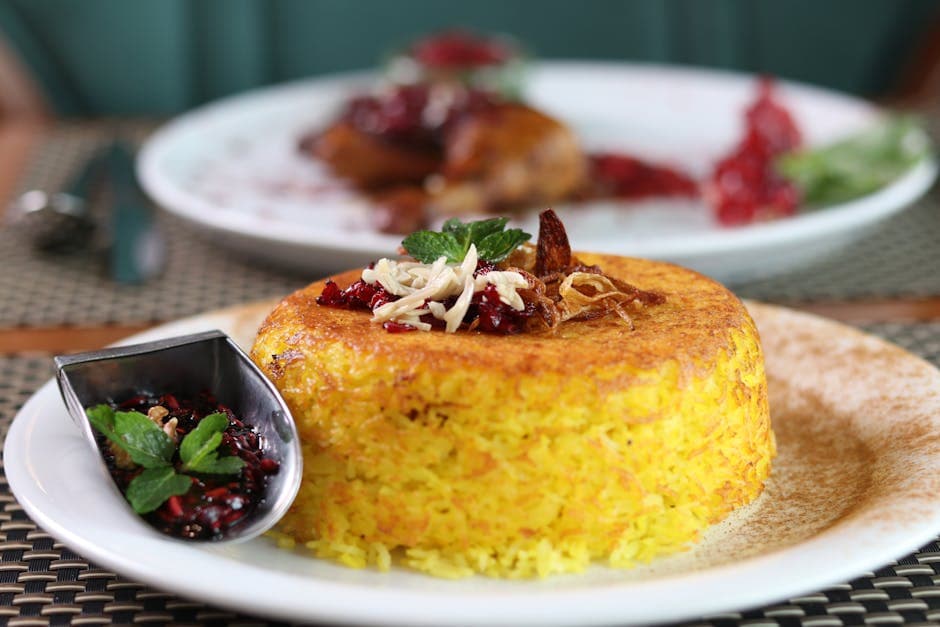
Koofteh Tabrizi
Giant Persian meatballs stuffed with eggs and prunes — a spectacular Tabriz specialty.
About This Recipe
Koofteh Tabrizi is the showpiece of Iranian Azerbaijan — meatballs the size of oranges, sometimes grapefruits, built from ground lamb kneaded with rice, yellow split peas, and fresh herbs until the mixture binds like dough. Hidden inside each one waits a treasure: a whole boiled egg, prunes, walnuts, and tart barberries. The koofteh poach gently in a turmeric-tomato broth and arrive whole at the table, where slicing one open is pure theater. In Tabriz, a cook's skill is judged by whether the koofteh survives the simmer intact; legend holds that the grandest versions once concealed an entire small chicken inside. It is celebration food, demanding patience and rewarding it lavishly.
Ingredients
Serves 6
- 600 gground lamb
- 1 cupcooked yellow split peas
- 1/2 cupcooked white rice
- 1 largeonion, grated
- 1/2 cupfresh herbs (parsley, chives, tarragon), chopped
- 1egg
- 1 tspturmeric
- 1 tspcinnamon
- 1 tspsalt
- 6 smallhard-boiled eggs (for stuffing)
- 6prunes (for stuffing)
- 2 tbspwalnuts (for stuffing)
- 2 tbspbarberries or sour cherries (for stuffing)
- 2 tbsptomato paste
- 1.5 literswater
Instructions
- 1
Make mixture
Squeeze the grated onion dry, then combine it with the lamb, mashed split peas, rice, herbs, raw egg, turmeric, cinnamon, and salt. Knead vigorously for a full 5–10 minutes, pressing and folding like bread dough, until the mixture turns sticky, smooth, and paste-like.
The kneading develops the meat proteins that hold these giant meatballs together — undermixed koofteh fall apart in the broth.
- 2
Stuff
With wet hands, take about 200g of mixture and flatten it into a thick disk across your palm. Nestle a peeled boiled egg in the center with a prune, a few walnuts, and a spoonful of barberries, then cup the meat up around the filling, pinch the seams closed, and roll between your palms into a smooth, crack-free ball.
Check the surface carefully — any visible crack will widen during simmering and split the koofteh open.
- 3
Make broth
In a wide pot, dissolve the tomato paste in the water with turmeric and salt, and bring to a boil. The pot should be wide enough that the meatballs sit in one layer without crowding, with broth reaching at least two-thirds of the way up their sides.
- 4
Simmer
Reduce the broth to a bare, trembling simmer and lower the meatballs in one at a time with a slotted spoon. Cook gently for 50–60 minutes, spooning broth over the tops and turning them once, very carefully, halfway through. Never let the liquid boil hard.
Don't touch the koofteh for the first 15 minutes — the surface needs time to set before they can survive being turned.
- 5
Serve
Lift each koofteh whole into a deep bowl and ladle the reduced saffron-tinged broth around it. Slice open at the table to reveal the egg, prunes, and barberries inside, and serve with fresh flatbread, sabzi khordan, and torshi.
Did you make this?
Rate it and help other cooks find the recipes that actually work.
One tap to sign in, and we'll save the rating you just picked.
Everything you need to plan your week — free
- Meal calendar
- Grocery list
- AI recipe ideas
Track what you eat
Snap your meal to log calories and macros, run fasting timers and track water in the free SnapCal app.
Pro Tips
- →
Knead the meat mixture far longer than feels necessary — at least 5 minutes — so it becomes sticky enough to hold the stuffing.
- →
Use wet hands when shaping and re-wet them often to prevent sticking and cracks.
- →
Squeeze the grated onion thoroughly; excess onion juice makes the mixture too loose to bind.
- →
Keep the broth at a bare simmer — a hard boil is the number one cause of burst koofteh.
- →
Make one small test meatball first and poach it for 10 minutes to check seasoning and binding before committing the whole batch.
Variations
- •
Stuff with dried apricots instead of prunes for a brighter, tangier center.
- •
Add fried onions and a pinch of saffron to the stuffing in the festive Tabriz style.
- •
Tuck pomegranate seeds or sour cherries inside for bursts of tartness.
- •
Make smaller, fist-sized koofteh for a more manageable weeknight version — reduce simmering to 35 minutes.
Storage
Refrigerate the koofteh submerged in their broth for up to 3 days; they reheat best gently on the stovetop in the same liquid. Freezing is possible but the stuffed egg texture suffers slightly.
History & Origin
Koofteh Tabrizi originates in Tabriz, the historic capital of Iranian Azerbaijan and a crossroads of the Silk Road, where Turkic and Persian cooking traditions merged. The dish belongs to a wider family of stuffed kofta found from the Caucasus to the Levant, but the Tabrizi version is famous for its sheer scale — folklore tells of wedding koofteh large enough to hide a whole stuffed chicken inside. It remains the dish Tabrizi families serve to honor important guests.
Frequently Asked Questions
What are barberries?
Barberries (zereshk) are tiny, jewel-red dried berries with an intensely sour, almost citrusy flavor, used throughout Persian cooking in rice dishes and stuffings. Find them at Persian or Middle Eastern grocers; rinse before using. Dried sour cherries or unsweetened cranberries are the closest substitutes, though slightly sweeter.
Why did my koofteh fall apart?
Three usual culprits: the mixture wasn't kneaded long enough to become sticky, the grated onion wasn't squeezed dry, or the broth boiled too hard. The rice and split peas also act as binders, so don't reduce them. Keep the liquid at a trembling simmer and avoid moving the meatballs early.
Can I make koofteh ahead of time?
Yes — shape and stuff the meatballs up to a day ahead and refrigerate them covered, which actually firms them up and makes them easier to poach intact. You can also fully cook them a day in advance; they reheat beautifully in their broth and the flavor deepens.
What do I serve with Koofteh Tabrizi?
Traditionally the koofteh and its broth are a complete meal with warm flatbread like sangak or lavash for dipping, plus fresh herbs, raw onion, and torshi. Some families serve the broth first as a soup, then the sliced koofteh — echoing the two-course abgoosht ritual.
Nutrition Facts
Per serving (500g / 17.6 oz) · 6 servings total
Time Summary
Have Questions?
Ask our AI cooking assistant anything about this recipe — substitutions, techniques, scaling.
Chat with AI Chef →Featured in Guides
This recipe is featured in the following curated guides:
More Persian Recipes
You Might Also Like
Similar dishes from other cuisines around the world.
Browse by Ingredient
More recipes built around the same core ingredients.
Free Kitchen Tools
Calculators and converters that pair with this page — no signup needed.
Put This Into a Plan
Schedule it, shop for it, and track what you already have.
Read Next
Longer reads that go deeper on the ideas behind this dish.
Community
Join the conversation
Sign in to leave a comment and save your favourite recipes