
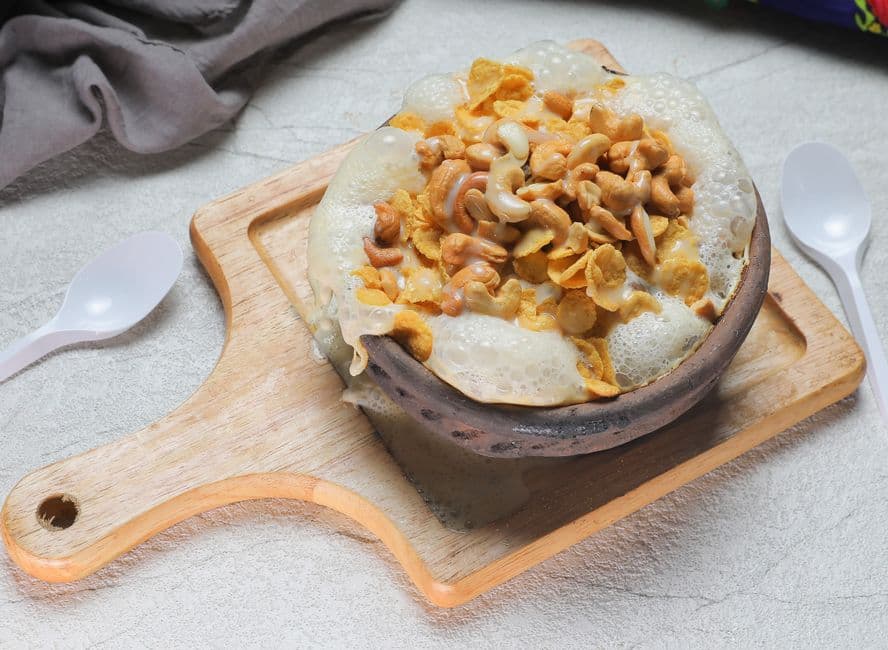
Harees
A slow-simmered Kuwaiti porridge of cracked wheat and lamb, cooked for hours into a silky, buttery comfort dish traditionally served during Ramadan.
About This Recipe
Harees is one of the oldest dishes in the Gulf — a study in simplicity and patience. Cracked (not whole) wheat and chunks of bone-in lamb are simmered together for 3–4 hours with nothing more than water, salt, and cinnamon until the wheat completely dissolves and the lamb melts into the mixture. The whole thing is then vigorously beaten with a wooden spoon or paddle until it becomes a smooth, elastic, porridge-like mass of extraordinary depth. It is ladled into bowls, topped with a lake of clarified butter (ghee), a dusting of cinnamon, and sometimes a drizzle of date syrup. During Ramadan it is eaten at suhoor or iftar because it is filling and sustaining. At any time of year it is deeply restorative comfort food.
Ingredients
Serves 6
- 500 gcracked wheat (jareesh), soaked overnight
- 600 gbone-in lamb shoulder, in large pieces
- 2 litreswater
- 1 stickcinnamon
- 3 podscardamom
- 1½ tspsalt
- 4 tbspghee (clarified butter)
- 1 tspground cinnamon, to serve
- date syrupto drizzle (optional)
Instructions
- 1
Start the pot
Drain soaked cracked wheat and place in a large heavy pot with lamb, water, cinnamon stick, cardamom pods, and salt. Bring to a boil over high heat, skimming foam for 10 minutes.
- 2
Long slow simmer
Reduce heat to very low, cover, and simmer for 3–3.5 hours, stirring every 30 minutes to prevent sticking. Add more water if the mixture becomes too thick too early — aim for a consistency slightly thicker than oatmeal by the end.
- 3
Remove and shred lamb
Remove the lamb pieces and pull the meat from the bones. Discard bones and the whole spices. Return shredded meat to the pot.
- 4
Beat to a smooth porridge
Using a heavy wooden spoon or a paddle, beat the mixture vigorously in the pot over low heat for 10–15 minutes until completely smooth and glossy, no wheat grains visible. Adjust salt.
- 5
Serve
Ladle into wide bowls, make a well in the centre, and fill with melted ghee. Dust generously with ground cinnamon and drizzle with date syrup if desired.
Did you make this?
Rate it and help other cooks find the recipes that actually work.
One tap to sign in, and we'll save the rating you just picked.
Everything you need to plan your week — free
- Meal calendar
- Grocery list
- AI recipe ideas
Track what you eat
Snap your meal to log calories and macros, run fasting timers and track water in the free SnapCal app.
Pro Tips
- →
Do not rush it — the 3-hour simmer is what develops the complex, deep flavour.
- →
A slow cooker works well: cook on Low 8–10 hours.
- →
The more vigorously you beat at the end, the smoother and silkier the texture.
- →
Soak the wheat overnight to cut cooking time by 30–45 minutes.
Variations
- •
Chicken Harees: substitute a whole chicken; cooking time reduces to about 2 hours.
- •
Vegetarian Harees: use vegetable stock and omit meat; add chickpeas for protein.
- •
Sweeten for dessert: omit the meat, cook wheat in milk, finish with sugar and ghee.
- •
Spicier: add a finely chopped fresh chile or a teaspoon of crushed Aleppo/Urfa pepper to the aromatics for warm, layered heat instead of a single sharp hit.
Storage
Refrigerate up to 3 days. Harees thickens dramatically when cold. Reheat over low heat with a splash of water, stirring well.
History & Origin
Harees is perhaps the oldest continuous dish of the Arabian Peninsula, with records dating to the 10th century in the Arab cookbook 'Kitab al-Tabikh'. It is common across the Gulf, the Levant, and South Asia (where it is called 'haleem'), with each region adapting the spice profile. In Kuwait it became a Ramadan institution because the slow-releasing carbohydrates from wheat sustain the fasting person through the long daylight hours. It is also the traditional dish served at funerals, symbolising simplicity and communal mourning.
Frequently Asked Questions
What is cracked wheat exactly?
Cracked wheat (jareesh) is whole wheat berries that have been roughly cracked but not ground into flour. It looks like coarse bulgur. Find it at Middle Eastern or health food stores.
Can I make this ahead of time?
Yes — most of the components can be prepared up to a day in advance and refrigerated separately. Reheat gently and assemble just before serving so textures stay distinct.
What can I substitute if I don't have all the ingredients?
Stay close to the role each ingredient plays: swap aromatics for similar ones (shallot for onion, lime for lemon), and keep the fat-acid-salt balance intact. Spice blends can usually be approximated with what's in the cupboard.
How do I know it's authentic?
Authenticity sits on a spectrum — what matters more is honoring the technique and balance of flavors. If the dish tastes harmonious and respects how cooks in its home region would build it, you're on solid ground.
Nutrition Facts
Per serving (380g / 13.4 oz) · 6 servings total
Time Summary
Have Questions?
Ask our AI cooking assistant anything about this recipe — substitutions, techniques, scaling.
Chat with AI Chef →Featured in Guides
This recipe is featured in the following curated guides:
More Kuwaiti Recipes
You Might Also Like
Similar dishes from other cuisines around the world.
Free Kitchen Tools
Calculators and converters that pair with this page — no signup needed.
Put This Into a Plan
Schedule it, shop for it, and track what you already have.
Read Next
Longer reads that go deeper on the ideas behind this dish.
Community
Join the conversation
Sign in to leave a comment and save your favourite recipes