
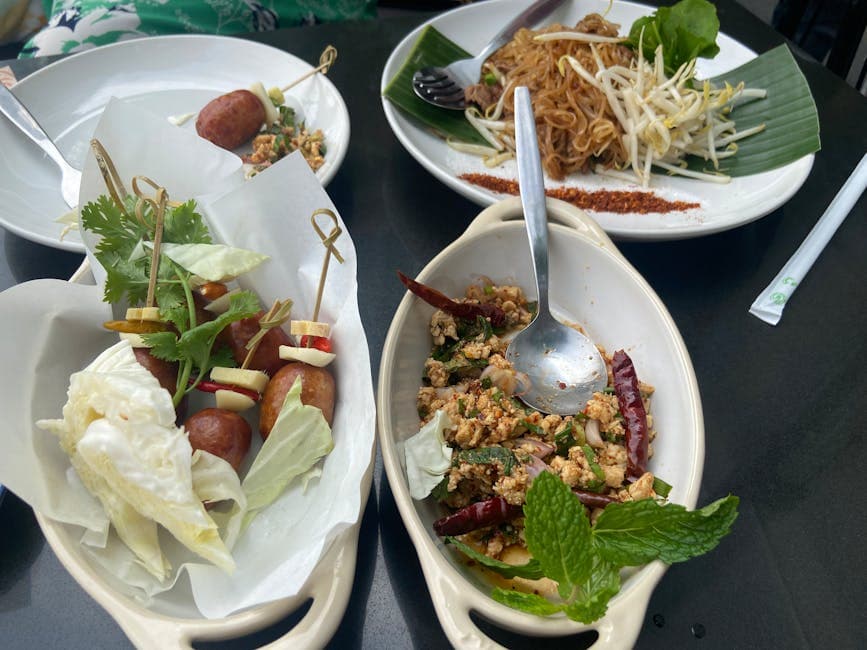
Laap (Lao Larb — Minced Meat Salad)
The national dish of Laos — minced meat tossed warm with toasted rice powder, lime, fish sauce, mint, cilantro and fried shallots, eaten by hand with sticky rice and raw vegetables.
About This Recipe
Laap (often written 'larb' in Thailand) is the national dish of Laos and the centerpiece of every important gathering, from baci ceremonies to weddings. The dish is deceptively simple: finely minced meat — chicken, duck, pork, beef or fish — is briefly cooked or, in some regions, served raw or 'laap dip', then dressed warm with a vivid mix of lime juice, fish sauce, dried chili, sliced shallot, scallion, mint, cilantro and the soul of the dish: khao khua, a fragrant powder of rice toasted dry in a pan until deeply golden and ground coarse. The rice powder is what makes laap unmistakable; it perfumes the meat with a nutty aroma and gives the dish a slightly chewy, sandy texture that contrasts beautifully with the herbs. Laap is always eaten by hand alongside a basket of sticky rice — you pinch off a small ball of rice, dimple it with your thumb, scoop up a bite of meat, and tuck it into your mouth — and a platter of raw greens (cabbage, long beans, Thai eggplant, mint) for crunch and freshness. Vientiane laap is mild and aromatic; Luang Prabang versions can include offal, blood and bitter herbs; Isaan-Thai larb is brighter, hotter and sweeter. All share the same brilliance: minutes to make, endlessly variable, alive with herbs.
Ingredients
Serves 4
- 500 gground chicken thigh, pork shoulder or beef sirloin
- 3 tbspuncooked Thai sticky rice (or jasmine rice)
- 3 tbspfresh lime juice (about 2 limes)
- 2 tbspfish sauce (Squid or Three Crabs brand)
- 1 tsptoasted Thai chili flakes (prik bon), or more to taste
- 3shallots, finely sliced
- 3scallions, thinly sliced
- 1 small handfulfresh mint leaves
- 1 small handfulfresh cilantro leaves and tender stems, chopped
- 1 small handfulsaw-leaf coriander (culantro), torn — optional but traditional
- 1 tsppalm sugar (Lao versions skip this; Thai versions include it)
- to serve: warm sticky rice, raw cabbage wedges, long beans, cucumber, Thai basil
Instructions
- 1
Toast the rice powder
Heat a dry skillet over medium and toast the raw rice, stirring constantly, for 6–8 minutes until evenly deep golden brown and very fragrant — like toasted nuts and popcorn. Tip into a mortar or spice grinder and grind to a coarse powder, the texture of fine cornmeal. This is khao khua — the soul of laap.
Toast a big batch and keep in a jar — it lasts months and you'll want it for every laap going forward.
- 2
Cook the meat
Place the ground meat in a wok or wide pan with 3 tablespoons of water. Cook over medium-high heat, breaking it into very small crumbles with the back of a spoon, just until no longer pink — 4–6 minutes. The water keeps the meat tender and prevents browning, which is wrong for laap.
- 3
Cool slightly
Tip the meat with its juices into a wide mixing bowl and let cool for 2 minutes — just below scalding. Dressing it too hot dulls the herbs; too cold and the dressing won't penetrate.
- 4
Dress
Add the fish sauce, lime juice, chili flakes, shallot, scallion and 2 tablespoons of the toasted rice powder. Toss thoroughly with a spoon, scraping the juices in.
- 5
Fold in the herbs
Tear the mint, cilantro and saw-leaf coriander and fold through. Taste and adjust — laap should be punchy: sharp from lime, salty from fish sauce, hot from chili, with the toasted rice perfuming everything. Add palm sugar if you prefer the sweeter Thai style.
- 6
Plate
Pile the laap on a platter, sprinkle the remaining rice powder over the top. Surround with sticky rice and a generous spread of raw vegetables.
- 7
Serve
Eat with hands, Lao-style: pinch a small lump of sticky rice, press it into a dimple, scoop laap and a leaf of mint, and tuck the parcel into your mouth. Wash down with cold Beerlao or a herbal iced tea.
Did you make this?
Rate it and help other cooks find the recipes that actually work.
One tap to sign in, and we'll save the rating you just picked.
Everything you need to plan your week — free
- Meal calendar
- Grocery list
- AI recipe ideas
Track what you eat
Snap your meal to log calories and macros, run fasting timers and track water in the free SnapCal app.
Pro Tips
- →
Use ground meat with at least 15% fat — too lean and laap is dry. Hand-chop the meat for the most authentic texture, but a coarse grind from the butcher works fine.
- →
Toasted rice powder loses fragrance fast — grind only what you'll use in a week and store the rest as whole toasted grains.
- →
Real Thai chili flakes (prik bon) are smokier and hotter than supermarket red pepper flakes. Toast dried Thai chilies dry in a pan, then crush.
- →
Always taste and rebalance — every batch of lime and fish sauce is different. Aim for equal parts sharp, salty, hot, herbal.
Variations
- •
Laap pet — duck breast laap, traditional for Lao New Year. Cook the duck breast rare, then mince.
- •
Laap pla — raw or barely-warmed fish laap, popular along the Mekong, using firm white fish like tilapia.
- •
Vegan laap — substitute crumbled extra-firm tofu or finely chopped mushrooms; use vegan fish sauce or soy.
- •
Larb gai (Isaan-Thai chicken) — sweeter, sometimes with a teaspoon of palm sugar, often served as a one-plate meal with sticky rice on the side.
Storage
Best eaten freshly made — herbs wilt within 2 hours. Leftovers keep 1 day refrigerated; refresh with extra lime and fresh herbs before serving. Do not freeze.
History & Origin
Laap is the heart of Lao cuisine and predates the modern state by centuries — it is the dish served at weddings, baci ceremonies and Buddhist festivals. The Thai-Isaan version 'larb' migrated south with ethnic Lao communities and was popularized nationwide in Thailand after the 1970s. The word laap is thought to share roots with the Lao word for 'fortune' or 'luck'.
Frequently Asked Questions
Can I eat the meat raw?
Traditional laap dip uses raw meat from a trusted butcher, but this carries real food-safety risk outside Laos. For home cooking, briefly cook the meat — the texture is nearly identical.
What if I don't have sticky rice?
Serve with jasmine rice or even crusty bread for scooping. Sticky rice is traditional and ideal, but laap is delicious any way.
Where do I find saw-leaf coriander?
Asian markets sell it as 'culantro', 'ngo gai' or 'pak chee farang'. If unavailable, just use extra cilantro.
How spicy should it be?
Adjust to taste — Lao versions tend to be milder than Thai, but both should make your nose run a little. Start with 1 teaspoon chili flakes and add more after tasting.
Nutrition Facts
Per serving (220g / 7.8 oz) · 4 servings total
Time Summary
Have Questions?
Ask our AI cooking assistant anything about this recipe — substitutions, techniques, scaling.
Chat with AI Chef →Featured in Guides
This recipe is featured in the following curated guides:
More Laotian Recipes
You Might Also Like
Similar dishes from other cuisines around the world.
Free Kitchen Tools
Calculators and converters that pair with this page — no signup needed.
Put This Into a Plan
Schedule it, shop for it, and track what you already have.
Read Next
Longer reads that go deeper on the ideas behind this dish.
Community
Join the conversation
Sign in to leave a comment and save your favourite recipes