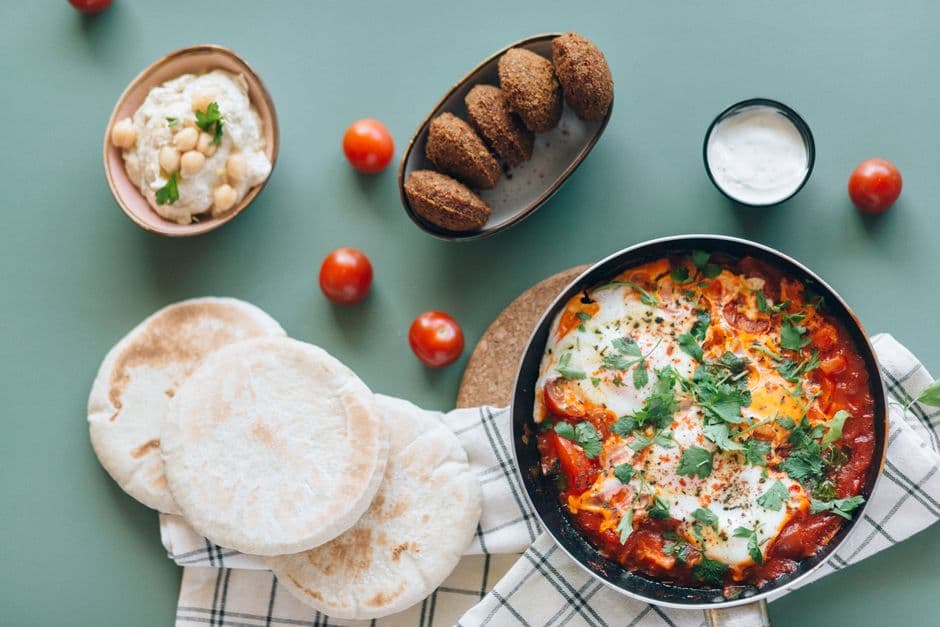
Tunisia's beloved street breakfast — a fiery, garlicky chickpea broth poured over torn day-old bread with a coddled egg, harissa, capers, tuna and a stream of olive oil.
Lablabi is the breakfast of Tunis — a deeply savory, garlicky chickpea broth that defines Tunisian morning street food, served from tiny shops where workers, students and tourists alike crowd around plastic stools and zinc counters waiting for their bowl to be assembled. The premise is brilliant in its frugality: torn pieces of stale bread are placed in the bottom of a bowl, a generous dose of harissa, cumin and garlic is added on top, then the bowl is flooded with steaming chickpea cooking broth, and the customer customizes the rest. A raw egg cracked into the hot broth coddles in seconds to a wobbly, half-set custard; a spoon of capers, a handful of olives, a tin of tuna, preserved lemon, and a final aggressive drizzle of olive oil all go on top. The result is a thick, soulful, intensely flavored breakfast soup-stew that costs almost nothing to make and tastes like a Tunisian grandmother's kitchen distilled. Each lablabi shop has its signature: some serve it with extra capers, some with a whole boiled egg instead of coddled, some with a small grilled merguez sausage on the side. The dish is eaten with a spoon, the bread softening into the broth as you go, the egg yolk breaking and enriching everything. It is the kind of dish that connects ancient Mediterranean Jewish, Berber and Arab cooking traditions — chickpeas, bread, eggs, harissa, olive oil — into a single bowl that is at once humble and addictive.
Serves 4
Drain the soaked chickpeas and rinse. Place in a large pot with the 4 whole garlic cloves, bay leaves and 2 liters of cold water. Bring to a boil, skim any foam, then reduce to a steady simmer. Cook 60 to 75 minutes (or pressure-cook 25 minutes) until the chickpeas are very tender but still hold their shape. Season generously with salt only in the last 10 minutes of cooking. Do not drain — the chickpea broth is half the dish.
While the chickpeas cook, combine the minced garlic, 1 tablespoon of cumin, the harissa paste, lemon juice and 80 ml of olive oil in a small bowl. Whisk into a thick rust-red paste. Taste; it should be aggressively garlicky, hot and acidic — this is what gives the finished soup its kick. Set aside.
When the chickpeas are tender, stir the remaining tablespoon of cumin and the remaining 40 ml of olive oil into the pot. Simmer 5 more minutes to integrate. Smash about a quarter of the chickpeas against the side of the pot with the back of a ladle to thicken the broth slightly. Taste for salt; chickpea broth absorbs surprising amounts.
Tear the stale bread into rough 3 cm chunks and divide between 4 deep wide bowls — about 75 g per bowl. The bread should fill the bottom third of each bowl loosely. Stale bread is essential; fresh bread turns into mush. If your bread isn't quite stale, dry it in a 150°C oven for 8 minutes.
Spoon 2 to 3 tablespoons of the prepared harissa-garlic-cumin paste over the bread in each bowl. Don't stir; let it sit in a vibrant red mound. The hot broth will dissolve it in the next step.
Bring the chickpea pot back to a hard simmer. Crack each egg into the simmering broth one at a time and let them coddle in the broth for 90 seconds to 2 minutes — the whites should set into a wobbly cloud while the yolks remain runny. Use a slotted spoon to lift each egg gently onto one of the bowls (perched on top of the bread and harissa).
Working bowl by bowl, ladle the hot chickpea broth (with plenty of whole chickpeas) over the bread, harissa and egg until the bowl is filled to about 2 cm from the rim. The broth should soak the bread, dissolve the harissa into the liquid, and leave the egg floating wobbly on top. Some bread should still poke above the surface.
Crown each bowl with a generous spoon of drained tuna, a sprinkle of capers, four pitted olives, a small pile of preserved lemon, and an aggressive final drizzle of extra-virgin olive oil. Hand a lemon wedge and a small extra spoon of harissa with each bowl. Eat immediately with a spoon, breaking the egg yolk into the broth, mixing the harissa through, and chasing each bite with a sip of strong mint tea.
Stale bread is non-negotiable. The whole architecture of the dish rests on bread that absorbs broth without turning to mush — 2-day-old country bread or sourdough is ideal.
Make a big pot of chickpeas the day before; lablabi is fundamentally a leftover-chickpea dish and the second-day broth is even more flavorful.
Real Tunisian harissa (Le Phare du Cap Bon brand in the silver tube, or fresh from a North African grocer) is dramatically better than commercial harissa from western supermarkets. The depth of flavor and chili heat profile is completely different.
Coddle the egg directly in the chickpea broth — this gently sets the white without overcooking the yolk and infuses the egg with the chickpea-and-cumin flavor of the broth.
Lablabi bel beid: replace the coddled egg with two whole hard-boiled eggs quartered on top — a less messy version popular at lunch.
Add a small grilled merguez sausage to each bowl on top of the broth — a meaty version for weekend mornings.
Lablabi with brik pastry: lay a fried Tunisian brik (egg-and-tuna-filled pastry triangle) across the bowl instead of mixing the egg directly into the broth — a more elaborate restaurant version.
Add 1 teaspoon of tabil (Tunisian spice mix of coriander, caraway, garlic and chili) to the broth for a more aromatic regional version popular in the south of the country.
The chickpea broth and base keep refrigerated up to 4 days and improve on day two. Reheat and assemble fresh — never store a fully assembled bowl because the bread will turn to paste. Harissa-garlic paste keeps a week in the fridge; capers and olives last weeks. This is the perfect 'make a big pot of chickpeas, eat lablabi for breakfast all week' kind of dish.
Lablabi has its roots in the cooking of Tunisia's working-class Jewish and Arab communities, where stale bread soaked in hot broth — a Mediterranean tradition called 'aciotta' in Italy and 'açorda' in Portugal — provided cheap, hearty breakfast nourishment. The Tunisian version absorbed local chickpeas, harissa, cumin and olive oil, becoming a defining dish of Tunis street food by the early 20th century. Today lablabi remains the breakfast of Tunis — eaten at humble specialist shops like Lablabi Hadj Aly in the medina, where workers queue from sunrise — and a beloved dish across the broader Maghreb and Tunisian diaspora in France and Belgium.
You can in a pinch — use 800 g drained canned chickpeas with 1.5 liters of vegetable broth simmered with garlic, bay and cumin for 30 minutes to build flavor. But the broth from freshly cooked dried chickpeas is dramatically more flavorful and viscous, and is half the dish. Make from dried whenever possible.
Yes — tuna in olive oil is a defining Tunisian larder ingredient and a standard lablabi topping. Use a good Italian or Spanish tuna in olive oil rather than tinned tuna in water. If unavailable, skip — but the salty richness it adds is part of the classic profile.
Properly Tunisian lablabi is genuinely hot — harissa is fierce. Start with 2 tablespoons of paste per bowl and offer more at the table for those who want to escalate. If serving to non-spice-eaters, dial the per-bowl harissa to 1 teaspoon and let everyone add more as desired.
A sturdy country sourdough or French country loaf, ideally 2 to 3 days old. Soft sandwich bread will turn to mush. Tunisian khobz (a round semolina country loaf) is perfect if you can find it at a North African bakery.
Per serving (480g / 16.9 oz) · 4 servings total
Ask our AI cooking assistant anything about this recipe — substitutions, techniques, scaling.
Chat with AI Chef →Join the conversation
Sign in to leave a comment and save your favourite recipes