
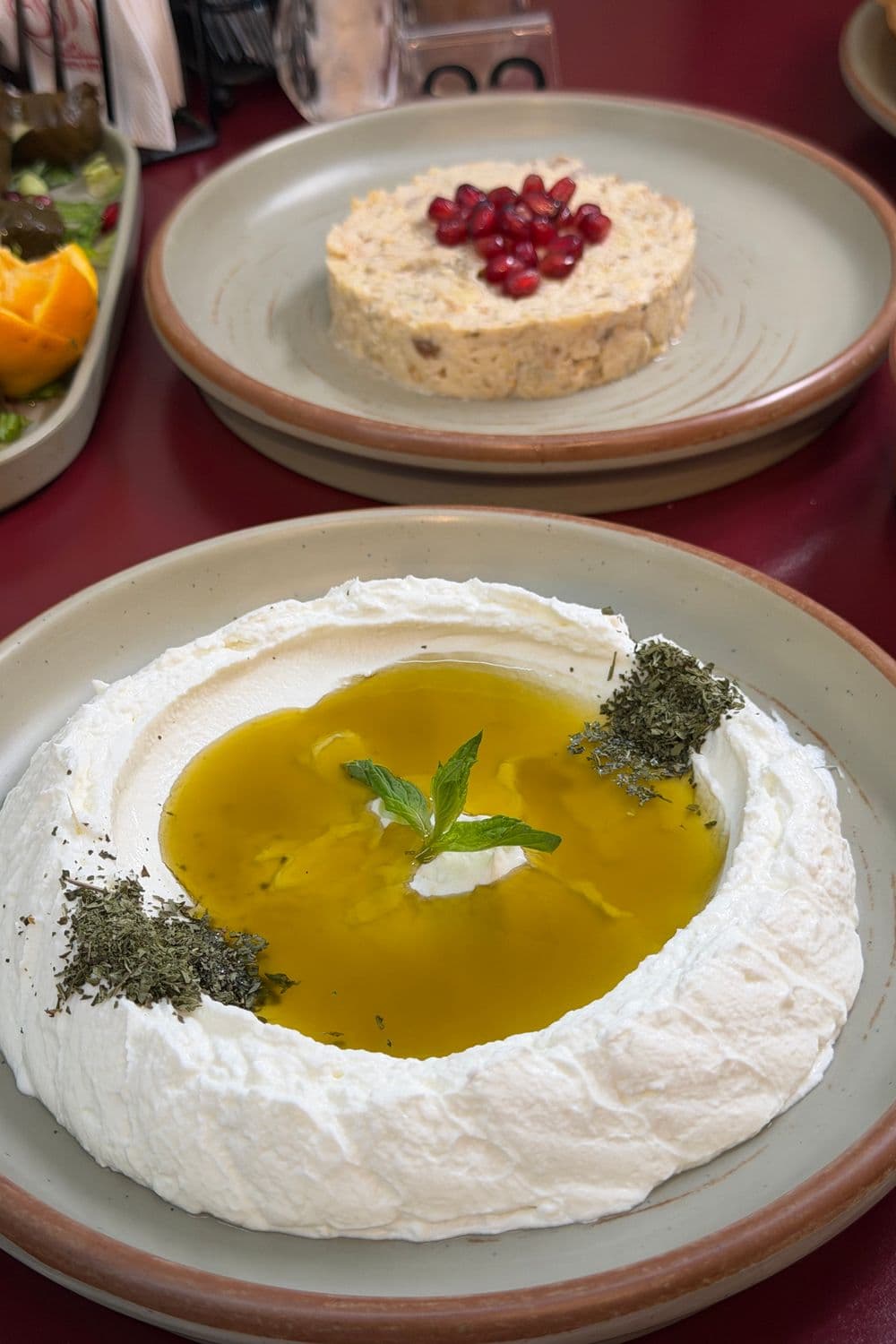
Labneh
Thick strained yogurt cheese served with olive oil and za'atar — a Lebanese breakfast staple.
About This Recipe
Labneh sits at the heart of the Lebanese table — a thick, tangy strained yogurt cheese that appears at breakfast, in mezze spreads, and tucked into manousheh wraps. It is dairy preservation at its simplest: yogurt is salted, hung in cloth, and drained until it transforms from spoonable to spreadable. What makes a great labneh is patience and good yogurt — full-fat, live-culture yogurt strained slowly in the fridge develops a clean lactic tang without bitterness. Finished the classic way, with a pool of peppery extra-virgin olive oil and a scatter of za'atar, it needs nothing more than warm pita. This version uses a full 24–48 hour strain for a dense, almost cream-cheese texture that holds its shape when swooshed across a plate.
Ingredients
Serves 6
- 1 kgfull-fat plain yogurt
- 1 tspsalt
- 3 tbspextra-virgin olive oil
- 2 tspza'atar
- 1 pinchdried mint (optional)
Instructions
- 1
Strain yogurt
Stir the salt evenly through the yogurt — it seasons the labneh and helps pull out whey. Line a colander with a double layer of cheesecloth, pour in the yogurt, gather and tie the corners, and hang the bundle over a bowl in the fridge for 24–48 hours. At 24 hours you get a soft, spreadable labneh; at 48 it is dense enough to roll into balls.
If you have no place to hang it, set the bundle in a sieve over a deep bowl and place a small weight on top.
- 2
Serve
Spoon the labneh onto a shallow plate and use the back of the spoon to swirl a well in the center. Flood the well with extra-virgin olive oil, sprinkle za'atar and dried mint over the top, and serve at room temperature with warm pita — cold straight from the fridge it tastes muted.
Let labneh sit out 15 minutes before serving so the tang and the olive oil aroma open up.
Did you make this?
Rate it and help other cooks find the recipes that actually work.
One tap to sign in, and we'll save the rating you just picked.
Everything you need to plan your week — free
- Meal calendar
- Grocery list
- AI recipe ideas
Track what you eat
Snap your meal to log calories and macros, run fasting timers and track water in the free SnapCal app.
Pro Tips
- →
The longer you strain, the thicker and tangier the labneh — taste at 24 hours and decide whether to continue.
- →
Save the drained whey; it is excellent in bread dough, smoothies, or for soaking grains.
- →
For labneh balls, strain a full 48 hours, roll tablespoon-sized balls with oiled hands, and submerge them in olive oil in a clean jar.
- →
Use yogurt with live cultures and no thickeners — gelatin or starch-stabilized yogurts strain poorly and taste flat.
- →
A sprinkle of Aleppo pepper alongside the za'atar adds gentle fruity heat without overpowering the dairy tang.
Variations
- •
Garlic labneh: stir one finely grated clove into the yogurt before straining for a sharper mezze dip.
- •
Goat milk labneh: use goat yogurt for a tangier, slightly grassy flavor closer to mountain-village versions.
- •
Herbed labneh balls: roll strained balls in za'atar, chili flakes, or chopped fresh thyme before jarring in oil.
- •
Sweet labneh: skip the salt and serve with honey, walnuts, and a pinch of cinnamon for breakfast.
Storage
Keep labneh in an airtight container in the fridge for up to 1 week. Labneh balls fully submerged in olive oil keep refrigerated for up to 1 month; always use a clean spoon to retrieve them.
History & Origin
Strained yogurt has been made across the Levant for thousands of years as a practical way to preserve milk in a warm climate, and labneh remains one of the region's most universal foods. In Lebanon it is both an everyday breakfast and a point of pride — village-made labneh from goat milk, rolled into balls and stored in oil, was a traditional winter provision. Today every Lebanese household keeps it on hand, and no mezze spread feels complete without it.
Frequently Asked Questions
Can I use store-bought Greek yogurt?
Yes — Greek yogurt is already partially strained, so it will reach labneh thickness faster, often in 12–24 hours. Choose full-fat plain Greek yogurt for the creamiest result; low-fat versions turn chalky. You will lose a little of the fresh lactic flavor that comes from straining regular yogurt yourself, but the convenience trade-off is reasonable.
Why is my labneh bitter?
Bitterness usually comes from the yogurt itself rather than the straining. Some commercial yogurts develop bitter notes from certain cultures or long storage. Use the freshest yogurt you can find, keep the straining bundle cold in the fridge rather than at room temperature, and make sure your cheesecloth is clean and free of soap residue.
What is the difference between labneh and Greek yogurt?
They are points on the same spectrum. Greek yogurt is strained to remove some whey; labneh is strained much further, until it becomes a soft spreadable cheese with roughly twice the thickness. Labneh is also typically salted before straining, which gives it a more savory, cheese-like character suited to olive oil and za'atar.
How do I serve labneh beyond breakfast?
Use it anywhere you would use sour cream or cream cheese. Spread it under roasted vegetables or spiced lamb, dollop it on lentil soup, swirl it into pasta sauces off the heat, or spread it inside a wrap with cucumber, mint, and olives — the classic Lebanese arous sandwich.
Nutrition Facts
Per serving (100g / 3.5 oz) · 6 servings total
Time Summary
Have Questions?
Ask our AI cooking assistant anything about this recipe — substitutions, techniques, scaling.
Chat with AI Chef →More Lebanese Recipes
You Might Also Like
Similar dishes from other cuisines around the world.
Free Kitchen Tools
Calculators and converters that pair with this page — no signup needed.
Put This Into a Plan
Schedule it, shop for it, and track what you already have.
Read Next
Longer reads that go deeper on the ideas behind this dish.
Community
Join the conversation
Sign in to leave a comment and save your favourite recipes