
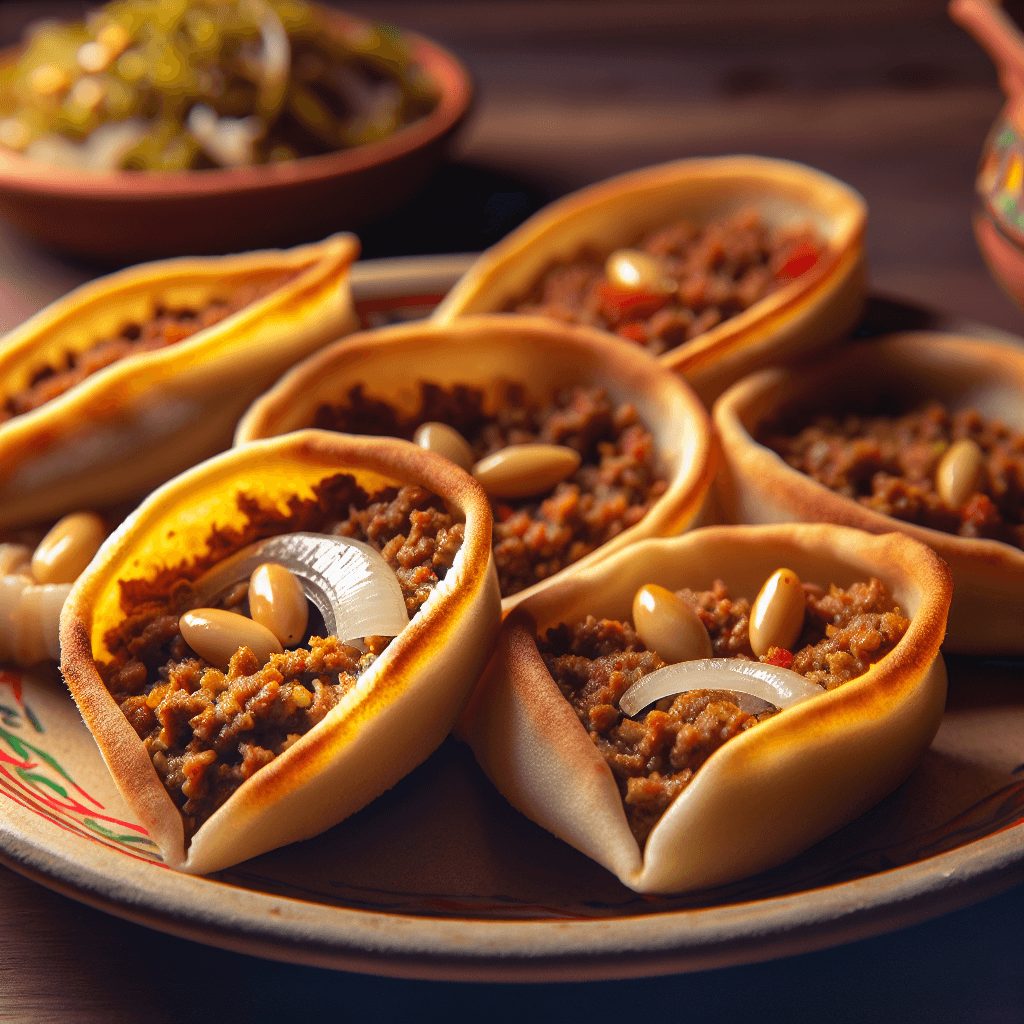
Lahem Bi Ajeen
Lebanese spiced meat pies — individual pastries with savory filling.
About This Recipe
Lahem bi ajeen — literally 'meat with dough' — are the Levant's iconic open-faced meat pies: thin rounds of yeasted dough spread with a fragrant mixture of minced lamb or beef, onion, tomato paste, pine nuts, allspice, and cinnamon, then baked hot and fast until the edges crisp while the topping stays juicy. The secret is keeping the dough thin and the meat layer modest, so pie and filling cook in the same short window. Every Lebanese bakery turns these out by the tray, and they're eaten warm with a squeeze of lemon, a dollop of yogurt, or rolled up around fresh mint. Made at home, they're an irresistible crowd-pleaser for mezze tables and lunchboxes alike.
Ingredients
Serves 12
- 500 gall-purpose flour
- 300 mlwarm water
- 7 ginstant yeast
- 2 tspsalt
- 3 tbspolive oil
- 400 gground lamb or beef
- 1 largeonion, finely diced
- 1/4 cuppine nuts
- 1 tspallspice
- 1 tspcinnamon
- 2 tbsptomato paste
- 1/2 tspsalt
- 1/4 tspblack pepper
Instructions
- 1
Make dough
Mix the flour, warm water, yeast, 2 tsp salt, and 3 tbsp olive oil into a rough dough, then knead for about 8 minutes until smooth and elastic. Place in an oiled bowl, cover, and let rise in a warm spot for 1 hour until doubled in size.
A soft, slightly sticky dough rolls thinner and bakes more tender — resist adding extra flour while kneading; oil your hands instead.
- 2
Make filling
Brown the ground meat with the diced onion in a skillet over medium-high heat, breaking it into fine crumbles as it cooks. Stir in the pine nuts, allspice, cinnamon, tomato paste, salt, and pepper, and cook 5 more minutes until the mixture is fragrant and fairly dry. Cool before using.
Cool the filling completely before topping the dough — hot filling steams the dough soggy and makes shaping difficult.
- 3
Divide dough
Punch down the risen dough and divide it into 12 equal pieces, rolling each into a smooth ball. Cover with a kitchen towel and let them rest 10 minutes so the gluten relaxes — they'll roll out thin without springing back.
- 4
Shape
Roll each ball into a thin round about 3mm thick on a floured surface, then transfer to parchment-lined baking sheets. Pinch up a slight rim or press the centers down lightly to form shallow cups that will hold the filling in place during baking.
- 5
Fill
Spoon a thin, even layer of the cooled meat filling onto each round, pressing it gently into the dough and spreading almost to the rim. Keep the layer modest — the thin dough and topping must finish cooking at the same moment.
Pressing the meat firmly into the dough surface helps it adhere and keeps the pies from shedding their topping when picked up.
- 6
Bake
Bake at 220°C for 18–20 minutes, rotating the trays halfway, until the edges are golden brown, the bottoms are crisp, and the meat is sizzling. Serve warm with lemon wedges, plain yogurt, or fresh mint leaves.
Did you make this?
Rate it and help other cooks find the recipes that actually work.
One tap to sign in, and we'll save the rating you just picked.
Everything you need to plan your week — free
- Meal calendar
- Grocery list
- AI recipe ideas
Track what you eat
Snap your meal to log calories and macros, run fasting timers and track water in the free SnapCal app.
Pro Tips
- →
Roll the dough genuinely thin — thick bases turn bready and throw off the pie-to-filling balance that defines lahem bi ajeen.
- →
Don't overfill; a restrained, even meat layer crisps and caramelizes, while a thick one leaks fat and steams the dough.
- →
Lamb with around 15–20% fat gives the juiciest, most traditional flavor; very lean meat bakes dry.
- →
A squeeze of fresh lemon over the hot pies just before eating is the classic Lebanese finishing touch.
- →
Bake on the lowest oven rack or a preheated stone for the crispest bottoms.
Variations
- •
Add 1–2 tablespoons of pomegranate molasses to the filling for the tangy-sweet Aleppo-style version.
- •
Stir finely diced tomato and a pinch of chili into the meat for a juicier, spicier sfiha-style pie.
- •
Use ground chicken with extra allspice and a knob of butter for a lighter take.
- •
Fold the rounds into open triangles before baking, pinching three corners, for the classic fatayer presentation.
Storage
Best eaten fresh and warm. Refrigerate leftovers up to 3 days, or freeze baked pies for 2 months; reheat in a 180°C oven for 6–8 minutes to re-crisp the base.
History & Origin
Lahem bi ajeen belongs to the wider Levantine family of sfiha, flatbread meat pies with roots stretching back centuries across Lebanon, Syria, and southern Turkey. Bakeries in Beirut and Baalbek are famous for their renditions, and the dish traveled with Lebanese and Syrian emigrants to Brazil, where 'esfiha' became a national snack. Each region seasons its filling differently, from cinnamon-warm Lebanese versions to tart pomegranate-laced Aleppan ones.
Frequently Asked Questions
Can I make these ahead of time?
Yes, several ways. Assemble the pies and refrigerate them covered for up to 6 hours, then bake fresh before serving. Alternatively, bake them fully, cool, and freeze for up to 2 months — they reheat beautifully in a 180°C oven for 6–8 minutes. The filling alone also keeps refrigerated for 2 days, making day-of assembly very quick.
Should the meat be cooked before it goes on the dough?
Recipes split on this. Pre-cooking, as done here, guarantees the meat is safe and lets you drain excess fat, which keeps thin dough crisp. Many Lebanese bakeries spread raw seasoned meat instead, relying on a ferociously hot oven to cook it through in minutes. At home-oven temperatures, pre-cooking is the more reliable route to juicy meat and a crisp base.
What's the difference between lahem bi ajeen and sfiha?
They're closely related and the names often overlap — both describe open-faced flatbread meat pies. 'Sfiha' is the broader regional term used across the Levant and famously in Brazil, sometimes folded into squares with pinched corners, while 'lahem bi ajeen' (meat with dough) is the common Lebanese name for the flat, round style. Seasonings and shapes vary town to town more than name to name.
What do I serve with lahem bi ajeen?
Lemon wedges are essential — the bright acidity cuts the rich, spiced lamb. Beyond that, serve with cold plain yogurt or cucumber-laced laban, a simple tomato and mint salad, and pickled turnips for a complete Lebanese casual meal. As mezze, they sit naturally alongside hummus, tabbouleh, and olives, with ayran or mint lemonade to drink.
Nutrition Facts
Per serving (100g / 3.5 oz) · 12 servings total
Time Summary
Have Questions?
Ask our AI cooking assistant anything about this recipe — substitutions, techniques, scaling.
Chat with AI Chef →Featured in Guides
This recipe is featured in the following curated guides:
More Lebanese Recipes
You Might Also Like
Similar dishes from other cuisines around the world.
Browse by Ingredient
More recipes built around the same core ingredients.
Free Kitchen Tools
Calculators and converters that pair with this page — no signup needed.
Put This Into a Plan
Schedule it, shop for it, and track what you already have.
Read Next
Longer reads that go deeper on the ideas behind this dish.
Community
Join the conversation
Sign in to leave a comment and save your favourite recipes