
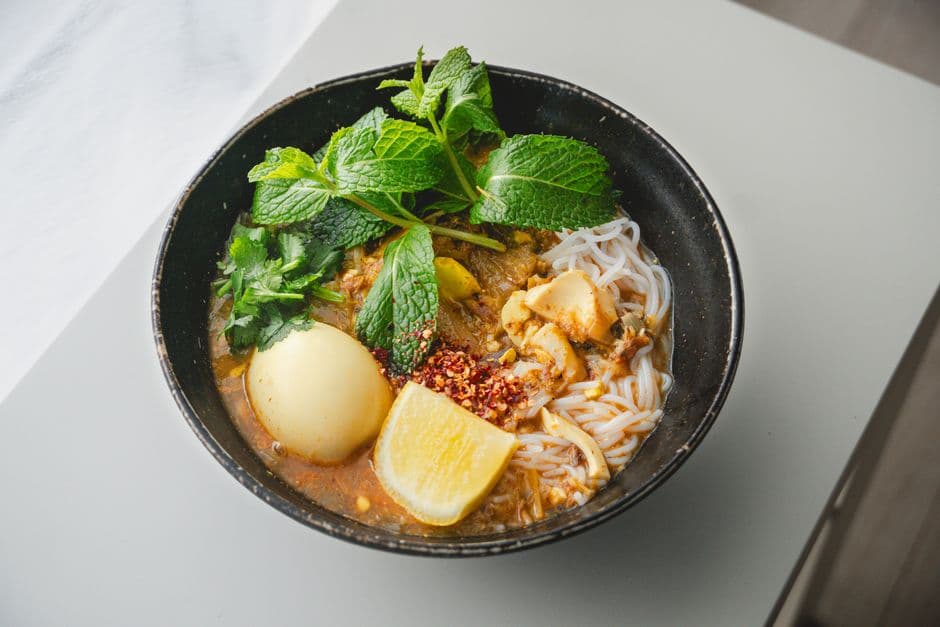
Sarawak Laksa (Malaysian Borneo Spiced Noodle Soup)
Borneo's most famous noodle soup — rice vermicelli in a fragrant coconut-tamarind broth topped with chicken, prawns, omelette ribbons and bean sprouts.
About This Recipe
Sarawak laksa is the pride of Kuching, the capital of Malaysia's Borneo state — a noodle soup so distinct from peninsular laksas (curry laksa, asam laksa, Penang laksa) that Anthony Bourdain famously called it 'breakfast of the gods.' Where Penang asam laksa is sour and fishy and Singapore laksa lemak is rich with curry coconut, Sarawak laksa hits a unique sweet spot: a fragrant broth built on a homemade laksa paste of shallots, garlic, lemongrass, galangal, chiles, candlenut and a complex toasted spice mix (coriander, fennel, star anise, cinnamon), enriched with coconut milk and sharpened with a finishing squeeze of tamarind-lime juice (calamansi if you can find it). The soup is poured over rice vermicelli and topped with shredded poached chicken, butterflied prawns, ribbons of thin omelette, bean sprouts, fresh coriander and a wedge of lime. Sarawakian breakfast stalls open at 5 a.m. and sell out by 10. The signature flavor comes from Borneo Belacan-brand laksa paste (sold internationally), though making it from scratch — though laborious — produces a deeper, more aromatic bowl that justifies the effort for a weekend cook-up.
Ingredients
Serves 4
- 1whole chicken (1.4 kg) or 4 bone-in thighs, for poaching and stock
- 12large prawns, shell-on
- 200 grice vermicelli (bihun)
- 200 gbean sprouts, blanched 15 seconds
- 3eggs, beaten and made into thin omelette ribbons
- 400 mlcoconut milk
- 8shallots; 6 garlic cloves; 3 lemongrass stalks (white only); 4 cm galangal; 4 cm ginger
- 6dried red chiles, soaked in hot water 20 minutes
- 4candlenuts (or macadamia nuts)
- 1 tbsp eachground coriander, fennel seed; 4 star anise; 1 cinnamon stick; 4 cloves
- 2 tbspbelacan (Malaysian shrimp paste), toasted
- 3 tbsptamarind concentrate mixed with 4 tbsp warm water
- to serve: calamansi or lime wedges, sambal belacan, coriander leaves
Instructions
- 1
Poach the chicken and make stock
Place the chicken in a large pot with 2.5 L water, a halved onion and a piece of ginger. Bring to a bare simmer (never boil — it toughens the meat) and cook 35 minutes. Remove the chicken to cool, then shred the meat with two forks. Strain and reserve 1.8 L stock; discard solids.
- 2
Toast the dry spices
Dry-toast coriander, fennel, star anise, cinnamon and cloves in a small skillet over medium 3 minutes until fragrant. Grind in a spice grinder or mortar to a fine powder. Toast the belacan in foil under a hot broiler 2 minutes per side — it will smell pungent and is essential for depth.
- 3
Make the rempah (spice paste)
In a food processor or large mortar, blend shallots, garlic, lemongrass, galangal, ginger, drained dried chiles and candlenuts with 3 tbsp oil until a smooth paste forms. Add the toasted spice powder and belacan and pulse once more. This is the soul of Sarawak laksa.
- 4
Fry the rempah
Heat 4 tbsp oil in a heavy pot over medium and fry the rempah, stirring constantly, for 12–15 minutes. The paste should darken and the oil should separate visibly around the edges — this is when the spices are properly cooked out and the bitterness has gone. Don't rush this step; under-fried rempah tastes raw and harsh.
Open windows and turn on extractor fans — the toasted chile-belacan smell is overwhelming but it's the price of authenticity.
- 5
Build the broth
Pour the 1.8 L chicken stock into the fried rempah and bring to a strong simmer. Cook 15 minutes for the flavors to meld, skimming any orange oil that rises. Add the coconut milk and tamarind water, simmer another 5 minutes (do not let it boil hard — coconut milk splits). Taste and adjust with salt or a touch of palm sugar.
- 6
Prepare toppings
Cook the prawns in the simmering broth 90 seconds until just pink, then remove and butterfly them along the back. Cook vermicelli per package directions (usually 4 minutes in boiling water), drain and divide among 4 deep bowls. Make thin omelette by pouring beaten egg into a hot oiled skillet, cooking 30 seconds, flipping, and rolling — slice into ribbons.
- 7
Assemble and serve
Top each bowl of vermicelli with shredded chicken, butterflied prawns, bean sprouts and omelette ribbons. Ladle the hot broth generously over everything (the broth should come halfway up the toppings). Garnish with coriander, a wedge of calamansi or lime, and a small spoonful of sambal belacan on the side. Diners squeeze the lime and stir the sambal in to taste.
Did you make this?
Rate it and help other cooks find the recipes that actually work.
One tap to sign in, and we'll save the rating you just picked.
Everything you need to plan your week — free
- Meal calendar
- Grocery list
- AI recipe ideas
Track what you eat
Snap your meal to log calories and macros, run fasting timers and track water in the free SnapCal app.
Pro Tips
- →
Authentic Borneo Belacan laksa paste (sold in Asian groceries and online) is what most home cooks in Sarawak actually use — a 200 g jar makes 4 bowls. Don't be ashamed to use it.
- →
Toasting belacan is non-negotiable — raw shrimp paste tastes sharp and fishy; toasted, it becomes deeply umami and disappears into the broth.
- →
Fry the rempah long enough — until you see the oil separate. This is the signature of properly cooked Malaysian curry pastes; under-frying ruins the broth.
- →
Calamansi gives the most authentic finish — substitute with a 50/50 mix of lime juice and orange juice if unavailable.
Variations
- •
Vegetarian Sarawak laksa — omit chicken, prawns and belacan; use vegetable stock and fermented bean paste (taucu) for umami. Top with fried tofu puffs.
- •
Quick version with paste — use 3 tbsp Borneo Belacan brand laksa paste fried in 2 tbsp oil, then build the broth as written. 70% of the flavor in 20% of the time.
- •
Curry laksa fusion — add 1 tbsp curry powder to the rempah for a heartier Penang-style flavor.
- •
Seafood-only — replace chicken with squid rings and mussels alongside the prawns.
Storage
The broth keeps refrigerated 4 days and freezes 3 months; cook noodles fresh each time as they bloat in liquid. Cooked chicken refrigerates 3 days. Reheat the broth gently — never to a hard boil, or the coconut milk will split. Add fresh garnishes and a squeeze of lime when reheating to brighten the soup.
History & Origin
Sarawak laksa was developed in Kuching by Chinese-Malay communities of mixed Peranakan heritage in the early 20th century, blending Chinese noodle-soup techniques with Malay rempah and Indian spice elements. The dish was further refined by Hokkien immigrants and became Sarawak's signature breakfast by the 1960s. Borneo Belacan, the most famous commercial paste brand, was founded in Kuching in 1956 and now exports globally.
Frequently Asked Questions
What's the difference from Singapore curry laksa?
Singapore laksa is much richer in curry powder and coconut and uses thick yellow noodles; Sarawak laksa uses thin vermicelli and has more spice complexity (star anise, cinnamon) with less curry character.
Can I make the paste ahead?
Yes — fried rempah refrigerates 2 weeks in a sealed jar topped with a thin layer of oil, or freezes 3 months. This is the most time-consuming step, so batch-cook it.
Why did my broth split?
You boiled the coconut milk too hard — it must only simmer gently. If it splits, blend a tablespoon of fresh coconut milk with a tablespoon of cold water and whisk into the broth off the heat to re-emulsify.
Where do I find candlenuts?
Asian groceries (often labeled 'kemiri'); macadamia nuts are the standard substitute — both contribute body and a subtle creaminess to the rempah.
Nutrition Facts
Per serving (580g / 20.5 oz) · 4 servings total
Time Summary
Have Questions?
Ask our AI cooking assistant anything about this recipe — substitutions, techniques, scaling.
Chat with AI Chef →Featured in Guides
This recipe is featured in the following curated guides:
More Malaysian Recipes
You Might Also Like
Similar dishes from other cuisines around the world.
Browse by Ingredient
More recipes built around the same core ingredients.
Free Kitchen Tools
Calculators and converters that pair with this page — no signup needed.
Put This Into a Plan
Schedule it, shop for it, and track what you already have.
Read Next
Longer reads that go deeper on the ideas behind this dish.
Community
Join the conversation
Sign in to leave a comment and save your favourite recipes