
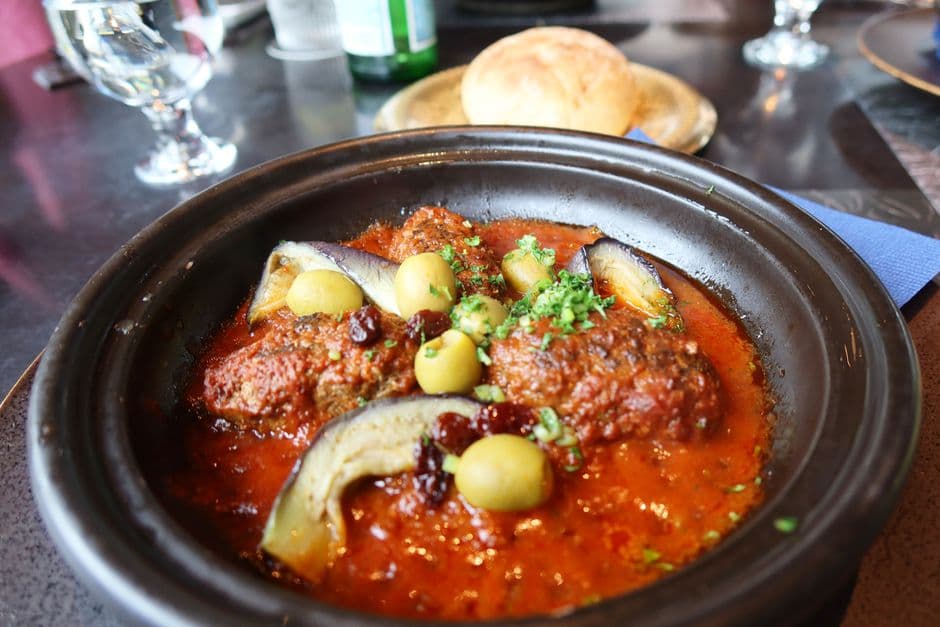
Lamb Tagine with Preserved Lemon & Olives
A slow-braised Moroccan lamb stew perfumed with warm spices, preserved lemon, and green olives.
About This Recipe
The tagine is Morocco's most emblematic dish — both the name of the clay conical cooking vessel and the slow-braised stew cooked within it. The unique shape of the tagine lid allows steam to circulate and condense, returning moisture to the stew and producing extraordinarily tender meat with minimal liquid. This lamb version with preserved lemon and green olives is a classic of Moroccan household cooking, particularly around the cities of Fez and Marrakech. The preserved lemons, cured in salt and their own juice for weeks, provide a complex, mellow citrus flavor that fresh lemon cannot replicate.
Ingredients
Serves 4
- 800 gbone-in lamb shoulder(cut into large chunks)
- 3 tbspolive oil
- 2 mediumonions(grated or finely chopped)
- 4 clovesgarlic(minced)
- 1 tspground ginger
- 1 tspground cumin
- 1 tspground coriander
- 0.5 tspground turmeric
- 0.5 tspground cinnamon
- 0.5 tspblack pepper
- 0.25 tspcayenne pepper
- 400 mlchicken or lamb stock
- 1 wholepreserved lemon(skin only, rinsed and finely sliced)
- 150 ggreen olives(pitted)
- 1 largebunch fresh cilantro(chopped)
- 1 largebunch fresh flat-leaf parsley(chopped)
- 1 tspsalt(to taste)
Instructions
- 1
Brown the Lamb
Heat olive oil in a tagine or heavy casserole over medium-high heat. Season lamb pieces with salt and half the spice blend. Brown in batches on all sides for 4–5 minutes until deeply golden. Remove and set aside. Don't rush this step — the caramelized crust adds essential depth.
Browning in batches prevents overcrowding and steaming; you want a sear, not a stew at this stage.
- 2
Build the Spiced Onion Base
In the same vessel, reduce heat to medium and add grated onions. Cook for 8 minutes, stirring, until softened and golden. Add garlic and remaining spices, stirring for 1–2 minutes until fragrant. The spiced onion base is the heart of the tagine's flavor.
- 3
Braise the Lamb
Return browned lamb to the pot. Pour over the stock — the liquid should reach about halfway up the meat. Add half the chopped herbs. Bring to a simmer, cover tightly, and cook over very low heat for 1 hour 30 minutes until the lamb is very tender and nearly falling off the bone.
- 4
Add Preserved Lemon and Olives
Add the sliced preserved lemon skin and green olives to the tagine. Stir gently and continue cooking uncovered for 15 minutes to allow the sauce to reduce slightly and the flavors to meld. The olives should be warmed through and the lemon distributed throughout.
Use only the skin of the preserved lemon — discard the pulp, which can be bitter and too salty.
- 5
Finish and Serve
Taste and adjust seasoning. Scatter remaining fresh herbs over the top. Serve directly from the tagine or a large serving dish, accompanied by couscous or warm flatbread to soak up the fragrant sauce.
Did you make this?
Rate it and help other cooks find the recipes that actually work.
One tap to sign in, and we'll save the rating you just picked.
Everything you need to plan your week — free
- Meal calendar
- Grocery list
- AI recipe ideas
Track what you eat
Snap your meal to log calories and macros, run fasting timers and track water in the free SnapCal app.
Pro Tips
- →
If using a clay tagine, soak it in water for 24 hours before first use to prevent cracking.
- →
Cook on the lowest possible heat — a tagine should barely simmer, not boil.
- →
Preserved lemons are available at Middle Eastern and specialty food stores; make your own 4 weeks ahead.
- →
Lamb shoulder is preferred over leg — it has more fat and connective tissue that melts into richness.
Variations
- •
Chicken Tagine: Replace lamb with bone-in chicken thighs and reduce cooking time to 45 minutes.
- •
Lamb and Chickpea Tagine: Add a can of drained chickpeas in the final 20 minutes for extra heartiness.
- •
Vegetable Tagine: Substitute lamb with root vegetables (parsnip, sweet potato, carrot) and double the spices.
- •
Vegetarian: swap the protein for roasted king oyster mushrooms, smoked tofu or cooked chickpeas — adjust seasoning slightly upward to compensate.
Storage
Tagine improves overnight as flavors deepen. Refrigerate for up to 3 days. Reheat gently over low heat with a splash of water. Freezes well for up to 2 months — add olives fresh when reheating.
History & Origin
Tagine cooking dates back at least a thousand years in North Africa, with the clay vessel ideally suited to the open fire or charcoal brazier cooking methods of Berber communities. The combination of lamb, preserved lemon, and olives reflects the Moroccan tradition of using fermented and preserved ingredients developed for desert climate preservation. The dish remains central to Moroccan social occasions and family gatherings.
Frequently Asked Questions
Do I need an actual tagine pot to make this dish?
No — a heavy-bottomed casserole or Dutch oven with a tight-fitting lid works very well. The key is maintaining a consistent, very low heat and preventing steam from escaping. A genuine clay tagine does add a subtle earthiness and allows for even lower heat distribution, but results are excellent in a good enameled cast iron pot.
Can I substitute preserved lemon with fresh lemon?
Fresh lemon juice and zest don't replicate the complex, mellow, fermented flavor of preserved lemons. You can make a rough approximation by simmering fresh lemon zest in salted water for 10 minutes, but it's quite different. For the most authentic result, prepare preserved lemons 4 weeks in advance or buy them — they're a transformative ingredient worth having.
Why is my tagine sauce too watery?
A watery sauce usually means too much liquid was added or the heat was too high, preventing the sauce from concentrating. For the final 20–30 minutes, remove the lid and increase heat slightly to reduce. The sauce should be a glossy, rich coating consistency rather than a thin broth. Grated onion (rather than chopped) also helps thicken the base naturally.
Can I make this ahead of time?
Yes — most of the components can be prepared up to a day in advance and refrigerated separately. Reheat gently and assemble just before serving so textures stay distinct.
Nutrition Facts
Per serving (380g / 13.4 oz) · 4 servings total
Time Summary
Have Questions?
Ask our AI cooking assistant anything about this recipe — substitutions, techniques, scaling.
Chat with AI Chef →Featured in Guides
This recipe is featured in the following curated guides:
More Moroccan Recipes
You Might Also Like
Similar dishes from other cuisines around the world.
Browse by Ingredient
More recipes built around the same core ingredients.
Free Kitchen Tools
Calculators and converters that pair with this page — no signup needed.
Put This Into a Plan
Schedule it, shop for it, and track what you already have.
Read Next
Longer reads that go deeper on the ideas behind this dish.
Community
Join the conversation
Sign in to leave a comment and save your favourite recipes