
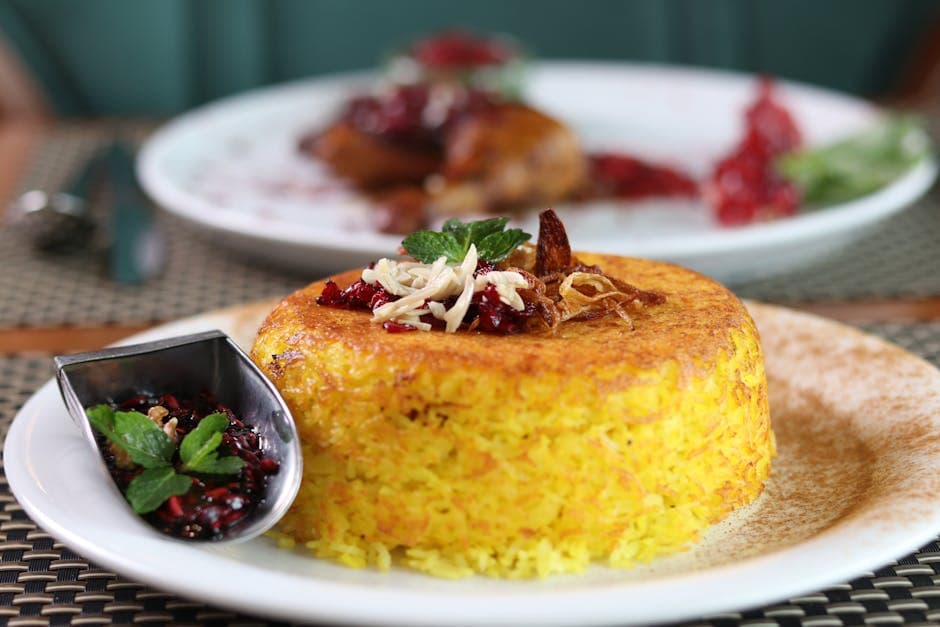
Loobia Polo
Persian green bean rice with spiced lamb — a beloved family dish.
About This Recipe
Loobia Polo is the workhorse of the Persian rice repertoire — the layered polo that Iranian families actually cook on a Tuesday night. Ground lamb or beef is simmered with onion, tomato paste, cinnamon, and turmeric, folded with green beans, then layered through parboiled basmati and steamed under a towel-wrapped lid until the grains perfume each other and a golden tahdig forms below. It belongs to the 'mixed polo' family alongside lubia's cousins like estamboli polo, where rice and stew become one dish instead of two. Comfort food first and showpiece second, it still delivers the full Persian rice ritual: saffron, steam, and the ceremonial flip.
Ingredients
Serves 6
- 3 cupsbasmati rice
- 400 gground lamb or beef
- 300 ggreen beans, trimmed and cut into 3cm pieces
- 1 largeonion, diced
- 3 tbsptomato paste
- 1 tspturmeric
- 1 tspcinnamon
- 1/2 tspblack pepper
- 1 pinchsaffron, bloomed
- 3 tbspoil
- 2 tspsalt
Instructions
- 1
Make filling
Brown the onion in oil over medium heat until golden, then add the ground meat and cook, breaking it apart, until well browned. Stir in turmeric, cinnamon, pepper, and tomato paste and fry 5 minutes so the paste darkens and loses its raw edge. Add the green beans and cook 10 minutes more until just tender-crisp.
Fry the tomato paste properly — the deep brick-red color it develops flavors the entire dish.
- 2
Parboil rice
Rinse the basmati until the water runs clear, soak if time allows, then boil in generously salted water for about 6 minutes until the grains are tender outside with a firm white core. Drain immediately — the rice finishes cooking in the steam.
- 3
Layer and steam
Coat a heavy pot with oil and a splash of saffron water, spread a thin rice layer for tahdig, then alternate layers of rice and the meat-bean mixture, finishing with rice mounded into a pyramid. Poke steam holes, drizzle with saffron water, cover with a towel-wrapped lid, and cook 5 minutes on medium-high, then 45 minutes on the lowest heat.
Always end with a rice layer on top — meat touching the lid steams unevenly and stains the presentation.
- 4
Serve
Rest the pot 5 minutes off the heat, then flip onto a platter to reveal the golden tahdig, or gently fold the layers together and serve with the tahdig in shards alongside. Accompany with thick yogurt, shirazi salad, and torshi in the classic family style.
Did you make this?
Rate it and help other cooks find the recipes that actually work.
One tap to sign in, and we'll save the rating you just picked.
Everything you need to plan your week — free
- Meal calendar
- Grocery list
- AI recipe ideas
Track what you eat
Snap your meal to log calories and macros, run fasting timers and track water in the free SnapCal app.
Pro Tips
- →
Undercook the green beans slightly in the filling — they finish to perfect tenderness in the steam.
- →
Use a non-stick pot for the most reliable tahdig release.
- →
Fry the tomato paste until it darkens; it is the backbone of the dish's flavor.
- →
Don't skip the cinnamon — its warmth against the tomato and beef is what makes loobia polo taste Persian.
- →
A squeeze of lime juice into the meat mixture brightens the whole pot.
Variations
- •
Add diced potatoes to the bottom for a combined potato tahdig.
- •
Use cubed stewing lamb instead of ground meat, braising it first until tender, for the festive version.
- •
Make it vegetarian by substituting browned mushrooms and a handful of cooked lentils for the meat.
- •
Add a pinch of Persian advieh spice blend to the meat for a more aromatic, celebratory profile.
Storage
Refrigerate up to 3 days in a sealed container; loobia polo reheats exceptionally well, covered, over low heat with a splash of water. Many Iranians insist the day-two version, pan-fried until lightly crisped, is even better.
History & Origin
Loobia Polo belongs to Iran's tradition of mixed polos — rice dishes where the accompaniment is layered and steamed with the grain, a style refined since Safavid-era kitchens codified Persian rice cookery. Green beans entered the repertoire relatively recently as New World vegetables spread through Qajar-era Iran, and the dish quickly became a fixture of home cooking. Today it is among the first complete dishes Iranian cooks learn, the dependable weeknight answer beside its showier celebration-day cousins.
Frequently Asked Questions
Can I use canned green beans?
Fresh or frozen beans give far better results — canned beans are already fully soft and collapse into mush during the 45-minute steam. If canned is all you have, skip cooking them in the meat mixture entirely and simply fold them in when layering, but expect a softer texture.
Why does my loobia polo come out mushy?
Almost always over-parboiled rice. The grains must go into the steaming pot distinctly underdone, with a firm white core, because they cook further in the steam. Rinsing the rice well, salting the boiling water generously, and draining promptly at the 6-minute mark keeps the grains separate.
What's the difference between loobia polo and estamboli polo?
They are close cousins in the mixed-polo family. Loobia polo is defined by green beans with meat and tomato; estamboli polo uses potatoes (and sometimes green beans too) in a more tomato-forward rice. Both follow the same layering and dam-steaming technique with a tahdig at the bottom.
What do you serve alongside?
Plain thick yogurt or mast-o-khiar, shirazi salad of cucumber-tomato-onion with lime, torshi pickles, and fresh herbs are the standard table companions. A wedge of raw onion is the old-school accompaniment. The dish is a complete one-pot meal, so the sides exist to refresh the palate.
Nutrition Facts
Per serving (450g / 15.9 oz) · 6 servings total
Time Summary
Have Questions?
Ask our AI cooking assistant anything about this recipe — substitutions, techniques, scaling.
Chat with AI Chef →Featured in Guides
This recipe is featured in the following curated guides:
More Persian Recipes
You Might Also Like
Similar dishes from other cuisines around the world.
Browse by Ingredient
More recipes built around the same core ingredients.
Free Kitchen Tools
Calculators and converters that pair with this page — no signup needed.
Put This Into a Plan
Schedule it, shop for it, and track what you already have.
Read Next
Longer reads that go deeper on the ideas behind this dish.
Community
Join the conversation
Sign in to leave a comment and save your favourite recipes