
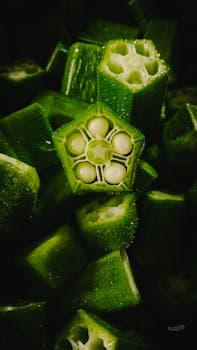
Louisiana Gumbo with Okra
Rich, spicy stew with roux, sausage and okra over rice.
About This Recipe
Gumbo is perhaps the most eloquent expression of Louisiana's multicultural history in food — a single pot that holds West African okra, French roux technique, Choctaw filé powder, Spanish bell peppers, and the smoked andouille of Acadian Cajun settlers. The dish's very name likely derives from ki ngombo, the Bantu word for okra, a testament to the ingredient that West African enslaved cooks brought to Louisiana kitchens in the early 18th century. Today it divides Louisiana loyalists into camps: Creole gumbo (tomatoes welcome, seafood prominent, associated with New Orleans' urban Creole community) versus Cajun gumbo (no tomatoes, darker roux, rural South Louisiana roots). What both share is an obsession with the roux — a simple cooked mixture of fat and flour that, when taken to dark brown over sustained heat, transforms into something complex, nutty, and deeply savory, with none of the raw flour flavor you'd expect. This okra version belongs to the okra-thickened tradition, which predates filé powder in Louisiana cooking by at least a century. Okra's mucilaginous texture melts into the broth as it simmers, adding body and a subtle vegetal sweetness that balances the smoke of andouille. The process demands patience on two fronts: the roux must be stirred constantly for 15–20 uninterrupted minutes until it reaches a deep mahogany that smells of popcorn and roasted nuts, and the finished gumbo needs at least 30 minutes of gentle simmering for the flavors to coalesce. Serve over long-grain white rice with a bottle of Crystal hot sauce on the table — in Louisiana, that is not optional.
Ingredients
Serves 6
- 4 tbspflour
- 4 tbspoil
- 1 largeonion(diced)
- 3 ribscelery(diced)
- 1 largebell pepper(diced)
- 300 gandouille sausage(sliced)
- 6 cupschicken broth
- 250 gokra(sliced)
- 2 tbsptomato paste
- 1 tbspcajun seasoning
- 2 cupscooked rice
Instructions
- 1
Make the dark roux
Combine oil and flour in a heavy-bottomed Dutch oven or cast-iron pot over medium heat. Whisk immediately and continuously as the roux begins to cook — it will lighten first, then gradually darken through blonde, peanut-butter brown, and finally reach a deep mahogany colour after 15–20 minutes. It should smell nutty and toasty, not burnt. Never stop stirring and never walk away.
If you see black specks, the roux is scorched and must be discarded — a burnt roux makes the entire gumbo bitter with no fix. Start over with clean equipment.
- 2
Cook the holy trinity
The moment the roux reaches dark mahogany, add all the diced onion, celery, and bell pepper at once — the cold vegetables will immediately stop the roux from darkening further. Stir vigorously, scraping the bottom of the pot, and cook 5–7 minutes over medium heat until the vegetables soften and the roux smell transitions from sharp to sweet.
- 3
Brown the andouille
Add the sliced andouille sausage and cook 4–5 minutes, stirring occasionally, until the edges brown and the sausage releases some of its smoky fat into the aromatics. The roux, vegetables, and sausage fat will amalgamate into an intensely fragrant, rust-coloured paste.
- 4
Add broth and build the stew
Pour in the chicken broth in three additions, whisking after each to fully incorporate the roux before adding more — this prevents lumping. Add tomato paste and Cajun seasoning, bring to a gentle boil, then reduce to a low simmer. The broth will be quite thin at this point; this is correct.
Use homemade or low-sodium broth — Cajun seasoning already contains significant salt, and commercial broth can make the gumbo unpleasantly salty.
- 5
Add okra and simmer
Add the sliced okra and stir to combine. Simmer uncovered for 25–30 minutes, stirring occasionally, until the okra is completely tender and has released its natural thickener into the broth — the gumbo should look noticeably darker and slightly glossy.
- 6
Taste and adjust
Taste carefully for seasoning. Louisiana cooking tends toward boldness — add more Cajun seasoning, a few dashes of hot sauce, or a pinch of salt as needed. The gumbo should be full-flavoured and slightly spicy, with a smoky depth from the roux and sausage.
- 7
Serve over rice
Mound a serving of cooked long-grain white rice in the centre of each wide bowl and ladle the gumbo around and over it — Louisianans serve the rice separately, not cooked in the gumbo. Finish each bowl with a sprig of flat-leaf parsley and hot sauce on the side.
Did you make this?
Rate it and help other cooks find the recipes that actually work.
One tap to sign in, and we'll save the rating you just picked.
Everything you need to plan your week — free
- Meal calendar
- Grocery list
- AI recipe ideas
Track what you eat
Snap your meal to log calories and macros, run fasting timers and track water in the free SnapCal app.
Pro Tips
- →
Have everything prepped and within arm's reach before the roux goes on the heat — once it starts, your only job is stirring and you cannot stop to chop vegetables.
- →
A heavy cast-iron pot distributes heat evenly and reduces hot spots, the leading cause of a scorched roux on home stoves.
- →
Use real andouille sausage from a Cajun producer if you can find it — supermarket 'andouille' is often a milder kielbasa-style sausage that does not deliver the same smoke intensity.
- →
Gumbo always tastes better the next day, once the flavors have had time to meld overnight in the refrigerator; make it a day ahead whenever possible.
- →
Filé powder (ground sassafras leaves) can be stirred into individual bowls at the table as an additional thickener — never add it to the pot while the gumbo is still on heat, as it turns slimy and stringy.
Variations
- •
Seafood gumbo: add 500 g of shrimp, 200 g of crab meat, and 12 oysters in the last 5 minutes of cooking — long enough to cook through, short enough to stay tender.
- •
Chicken and sausage gumbo: brown bone-in chicken thighs first, remove, pull the meat off the bone after simmering, and return the shredded meat to the pot in the final 10 minutes.
- •
Filé-thickened gumbo (z'herbes): omit the okra entirely and stir 1 tablespoon of filé powder into each bowl at serving — this is the Lenten tradition of gumbo z'herbes, made with seven greens on Holy Thursday.
- •
Vegetarian gumbo: replace the andouille with sliced smoked mushrooms and use vegetable broth; a teaspoon of smoked paprika compensates for the lost smokiness.
Storage
Cool to room temperature and refrigerate in a covered container for up to 4 days — the flavors deepen appreciably by day two. Reheat over medium-low heat with a splash of broth to loosen it, as the roux thickens considerably when cold. Gumbo freezes excellently for up to 3 months; freeze without the rice and cook fresh rice when reheating.
History & Origin
Gumbo's roots are documented in New Orleans records from the early 1800s, though the dish's essential building blocks — okra from West Africa, roux from French colonial cooking, filé from Choctaw cuisine, and sausage from Acadian settlers — came together in Louisiana's unique cultural cauldron throughout the 18th century. The first printed gumbo recipe appears in a New Orleans newspaper from 1803. By the mid-19th century, gumbo had become the defining symbol of Louisiana Creole cuisine, served at grand Creole dinner tables and in humble rural cabins alike. It was named Louisiana's official cuisine in 2004.
Frequently Asked Questions
What is the difference between Cajun gumbo and Creole gumbo?
The most reliable distinction is tomatoes: Creole gumbo from New Orleans often includes tomatoes and leans heavily on seafood, reflecting the city's French and Spanish Creole heritage. Cajun gumbo from rural South Louisiana typically omits tomatoes, uses a darker roux, and features chicken and andouille sausage. Both are authentic; neither is more 'correct' than the other.
What is the trinity and why is it essential?
The Cajun and Creole holy trinity is onion, celery, and green bell pepper — the aromatic base of virtually every Louisiana savory dish, analogous to the French mirepoix of onion, carrot, and celery. These three vegetables provide the structural flavor foundation on which roux, sausage, and broth are layered. Omitting or reducing any of the three changes the character of the finished gumbo significantly.
How dark should the roux actually be?
For gumbo, you want a roux between the colour of dark peanut butter and milk chocolate — food scientists describe it as 'brick red' to 'dark brown.' At this point the starch molecules have fully broken down and the Maillard reaction has produced dozens of complex flavor compounds that taste nutty, roasty, and slightly bitter. A blonde roux tastes raw and floury; a black roux is burnt and ruined. Aim for that chocolate zone.
Can I make gumbo without okra?
Absolutely. Filé powder (ground dried sassafras leaves) is the traditional alternative thickener used especially in winter when okra is out of season. Add about 1 tablespoon per pot, but only after removing from heat and just before serving — boiling filé makes it slimy and unpleasant. You can also simply rely on the roux as the sole thickener, producing a thinner but equally delicious gumbo.
Why does my gumbo taste bland even after adding Cajun seasoning?
Two common causes: a roux that didn't reach dark enough colour loses its depth before seasoning even enters the picture, and low-quality broth dilutes rather than amplifies flavor. Use good homemade or reduced-sodium store-bought broth, take the roux darker than you think is necessary, and season in layers — taste after adding the sausage, after adding the broth, and again at the end.
Nutrition Facts
Per serving (350g / 12.3 oz) · 6 servings total
Time Summary
Have Questions?
Ask our AI cooking assistant anything about this recipe — substitutions, techniques, scaling.
Chat with AI Chef →Featured in Guides
This recipe is featured in the following curated guides:
More American Recipes
You Might Also Like
Similar dishes from other cuisines around the world.
Browse by Ingredient
More recipes built around the same core ingredients.
Free Kitchen Tools
Calculators and converters that pair with this page — no signup needed.
Put This Into a Plan
Schedule it, shop for it, and track what you already have.
Read Next
Longer reads that go deeper on the ideas behind this dish.
Community
Join the conversation
Sign in to leave a comment and save your favourite recipes