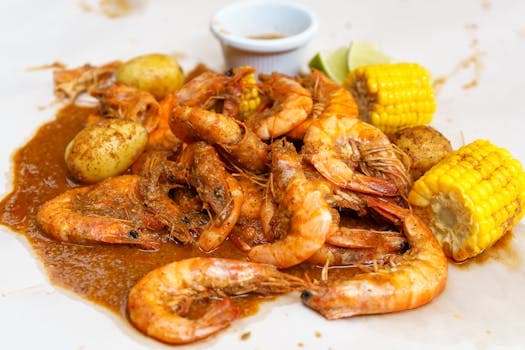
Low country boil, also called Frogmore stew, is the coastal Carolina and Georgia answer to the Louisiana crawfish boil: shrimp, smoked sausage, sweet corn, and red potatoes simmered together in one heavily seasoned pot. There is no actual stew here; the seasoned cooking liquid does its work and is then drained away, leaving the food to be dumped onto newspaper-covered tables for a hands-on feast. The trick is staggering the ingredients so the potatoes are creamy, the corn is crisp-sweet, and the shrimp are just barely cooked. Old Bay or a Carolina-style crab boil seasoning ties everything together with celery salt, paprika, and pepper.
Serves 4
Halve red potatoes, cut corn cobs into thirds, slice smoked sausage into 2-inch chunks, and leave shrimp shell-on for flavor. Fill a large stockpot two-thirds with water and add seasoning, halved lemons, and a quartered onion.
Shell-on shrimp protect the meat from the salty boil and add flavor; guests peel at the table.
Bring the pot to a rolling boil, add potatoes, and cook 10 to 12 minutes until a knife slides in with slight resistance. Add sausage and corn and boil 5 minutes more so the corn stays snappy.
Drop in the shrimp, stir once, and cook just 2 to 3 minutes until they curl loosely and turn opaque pink. Immediately drain everything in a large colander so nothing keeps cooking in the hot liquid.
Shrimp overcook in seconds; pull them when they form a loose C shape, because a tight O means they are already rubbery.
Dump the boil onto a newspaper-lined table or large platter and dust generously with extra seasoning. Serve hot with melted butter, cocktail sauce, lemon wedges, and plenty of napkins.
Salt the water aggressively, like pasta water; it is the only chance to season the potatoes from within.
Stagger additions by cooking time so every component finishes together.
Use a kielbasa or andouille that is fully smoked; raw sausage muddies the broth.
Drain immediately after the shrimp finish; carryover heat in the liquid keeps cooking everything.
A frozen lemon halved into the pot brightens the entire boil without extra acid prep.
Add blue crab clusters or snow crab legs with the corn for a seafood-heavy spread.
Crawfish-style Cajun version: swap Old Bay for Louisiana crab boil and add extra cayenne.
Oven sheet-pan version: roast the same ingredients tossed in butter and seasoning at 400°F for 25 minutes.
Vegetable-forward boil: add quartered artichokes and whole garlic heads with the potatoes.
Refrigerate peeled leftovers in an airtight container for up to 2 days and reheat gently in a skillet with butter. Leftover shrimp and sausage also make an excellent next-day rice bowl or omelet filling.
The dish comes from the Lowcountry of South Carolina and Georgia, where Gullah Geechee communities have long cooked one-pot seafood meals from tidal creeks and smokehouses. The name Frogmore stew refers to the Frogmore community on St. Helena Island, where a National Guardsman named Richard Gay popularized the recipe in the 1960s. Unlike Cajun boils, it traditionally relies on milder Chesapeake-style seasoning rather than fiery Louisiana spice.
A low country boil features shrimp and milder Old Bay-style seasoning from the Carolina coast, while a Louisiana crawfish boil centers on crawfish with hotter Cajun spice blends. Both share the same one-pot, dump-on-the-table format with sausage, corn, and potatoes.
Plan on about half a pound of shrimp, a quarter pound of sausage, one ear of corn, and two small potatoes per adult. For a crowd, it scales easily; just boil in batches if your pot cannot hold everything without crowding.
Absolutely. Thaw them overnight in the refrigerator or under cold running water, and keep the shells on for flavor and protection. Frozen shrimp are often fresher than the thawed shrimp at the seafood counter, which were usually frozen and defrosted anyway.
Everything was likely added at once. The ingredients need staggered timing: potatoes first for 10 to 12 minutes, then sausage and corn, with shrimp going in only for the final 2 to 3 minutes before draining.
Per serving (300g / 10.6 oz) · 4 servings total
Ask our AI cooking assistant anything about this recipe — substitutions, techniques, scaling.
Chat with AI Chef →Join the conversation
Sign in to leave a comment and save your favourite recipes
Have feedback or need help?
We read every email and reply within 1–2 business days.
© 2026 MyCookingCalendar. All rights reserved.