
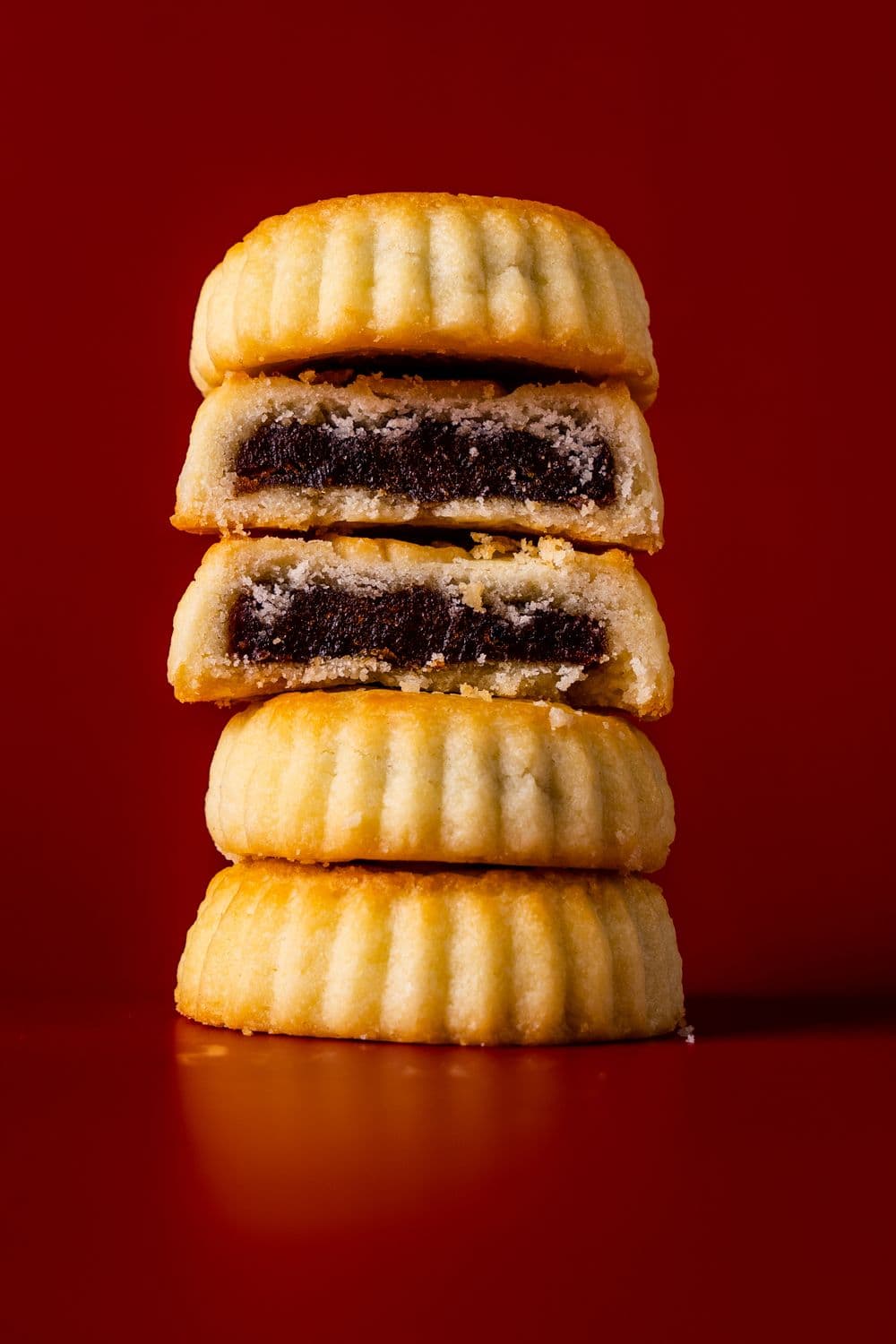
Maamoul
Lebanese semolina cookies stuffed with dates or walnuts — beloved at Easter and Eid.
About This Recipe
Maamoul are the cookies that mark sacred time in Lebanon — buttery semolina shortbreads hiding a heart of date paste or spiced nuts, pressed into carved wooden molds whose patterns traditionally signal the filling inside. In the days before Easter and Eid, kitchens across the country turn into maamoul workshops, with trays of dough resting and generations shaping side by side. The texture is the whole craft: semolina hydrated slowly by butter and floral waters, rested so the grains soften, then baked gently until barely colored — overbaking is the cardinal sin, because maamoul should crumble tenderly, not snap. Dusted with powdered sugar, they keep for weeks, which is precisely the point of a holiday cookie made by the hundred.
Ingredients
Serves 36
- 3 cupsfine semolina
- 1 cupall-purpose flour
- 250 gbutter, softened
- 1/4 cuppowdered sugar
- 1/4 cuprose water
- 1/4 cuporange blossom water
- 400 gpitted Medjool dates
- 2 tbspbutter
- 1/2 tspcinnamon
- powdered sugar for dusting
Instructions
- 1
Make dough
Rub the softened butter into the semolina, flour, and powdered sugar with your fingertips until the mixture is evenly sandy and holds together when squeezed. Add the rose and orange blossom waters gradually, working gently until a soft, pliable dough forms — it should feel like damp sand that molds easily. Cover and rest at least 1 hour, ideally overnight, so the semolina hydrates fully.
The overnight rest transforms the texture — grainy dough becomes smooth and the cookies bake up far more tender.
- 2
Make date filling
Process the dates with the butter and cinnamon until they form a smooth, glossy paste — if the dates are dry, soak them in hot water for 10 minutes and drain first. With lightly oiled hands, roll the paste into balls about the size of a small cherry, one per cookie.
- 3
Shape
Take a walnut-sized piece of dough, roll it smooth, and press a deep well into it with your thumb, thinning the walls evenly. Tuck a date ball inside and pinch the dough closed over it completely. Press the sealed ball gently into a floured maamoul mold and tap it out sharply against the counter edge — or shape by hand and crimp patterns with a fork.
Flour the mold lightly between every few cookies so the dough releases cleanly with sharp pattern definition.
- 4
Bake
Arrange the maamoul on parchment-lined trays with a little space between them and bake at 180°C for 15–20 minutes. They are done when the bottoms are lightly golden and the tops are still pale, barely blushing — they look underdone but firm up completely as they cool. Any visible browning on top means they've gone too far.
Pull them paler than instinct suggests; overbaked maamoul are dry and hard instead of melting.
- 5
Finish
Cool the cookies completely on the trays — they are fragile while warm — then dust generously with powdered sugar. Tradition dusts the nut-filled shapes heavily and leaves date maamoul barely sugared, since the dates carry their own sweetness.
Did you make this?
Rate it and help other cooks find the recipes that actually work.
One tap to sign in, and we'll save the rating you just picked.
Everything you need to plan your week — free
- Meal calendar
- Grocery list
- AI recipe ideas
Track what you eat
Snap your meal to log calories and macros, run fasting timers and track water in the free SnapCal app.
Pro Tips
- →
Rest the dough overnight if you can — hydrated semolina is the difference between sandy and meltingly tender.
- →
Don't overbake: the tops should stay pale, with only the bottoms taking light gold color.
- →
Keep dough portions and filling balls uniform so the whole batch bakes evenly.
- →
If the dough cracks while shaping, knead in a teaspoon more orange blossom water — it should never be dry.
- →
Let them cool fully before moving; warm maamoul crumble at a touch but become sturdy once cold.
Variations
- •
Walnut maamoul: fill with chopped walnuts mixed with sugar, cinnamon, and a splash of rose water — traditionally the round domed shape.
- •
Pistachio maamoul: ground pistachios with powdered sugar and orange blossom water, classically in the elongated oval mold.
- •
Maamoul madd: press the dough and filling in flat layers in a tray, bake, and cut into squares for the quicker sheet version.
- •
Dairy-free: substitute vegetable shortening or olive oil for the butter, common during Lent fasting.
Storage
Stored airtight at room temperature, maamoul keep beautifully for 2 weeks — their texture actually settles and improves after a day or two. They freeze for up to 3 months, baked and un-dusted; thaw at room temperature and add the powdered sugar fresh.
History & Origin
Stuffed celebration cookies of this kind have extremely old roots in the Levant and wider Middle East, with food historians pointing to ancient and early-medieval antecedents, and the wooden maamoul mold itself is an heirloom object passed down through families. What makes maamoul remarkable in Lebanon is their shared sacredness: Christians bake them for Easter and Muslims for Eid, often exchanging trays across communities — a rare edible symbol of the country's interwoven traditions.
Frequently Asked Questions
Do I need a maamoul mold?
No — molds create the beautiful traditional patterns and help signal the filling, but hand-shaped maamoul taste identical. Form smooth domes or ovals and decorate the tops with fork tines, the edge of a teaspoon, or special crimping tweezers (malqat). If you fall in love with the cookies, inexpensive plastic and carved wooden molds are easy to find online or at Middle Eastern shops.
Why did my maamoul crack while shaping?
The dough is too dry, usually from under-resting or too little liquid. Semolina drinks moisture slowly, which is why the long rest matters. Knead in additional orange blossom water or rose water a teaspoon at a time until the dough molds without splitting. Keeping the dough covered while you work also prevents the surface drying out.
Can I use other date varieties?
Yes — any soft, sweet date works. Medjool is the easiest because it is naturally moist and pastes smoothly, but Deglet Noor or baking-grade date blocks (sold pressed at Middle Eastern stores) are traditional and economical. Firmer dates just need a 10-minute soak in hot water before processing, and a knob of butter always helps the paste come together.
How far ahead can I bake them for a holiday?
Maamoul are designed for exactly this — bake them up to 2 weeks ahead and store airtight at room temperature, where the flavor and texture genuinely improve over the first days. For longer lead times, freeze the baked cookies up to 3 months and dust with powdered sugar after thawing so the coating stays snowy.
Nutrition Facts
Per serving (40g / 1.4 oz) · 36 servings total
Time Summary
Have Questions?
Ask our AI cooking assistant anything about this recipe — substitutions, techniques, scaling.
Chat with AI Chef →Featured in Guides
This recipe is featured in the following curated guides:
More Lebanese Recipes
You Might Also Like
Similar dishes from other cuisines around the world.
Free Kitchen Tools
Calculators and converters that pair with this page — no signup needed.
Put This Into a Plan
Schedule it, shop for it, and track what you already have.
Read Next
Longer reads that go deeper on the ideas behind this dish.
Community
Join the conversation
Sign in to leave a comment and save your favourite recipes