
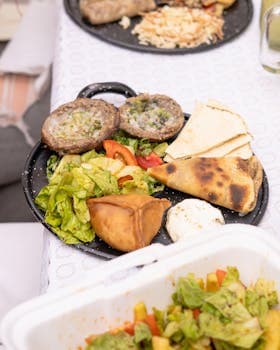
Makanek
Lebanese spiced lamb sausages pan-fried with lemon and pine nuts — mezze perfection.
About This Recipe
Makanek are Lebanon's little thunderbolts — short, plump lamb sausages packed with cinnamon, allspice, and nutmeg, fried hard so their fat renders into the pan, then deglazed at the last second with lemon juice so each one arrives glazed, tangy, and sizzling. In Beirut they are mezze royalty, ordered alongside hummus and arak and speared with toothpicks straight from the skillet. Made at home without casings, they lose nothing essential: the spiced lamb mixture rests so the flavors marry, the sausages are shaped small so they cook fast and stay juicy, and the pan sauce of rendered fat and lemon does the finishing work. The pine nuts inside are not optional — they are the signature.
Ingredients
Serves 6
- 500 gground lamb
- 1/2 cuppine nuts
- 1 tspcinnamon
- 1 tspallspice
- 1/2 tspnutmeg
- 1/2 tspblack pepper
- 1 tspsalt
- 1 tbsppomegranate molasses
- 1 tbspolive oil
- 2 tbsplemon juice
Instructions
- 1
Make sausage mixture
Knead the lamb thoroughly with the pine nuts, cinnamon, allspice, nutmeg, pepper, salt, and pomegranate molasses until evenly blended and slightly sticky — a couple of minutes of real kneading helps the sausages hold together. Cover and refrigerate at least 30 minutes (or overnight) so the spices penetrate the meat.
Fry a teaspoon of the mixture to taste-test the seasoning before shaping the whole batch.
- 2
Shape
With lightly oiled hands, roll the chilled mixture into small sausages about 5 cm long and 2 cm thick — roughly thumb-sized. Keep them uniform so they cook at the same rate. Traditional makanek are piped into thin lamb casings, but free-formed sausages crisp beautifully and are far easier at home.
- 3
Cook
Heat the olive oil in a wide skillet over medium-high heat and fry the sausages in a single layer, turning every couple of minutes, until browned on all sides and just cooked through, 8–10 minutes total. Pour the lemon juice into the hot pan, toss for 30 seconds as it bubbles with the rendered fat into a quick glaze, and pull from the heat.
Don't overcrowd the pan — steam prevents the deep browning that defines good makanek.
- 4
Serve
Tip the sausages and every drop of the lemony pan juices onto a warm plate. Serve immediately with fresh pita for mopping, pickled turnips, olives, and lemon wedges — and toothpicks if they're headed to a mezze table.
Did you make this?
Rate it and help other cooks find the recipes that actually work.
One tap to sign in, and we'll save the rating you just picked.
Everything you need to plan your week — free
- Meal calendar
- Grocery list
- AI recipe ideas
Track what you eat
Snap your meal to log calories and macros, run fasting timers and track water in the free SnapCal app.
Pro Tips
- →
Use lamb with a decent fat content — around 20% — because the rendering fat becomes the base of the pan sauce.
- →
Resting the spiced mixture at least 30 minutes (ideally overnight) makes a noticeable difference in flavor depth.
- →
Pull the sausages the moment they are cooked through; their small size means the line between juicy and dry is about a minute.
- →
The pine nuts inside are the authentic signature — toast them lightly first for extra aroma.
- →
Some Beirut cooks finish with pomegranate molasses instead of lemon for a darker, sweet-sour glaze; try both.
Variations
- •
Beef makanek: substitute 80/20 ground beef where lamb is unavailable; add a teaspoon of olive oil to the mix.
- •
Spicy soujouk-style: add chili flakes and extra garlic to move them toward Lebanon's other beloved sausage.
- •
Wine-splashed: deglaze with a splash of red wine before the lemon, a popular restaurant touch.
- •
Makanek wrap: stuff the fried sausages into pita with toum, fries, and pickles for the classic sandwich.
Storage
The raw spiced mixture or shaped sausages keep 2 days refrigerated, or freeze raw for up to 3 months in a single layer before bagging. Cooked makanek keep 3 days refrigerated and reheat well in a hot skillet with a fresh squeeze of lemon.
History & Origin
Makanek belong to Lebanon's small but proud charcuterie tradition, alongside soujouk and awarma, with the name generally traced back through Aramaic and ultimately to the Latin word for sausage. They were historically hand-stuffed by mountain and city butchers and reserved for festive mezze spreads. Today they remain a fixture of Beirut's mezze restaurants and a beloved test of any butcher's spice blend.
Frequently Asked Questions
Do I need sausage casing?
No — traditional makanek use thin lamb casings, but the home version shaped by hand into small cylinders or patties delivers the same spiced, lemon-glazed result without special equipment. If you do want casings, sheep casings around 20 mm are right, and a butcher supplying Middle Eastern shops can often sell you a small amount.
What is the difference between makanek and soujouk?
Both are spiced Levantine sausages, but they head in different directions: makanek are mild-spiced with warm baharat notes — cinnamon, allspice, nutmeg — and finished with lemon, while soujouk is heavily seasoned with garlic, chili, and fenugreek, giving it a hotter, more pungent character. Lebanese mezze spreads frequently serve both side by side.
Can I grill makanek instead of pan-frying?
Yes — thread them onto skewers or use a grill basket and cook over medium coals, turning often, for 8–10 minutes. You lose the pan sauce, so squeeze lemon generously over them straight off the grill or toss them briefly in a hot skillet with the lemon juice afterward to recreate the glaze.
What should I serve alongside?
Makanek shine in a mezze context: hummus, labneh, pickled turnips, olives, fresh vegetables, and plenty of pita to mop the lemony fat. As a quick meal, pile them into pita with garlic sauce and fries — the beloved Lebanese sandwich treatment — or serve over rice with a chopped salad.
Nutrition Facts
Per serving (200g / 7.1 oz) · 6 servings total
Time Summary
Have Questions?
Ask our AI cooking assistant anything about this recipe — substitutions, techniques, scaling.
Chat with AI Chef →More Lebanese Recipes
You Might Also Like
Similar dishes from other cuisines around the world.
Browse by Ingredient
More recipes built around the same core ingredients.
Free Kitchen Tools
Calculators and converters that pair with this page — no signup needed.
Put This Into a Plan
Schedule it, shop for it, and track what you already have.
Read Next
Longer reads that go deeper on the ideas behind this dish.
Community
Join the conversation
Sign in to leave a comment and save your favourite recipes