
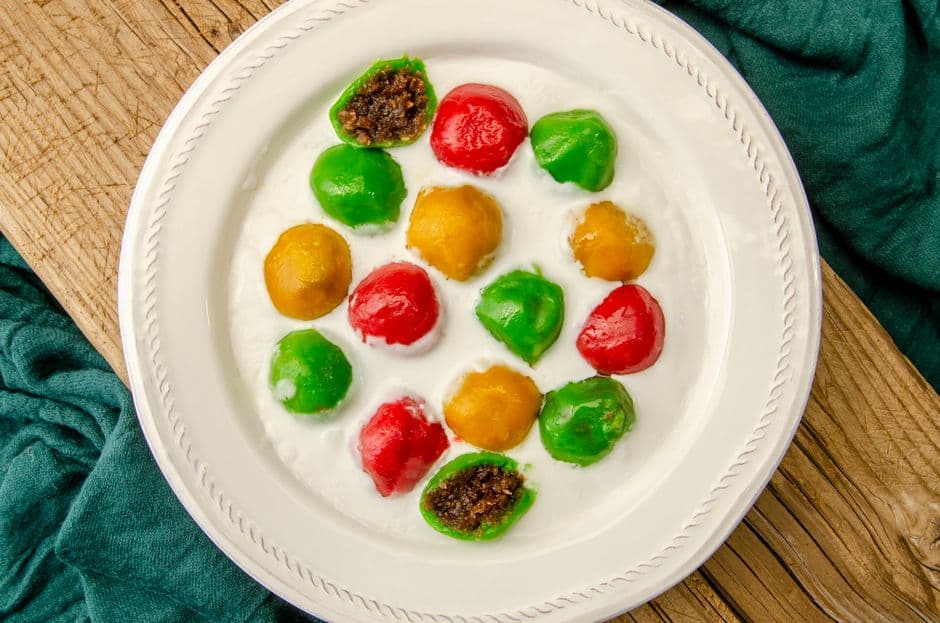
Malaysian Cendol (Pandan Jelly Coconut Shaved Ice)
Malaysia's iconic hawker dessert — green pandan rice jelly worms over shaved ice, drowned in coconut milk and dark palm sugar syrup.
About This Recipe
Cendol is the great street-stall dessert of Malaysia, Singapore, southern Thailand, and Indonesia — a tall glass or bowl of shaved ice topped with squiggly, bright-green pandan-flavored rice jelly 'worms,' drowned in coconut milk and crowned with a generous pour of inky-dark palm sugar syrup (gula melaka). It exists to be eaten on a swelteringly hot afternoon at a Penang street stall after walking 40 minutes through humid heat — stir everything together, raise the spoon, and the contrast of cold ice, smoky palm sugar, milky coconut, and chewy green worms is one of the great refreshment experiences on earth. The green jellies are the defining element: made by pushing a paste of rice flour and pandan juice through a perforated mold (or piping bag with a hole cut into the tip) directly into ice water so the strands set instantly into wriggly worm shapes. Gula melaka is the second star: a smoky-malt-caramel palm sugar from the Melaka region whose deep complexity cannot be replicated by any other sweetener. Authentic versions add a spoon of sweet red beans or sweet corn at the bottom; modern hawkers in KL might add ice cream or durian. Stripped to essentials, cendol is the most refreshing 5-ingredient dessert in Southeast Asia.
Ingredients
Serves 4
- 100 grice flour
- 30 gtapioca starch
- 1 pinchsalt
- 10 leavesfresh pandan leaves (or 2 tsp pandan paste)
- 500 mlwater (for the jelly batter)
- 1 Lice-cold water with ice cubes (for setting the jelly)
- 200 ggula melaka (Malaccan palm sugar), chopped
- 100 mlwater (for syrup)
- 2 leavespandan leaves, knotted (for syrup)
- 400 mlthick coconut milk (full-fat, chilled)
- 0.5 tspsalt (for coconut milk)
- 2 Lfinely shaved or crushed ice
- 100 gsweet red beans (azuki, optional but traditional)
Instructions
- 1
Make pandan juice
If using fresh pandan leaves: snip into 5 cm pieces, blend with 200 ml of the water, then strain through cheesecloth to extract bright green juice. Top up with more water to total 500 ml. If using pandan paste, add to the water directly.
- 2
Cook the jelly batter
In a saucepan, whisk rice flour, tapioca starch, and salt with the pandan water until completely smooth. Cook over medium-low heat, stirring constantly with a silicone spatula, 8–10 minutes until it thickens into a glossy, smooth paste with no white spots. It should look like very thick green custard.
- 3
Set the jellies
Prepare a large bowl with ice water and floating ice cubes. Working quickly while the paste is hot, push it through a perforated cendol mold (or a colander with large holes, or a piping bag with the tip snipped) directly into the ice water. Tap with the back of a spoon to encourage strands to drop. The worms set instantly on contact with cold water.
Work in batches and keep stirring the paste in the saucepan so it stays warm and pliable.
- 4
Drain the jellies
Let the cendol jellies rest in the ice water 5 minutes to firm up. Drain through a fine sieve and refrigerate until needed. They can be made up to 24 hours ahead.
- 5
Make the gula melaka syrup
In a small pan, combine chopped gula melaka with 100 ml water and pandan leaves. Warm over low heat, stirring, 5 minutes until completely dissolved into a thick dark syrup. Cool to room temperature. Strain to remove pandan. Refrigerate.
- 6
Salt the coconut milk
Stir 0.5 tsp salt into chilled coconut milk — this small amount of salt is what makes cendol's coconut milk taste so memorable. Keep cold until serving.
- 7
Prep optional toppings and ice
Drain sweet red beans if using. Shave or finely crush ice — you want fluffy snow, not big cubes. The ice should be ready right before assembling.
- 8
Assemble and serve
In each tall glass: 2 tablespoons sweet red beans at the bottom, then a fistful of cendol jellies, then a generous pile of shaved ice. Pour 80 ml salted coconut milk over the ice, then 60 ml gula melaka syrup. Serve immediately with a long spoon and instruct each diner to stir vigorously before drinking-eating.
Did you make this?
Rate it and help other cooks find the recipes that actually work.
One tap to sign in, and we'll save the rating you just picked.
Everything you need to plan your week — free
- Meal calendar
- Grocery list
- AI recipe ideas
Track what you eat
Snap your meal to log calories and macros, run fasting timers and track water in the free SnapCal app.
Pro Tips
- →
Gula melaka (Malaccan palm sugar) is genuinely irreplaceable — it has a smoky-burnt-caramel character no other sugar matches. Sold at SE Asian grocers in palm-leaf wrapped discs. If absolutely unavailable, dark muscovado is the closest backup.
- →
The jelly paste must be cooked to fully translucent — undercooked paste tastes powdery and the worms won't have the proper chew.
- →
A cendol mold (perforated cone) is available cheaply online. A colander with 4–5 mm holes works almost as well. A piping bag with a tip snipped is the home cook's solution.
- →
Salt the coconut milk — this is non-negotiable. Unsalted coconut milk over ice tastes flat and dull. The slight saltiness is what makes cendol pop.
Variations
- •
Cendol durian — add a spoonful of fresh durian flesh; controversial but beloved across the region.
- •
Cendol with sweet corn — replace red beans with sweet corn kernels, Penang street-stall style.
- •
Cendol ice cream — top with a scoop of coconut or vanilla ice cream for a modern KL café version.
- •
Cendol pulut (with sticky rice) — add 2 tablespoons of warm coconut-soaked glutinous rice at the bottom, popular in Singapore.
Storage
Cendol jellies refrigerate 24 hours in cold water; lose chew after that. Gula melaka syrup keeps refrigerated 2 weeks. Salted coconut milk stays fresh 2 days refrigerated. Assemble cendol just before serving — ice melts within minutes.
History & Origin
Cendol is shared heritage across the Malay archipelago — Malaysia, Singapore, Indonesia, and southern Thailand all claim versions, with the dish documented since the colonial era in 19th-century Java and the Straits Settlements. Melaka's gula melaka palm sugar gives the Malaysian version its definitive character; Penang and Melaka cendol stalls are pilgrimage destinations.
Frequently Asked Questions
Can I use store-bought cendol jellies?
Yes — sold frozen at SE Asian grocers (Penang Cendol or Sing Long brands). Thaw before using. Convenience is fine; texture is 90 percent as good as homemade.
What if I can't find gula melaka?
Dark muscovado sugar is the closest backup (similar molasses depth). Brown sugar works but tastes flat. Date syrup mixed with a pinch of smoked salt is a creative alternative.
Why are my jellies short and broken instead of long worms?
Either the paste was too thick (add a tablespoon of water and re-warm) or the holes in your mold/colander were too small. The strands need to be pushed through holes of about 4–5 mm.
Can I freeze the leftover jellies?
No — freezing breaks the rice-jelly texture and they become powdery on thawing. Make only what you'll eat within 24 hours.
Nutrition Facts
Per serving (460g / 16.2 oz) · 4 servings total
Time Summary
Have Questions?
Ask our AI cooking assistant anything about this recipe — substitutions, techniques, scaling.
Chat with AI Chef →Featured in Guides
This recipe is featured in the following curated guides:
More Malaysian Recipes
You Might Also Like
Similar dishes from other cuisines around the world.
Browse by Ingredient
More recipes built around the same core ingredients.
Free Kitchen Tools
Calculators and converters that pair with this page — no signup needed.
Put This Into a Plan
Schedule it, shop for it, and track what you already have.
Read Next
Longer reads that go deeper on the ideas behind this dish.
Community
Join the conversation
Sign in to leave a comment and save your favourite recipes