
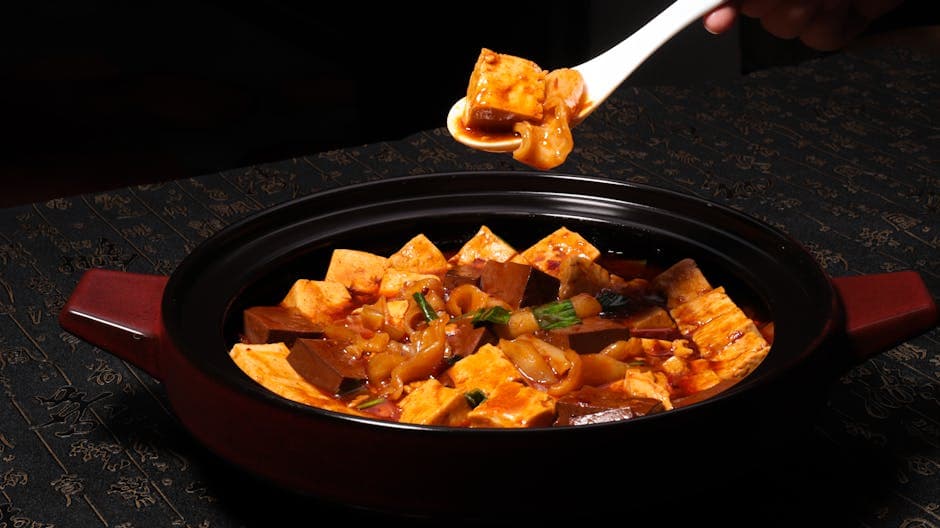
Sichuan Mapo Tofu
Sichuan's iconic silky tofu in a numbing-hot sauce of doubanjiang, fermented black beans, and ground pork.
About This Recipe
Mapo tofu is one of the most famous dishes from Sichuan — a bubbling pan of silken tofu cubes glossed in a brick-red sauce of doubanjiang (fermented broad-bean chili paste), fermented black beans, ground pork, and Sichuan peppercorns whose distinctive ma (numbing) tingle defines the dish along with la (heat). The full Chinese name characters describe its character: ma (numbing) la (hot) tang (warm) xian (savoury) su (fresh) nen (tender) and so on. It was invented in the 1860s in Chengdu by a pockmarked woman (mapo means 'pockmarked old woman') who ran a tofu shop. Served bubbling over fluffy white rice, it is fast (15 minutes once the tofu is in), addictive, and absolutely Sichuan.
Ingredients
Serves 4
- 500 gsilken or soft tofu, cut into 2 cm cubes
- 200 gground pork (or beef)
- 3 tbspPixian doubanjiang (broad-bean chili paste)
- 1 tbspfermented black beans (douchi), lightly rinsed and chopped
- 1 tbspSichuan chili powder
- 1.5 tspSichuan peppercorns, toasted and ground
- 4 clovesgarlic, minced
- 1 thumbginger, minced
- 3scallions, white and green parts separated and sliced
- 350 mlchicken stock (or water)
- 1 tbsplight soy sauce
- 1 tspdark soy sauce (for color)
- 1 tspsugar
- 2 tbspcornflour mixed with 4 tbsp water (slurry)
- 3 tbspneutral oil
- 1 tsptoasted Sichuan peppercorn oil (optional, for finishing)
Instructions
- 1
Blanch the tofu
Bring a pot of lightly salted water to a gentle simmer. Slide in the tofu cubes carefully and warm them for 2 minutes — this firms the tofu so it holds shape and seasons it through. Drain gently.
- 2
Toast peppercorns
Toast Sichuan peppercorns in a dry pan for 1 minute until fragrant. Cool and grind to a coarse powder.
- 3
Brown the pork
Heat 3 tbsp oil in a wok over medium-high. Add ground pork and stir-fry until deeply browned and the fat has rendered, about 4 minutes. Push to one side.
- 4
Bloom the paste
Tilt the wok so the oil pools. Add doubanjiang and chopped black beans to the oil. Stir-fry on medium for 90 seconds until the oil turns deep red and the paste smells fragrant.
- 5
Aromatics
Add garlic, ginger, and white parts of scallions. Stir-fry 30 seconds. Add Sichuan chili powder and stir 10 seconds — don't let it burn.
- 6
Sauce
Pour in stock, light soy, dark soy, and sugar. Stir to combine. Bring to a brisk simmer.
- 7
Add tofu carefully
Slide in the drained tofu cubes. Use the back of a spoon to gently push the tofu down — do not stir aggressively or the cubes will break. Simmer 5 minutes.
- 8
Thicken
Stir the cornflour slurry, then drizzle a third of it into the simmering sauce while stirring gently. Add more slurry until the sauce is glossy and coats the tofu (you might not need all of it). Simmer 1 minute.
- 9
Finish with ma
Sprinkle with ground Sichuan peppercorns and green scallion. Drizzle with Sichuan pepper oil if using. Slide onto a deep platter and serve immediately with a mountain of steamed rice.
Did you make this?
Rate it and help other cooks find the recipes that actually work.
One tap to sign in, and we'll save the rating you just picked.
Everything you need to plan your week — free
- Meal calendar
- Grocery list
- AI recipe ideas
Track what you eat
Snap your meal to log calories and macros, run fasting timers and track water in the free SnapCal app.
Pro Tips
- →
Use real Pixian doubanjiang — it's the soul of the dish; supermarket chili-bean paste won't compare.
- →
Blanching the tofu before cooking is the technique most home cooks skip and most ruin the dish over.
- →
Sichuan peppercorns must be toasted and freshly ground — pre-ground stale peppercorns barely tingle.
Variations
- •
Vegan mapo: replace ground pork with finely chopped king oyster mushrooms; use vegetable stock.
- •
Beef mapo: substitute ground beef for slightly heavier flavor.
- •
Crab mapo: top with picked crab meat at the end for a Sichuan-meets-Cantonese version.
Storage
Best fresh. Refrigerate 2 days; reheat gently in a wok with a splash of stock. The tofu absorbs the sauce and texture changes — still very good.
History & Origin
Mapo tofu was invented around 1862 in Chengdu by Chen Mapo (Mrs. Chen, the Pockmarked Woman), who ran a small tofu shop and improvised the dish using whatever ingredients laborers brought her. Today there is a famous restaurant in Chengdu called Chen Mapo Doufu that traces back to her shop.
Frequently Asked Questions
Silken or firm tofu?
Silken or soft — the silken texture against the spicy sauce is the whole point. Firm tofu makes a different (still tasty) dish.
How spicy is it?
Medium-hot by Sichuan standards; tongue-tingling rather than mouth-on-fire. Reduce chili powder by half for a milder version, or skip Sichuan peppercorns to remove the numbing element.
Nutrition Facts
Per serving (280g / 9.9 oz) · 4 servings total
Time Summary
Have Questions?
Ask our AI cooking assistant anything about this recipe — substitutions, techniques, scaling.
Chat with AI Chef →Featured in Guides
This recipe is featured in the following curated guides:
More Chinese Recipes
You Might Also Like
Similar dishes from other cuisines around the world.
Browse by Ingredient
More recipes built around the same core ingredients.
Free Kitchen Tools
Calculators and converters that pair with this page — no signup needed.
Put This Into a Plan
Schedule it, shop for it, and track what you already have.
Read Next
Longer reads that go deeper on the ideas behind this dish.
Community
Join the conversation
Sign in to leave a comment and save your favourite recipes