
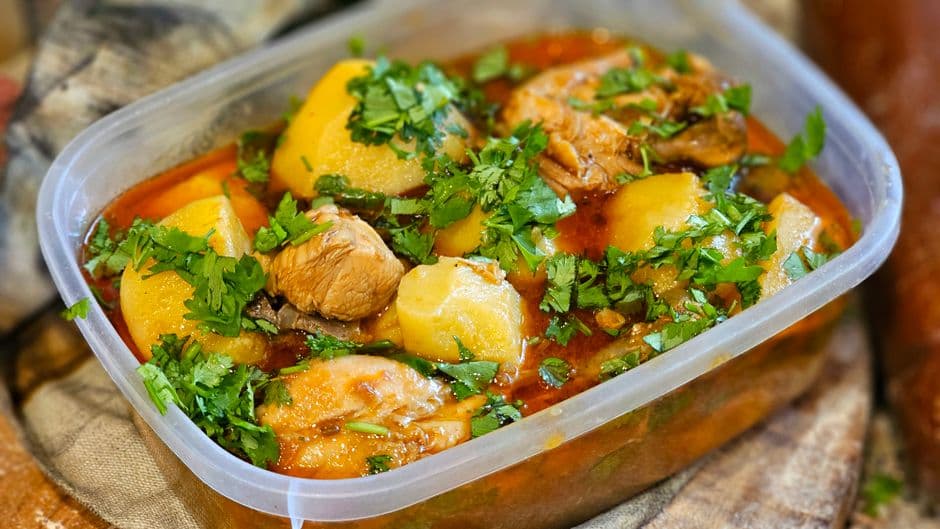
Marmitako (Basque Tuna and Potato Stew)
A rustic Basque fisherman's stew of bonito tuna, potatoes broken into ragged chunks, sweet choricero pepper, and green peppers — built on a smoky tomato-onion sofrito.
About This Recipe
Marmitako takes its name from the marmita, the deep iron pot Basque tuna fishermen carried aboard their boats to cook the day's catch over a small coal stove. It is a humble one-pot stew of bonito del norte (white-meat tuna), waxy potatoes, onion, green pepper, ripe tomato, and the indispensable dried choricero pepper, whose sweet smoky flesh is scraped from the skin and stirred in for body and color. The technique that defines a real marmitako is cachelar — the potatoes are not sliced but cracked apart with a paring knife (insert and twist) so the broken edges release starch and naturally thicken the broth into a glossy, almost stew-like consistency. The tuna goes in at the very end, off the heat, and is allowed to gently poach in the residual warmth for just two or three minutes; cooked any longer it becomes chalky and dry. The result is a dish that tastes of the Bay of Biscay — sweet onion, ripe tomato, the faintly smoky musk of choricero, and tuna that is still rosy at its center. In the Basque country it is served with crusty bread, a glass of txakoli, and the absolute insistence that the chef sits and eats with the company.
Ingredients
Serves 4
- 600 gfresh bonito or yellowfin tuna loin, cut into 3 cm cubes
- 800 gwaxy potatoes (Charlotte or Yukon Gold), peeled
- 2 largedried choricero peppers, soaked 30 min and pulp scraped
- 1 largewhite onion, finely chopped
- 1green Italian pepper, finely chopped
- 3ripe tomatoes, grated (skin discarded)
- 3garlic cloves, finely sliced
- 800 mllight fish stock, hot
- 60 mlSpanish extra virgin olive oil
- 1 tspsweet pimentón
- sea salt and black pepper, to taste
Instructions
- 1
Soak and prep the choricero
Soak the dried choricero peppers in just-boiled water for 30 minutes until soft. Open them, discard seeds and stems, and scrape the soft pulp off the skin with a spoon. Reserve the pulp — it is the flavour soul of the dish.
- 2
Build the sofrito
Heat the olive oil in a wide heavy pot over medium-low heat. Add the onion and green pepper with a pinch of salt and sweat slowly for 12 minutes until completely soft and lightly golden. Add the garlic and cook 1 minute more without colouring.
- 3
Add tomato and pimentón
Stir in the grated tomato and cook 6–8 minutes until the liquid evaporates and the sofrito darkens. Pull off the heat and stir in the pimentón and the choricero pulp; cook 30 seconds more so the paprika does not scorch.
- 4
Crack the potatoes
Hold each peeled potato in one hand. Insert a paring knife about 2 cm deep and twist sharply to crack off a ragged chunk — repeat to break the potato into 3 cm pieces with rough edges. This 'cachelar' technique releases starch that thickens the broth.
Never slice the potatoes cleanly. Smooth edges will not thicken the broth and the texture is wrong.
- 5
Simmer
Add the cracked potatoes to the sofrito and stir to coat. Pour in the hot fish stock to barely cover. Bring to a simmer and cook uncovered at a gentle bubble for 18–22 minutes until the potatoes are tender and the broth has thickened to a stew.
- 6
Add the tuna off the heat
Taste and adjust salt and pepper. Pull the pot off the heat. Season the tuna cubes with salt and slide them into the hot stew, pressing gently to submerge. Cover and rest 3 minutes — the residual heat will poach the tuna to a rosy medium.
- 7
Rest and serve
Let the stew rest 5 minutes more off the heat to settle and let flavours marry. Serve in warm bowls with crusty bread and, if you can find it, a chilled glass of txakoli.
Did you make this?
Rate it and help other cooks find the recipes that actually work.
One tap to sign in, and we'll save the rating you just picked.
Everything you need to plan your week — free
- Meal calendar
- Grocery list
- AI recipe ideas
Cook this hands-free
Get AI meal plans, step-by-step cooking mode, and your saved recipes in the free Bento app.
Pro Tips
- →
Fresh tuna must be sushi-grade or absolutely fresh — it cooks for only minutes. Frozen-then-thawed yellowfin is fine; tinned tuna is a different (also legitimate) dish.
- →
Choricero peppers are non-negotiable for authenticity. Substitute with 2 tbsp jarred choricero pulp or, at a pinch, 1 tbsp ñora pepper paste plus extra pimentón.
- →
Never let the stew boil after adding the tuna. Boiling makes the fish chalky and tough.
- →
If your broth is too thin at the end, mash a few of the potato chunks against the side of the pot and stir in — never add flour.
Variations
- •
Bonito en aceite version: stir in jarred bonito belly at the table instead of cooking raw tuna — a household weeknight shortcut.
- •
Red pepper version: add 1 roasted red pepper to the sofrito for a sweeter, brighter stew popular around Bilbao.
- •
Cider variant: replace 100 ml of the fish stock with dry Basque sidra for a sharper, more rustic profile.
- •
Vegetarian: omit tuna and stir in 200 g cooked white beans plus an extra spoon of choricero pulp at the end.
Storage
Refrigerate up to 2 days; the tuna firms slightly on chilling but the stew deepens in flavour. Reheat gently — never boil — over low heat until just steaming. Freezing is not recommended: the potatoes go grainy and the tuna dries out.
History & Origin
Marmitako was created by 19th-century Basque tuna fishermen on the boats of the Bay of Biscay, who cooked the day's catch in iron pots (marmitas) with onion, potato, and dried peppers from home. It became a celebrated land dish in the 1960s when Basque chefs began championing peasant cuisine, and is now central to summer cookery competitions across Bizkaia and Gipuzkoa.
Frequently Asked Questions
Can I use canned tuna?
Yes — high-quality jarred bonito del norte stirred in at the end produces a very respectable everyday marmitako. The dish loses its luxury character but gains in convenience and is what most Basque homes actually eat midweek.
Why crack the potatoes instead of slicing?
The ragged edges expose starch that dissolves into the broth and thickens it naturally. Cleanly sliced potatoes give you a soup with potatoes in it, not a stew.
What is choricero pepper?
A sweet (not hot) dried red pepper from the Basque country with a smoky, almost prune-like flavour. The pulp is scraped from the rehydrated skin. Jarred choricero paste is widely available online from Spanish importers.
What wine pairs best?
A young Basque txakoli is traditional — its high acidity cuts through the rich tuna. A young Rioja Joven or a Spanish dry rosado also work beautifully.
Nutrition Facts
Per serving (480g / 16.9 oz) · 4 servings total
Time Summary
Have Questions?
Ask our AI cooking assistant anything about this recipe — substitutions, techniques, scaling.
Chat with AI Chef →Featured in Guides
This recipe is featured in the following curated guides:
More Basque Recipes
You Might Also Like
Similar dishes from other cuisines around the world.
Free Kitchen Tools
Calculators and converters that pair with this page — no signup needed.
Put This Into a Plan
Schedule it, shop for it, and track what you already have.
Read Next
Longer reads that go deeper on the ideas behind this dish.
Community
Join the conversation
Sign in to leave a comment and save your favourite recipes