
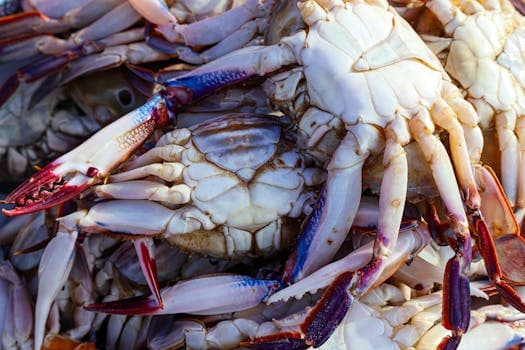
Maryland Blue Crab Cakes
Classic American Maryland Blue recipe.
About This Recipe
A true Maryland crab cake is mostly crab: jumbo lump blue crab held together with the bare minimum of binder, seasoned with Old Bay, mustard, and a little Worcestershire, then broiled or pan-seared until golden. The Chesapeake style avoids the bready, filler-heavy cakes found elsewhere; the test of a good one is whether it threatens to fall apart. This version works because the binder is a light mayonnaise and egg slurry folded in gently, the cakes are chilled before cooking so they set, and broiling lets the crab flavor lead rather than a fried crust. Saltines, not breadcrumbs, are the traditional Maryland filler, used sparingly.
Ingredients
Serves 4
- 1 lbjumbo lump blue crab meat(carefully picked for shell fragments)
- 0.25 cupmayonnaise
- 1 largeegg(beaten)
- 1 tbspDijon mustard
- 1 tspWorcestershire sauce
- 1 tbspfresh lemon juice
- 1.5 tspOld Bay seasoning
- 0.5 tspkosher salt
- 12saltine crackers(finely crushed, about 1/3 cup)
- 2 tbspunsalted butter(for pan-frying (optional))
- 1 wholelemon(cut into wedges for serving)
Instructions
- 1
Prepare
Pick through a pound of jumbo lump crab meat for shell fragments without breaking the lumps; work over a sheet pan in good light and handle the meat as little as possible.
Run your fingertips, not a fork, through the crab; forks shred the lumps you paid for.
- 2
Cook
Whisk mayonnaise, egg, Dijon mustard, Worcestershire, lemon juice, and Old Bay into a smooth binder, then fold in crushed saltines and the crab with a spatula in just a few gentle strokes.
- 3
Combine
Shape into six loose mounds without compacting them, set on a parchment-lined tray, and refrigerate at least 30 minutes; chilling firms the binder so the cakes survive cooking intact.
If a cake will not hold together at all, add one more crushed saltine, never more mayonnaise.
- 4
Serve
Broil 4 inches from the element for 10 to 12 minutes until golden and 145F inside, or sear in butter over medium heat 4 minutes per side. Serve with lemon wedges and a dusting of Old Bay.
Did you make this?
Rate it and help other cooks find the recipes that actually work.
One tap to sign in, and we'll save the rating you just picked.
Everything you need to plan your week — free
- Meal calendar
- Grocery list
- AI recipe ideas
Track what you eat
Snap your meal to log calories and macros, run fasting timers and track water in the free SnapCal app.
Pro Tips
- →
Buy refrigerated jumbo lump or lump blue crab; pasteurized tubs are far better than canned shelf-stable meat.
- →
Keep filler under a quarter cup per pound of crab; Maryland cakes are judged by how little binder they contain.
- →
Chill the shaped cakes at least 30 minutes, or up to a day, so they hold together under heat.
- →
Broiling is the traditional restaurant method and keeps the focus on crab rather than crust.
- →
Season lightly with salt; Old Bay and Worcestershire already carry significant sodium.
Variations
- •
Make smaller cocktail-size cakes for appetizers, broiling about 7 minutes.
- •
Pan-fry in clarified butter for a crispier exterior closer to the Eastern Shore tavern style.
- •
Fold in a tablespoon of finely minced red bell pepper and chives for color, a common restaurant touch.
- •
Serve as a crab cake sandwich on a soft potato roll with lettuce, tomato, and tartar sauce, Baltimore-style.
Storage
Uncooked shaped cakes keep refrigerated for 1 day and freeze, wrapped individually, for 2 months; cook from partially thawed. Cooked cakes refrigerate up to 2 days and reheat best in a 350F oven for 10 minutes.
History & Origin
Crab cakes have been made around the Chesapeake Bay for centuries, with roots in both Native American and English settler cookery, and the blue crab fishery made them a Maryland signature by the 19th century. The phrase crab cake was popularized nationally after appearing in print around the 1930s, and Old Bay seasoning, created in Baltimore in 1939 by German immigrant Gustav Brunn, became the dish's defining spice.
Frequently Asked Questions
What grade of crab meat should I buy?
Jumbo lump, from the two large swimming muscles, gives the showpiece texture and is worth the price for crab cakes. Regular lump is a fine compromise, and backfin works blended with lump. Claw meat is sweeter and darker but better suited to soups; avoid shelf-stable canned meat entirely.
Why do my crab cakes fall apart?
Either too little chilling or too little binder relative to very wet crab. Drain the crab well, fold gently, and refrigerate the shaped cakes at least 30 minutes so the egg and mayonnaise set. When flipping, use a thin spatula and turn them only once.
Is it better to broil or fry crab cakes?
Maryland purists generally broil, which browns the top without adding a heavy crust and lets the crab dominate. Pan-frying in butter gives a crispier exterior and is common on the Eastern Shore. Both finish at 145F internal; deep-frying is the one method most locals avoid.
Can I use imitation crab?
You can physically make a cake from surimi, but it bears little resemblance to a Maryland crab cake; the flavor is sweet and uniform and the texture rubbery. If blue crab is unavailable, real Dungeness or rock crab meat is a far better substitute than imitation.
Nutrition Facts
Per serving (300g / 10.6 oz) · 4 servings total
Time Summary
Have Questions?
Ask our AI cooking assistant anything about this recipe — substitutions, techniques, scaling.
Chat with AI Chef →Featured in Guides
This recipe is featured in the following curated guides:
More American Recipes
You Might Also Like
Similar dishes from other cuisines around the world.
Free Kitchen Tools
Calculators and converters that pair with this page — no signup needed.
Put This Into a Plan
Schedule it, shop for it, and track what you already have.
Read Next
Longer reads that go deeper on the ideas behind this dish.
Community
Join the conversation
Sign in to leave a comment and save your favourite recipes