
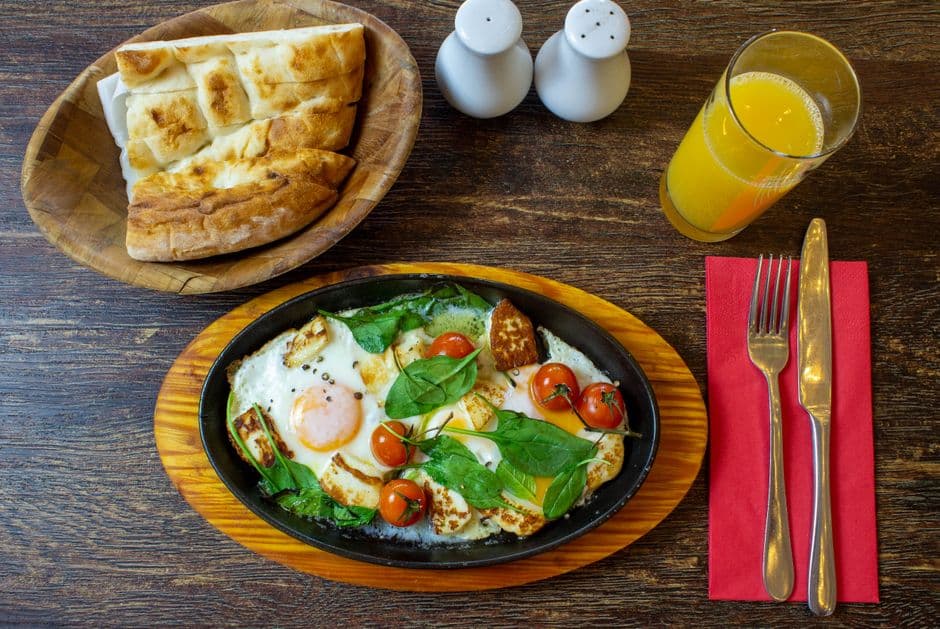
Menemen (Turkish Skillet Eggs with Tomato & Peppers)
Turkey's iconic breakfast skillet — soft-scrambled eggs barely set in a sweet, jammy tomato and pepper sauce, eaten straight from the pan with crusty bread.
About This Recipe
Menemen is to Turkish breakfast what shakshuka is to Israeli — a one-pan skillet of eggs cooked into a sweet, oil-glossy tomato and pepper base, traditionally served bubbling in its own copper sahan with hunks of fresh ekmek to mop the pan. The dish takes its name from the town of Menemen in Izmir province on Turkey's Aegean coast, where summer peppers and tomatoes ripen with intense sweetness and the local cooks developed the technique of crushing them down into a soft, almost confit-like base before adding eggs at the very last minute. Unlike shakshuka, where the eggs are cracked whole and poached in pockets of sauce, the Turkish version stirs the eggs gently through the sauce so they cook into soft, broken curds — the texture should be loose, almost spoonable, never dry. The defining pepper is the sivri biber, a long, pale-green, mildly hot Turkish pepper; outside Turkey, an Anaheim or pale Italian frying pepper works better than a bell. Some regional versions add white cheese (beyaz peynir) crumbled on top, sucuk (spiced sausage) sliced in at the start, or a finishing scatter of pul biber — the brick-red Aleppo-style chili flakes that give the dish its characteristic warmth without aggressive heat. Eaten for breakfast or as a late-night meze with cold beer, menemen is the kind of dish that takes ten minutes and tastes like the whole Aegean summer.
Ingredients
Serves 2
- 3 tbspolive oil, plus extra to finish
- 3sivri biber peppers (or 2 Anaheim peppers), seeded and sliced 1 cm
- 4 mediumripe tomatoes, peeled and chopped (about 500 g)(or 400 g canned San Marzano in winter)
- 4 largeeggs, room temperature
- 1 tsppul biber (Aleppo-style chili flakes), plus extra to serve
- 1 tspdried oregano (kekik)
- 60 gTurkish beyaz peynir or feta, crumbled (optional)
- salt and black pepper to taste
- 1 loaffresh crusty Turkish bread (ekmek), to serve
Instructions
- 1
Peel the tomatoes
Score a small X in the bottom of each tomato. Drop into boiling water for 30 seconds, then immediately into ice water. The skins should slip off easily. Chop coarsely, saving every drop of juice. In winter, use good canned tomatoes — crushed by hand, not pureed. Peeling matters because tomato skins curl into unpleasant strips in the finished menemen.
- 2
Soften the peppers
Heat the olive oil in a 25 cm skillet (preferably copper or carbon steel) over medium heat. Add the sliced peppers and a pinch of salt; cook 5 to 6 minutes, stirring occasionally, until they soften and release their fragrance without taking on much color. They should be limp and sweet, not browned.
- 3
Add tomatoes and reduce
Tip in the chopped tomatoes with all their juice. Stir in the dried oregano. Cook over medium heat for 6 to 8 minutes, breaking the tomatoes down with a wooden spoon, until the mixture thickens to a jammy, loose pulp and most of the watery juice has cooked off. The olive oil should be visibly separating around the edges of the skillet — a good sign the base has the right richness.
- 4
Season the base
Add the pul biber, season with salt and a generous twist of black pepper. Taste — the tomato sauce should be aggressively seasoned because the eggs will dilute it. If your tomatoes are very acidic, add a pinch of sugar. Lower the heat to medium-low.
- 5
Add the eggs
Crack the eggs directly into the skillet, distributing them across the surface. Wait 20 seconds for the whites to begin setting at the edges, then gently stir with a spatula, folding the eggs through the tomato in slow, lazy strokes. Do not over-stir — you want broken curds suspended in sauce, not a uniform scramble.
Some cooks beat the eggs lightly with a fork before adding for a smoother, more custardy menemen; pure traditionalists crack them in whole.
- 6
Cook to soft, glossy curds
Continue cooking 60 to 90 seconds, stirring slowly, until the eggs are softly set but still glossy and slightly underdone in the center — they will continue cooking from residual heat. The texture should be wet and creamy, the eggs and tomato neither fully separated nor fully blended.
- 7
Finish with cheese and pepper
Pull the skillet off the heat. Scatter the crumbled beyaz peynir over the top if using, and let it warm in the residual heat without melting fully — it should sit in soft pillows on the surface. Finish with a generous dust of pul biber and a final drizzle of olive oil.
- 8
Serve from the pan
Bring the skillet to the table set on a trivet. Eat directly from the pan with torn pieces of warm crusty bread, scooping up the eggs, sauce and any pooled olive oil. Serve alongside black olives, sliced cucumber, a wedge of cheese and a glass of strong Turkish çay for the full kahvaltı (breakfast) effect.
Did you make this?
Rate it and help other cooks find the recipes that actually work.
One tap to sign in, and we'll save the rating you just picked.
Everything you need to plan your week — free
- Meal calendar
- Grocery list
- AI recipe ideas
Track what you eat
Snap your meal to log calories and macros, run fasting timers and track water in the free SnapCal app.
Pro Tips
- →
Use ripe summer tomatoes whenever possible — menemen is a dish whose virtue is built on tomato sweetness. In winter, a tablespoon of tomato paste cooked in with canned tomatoes restores depth.
- →
Do not skip peeling the tomatoes. Strips of curled tomato skin in the finished dish are the hallmark of a careless menemen.
- →
Pull the pan off the heat while the eggs still look slightly underdone — they finish cooking on the way to the table. Overcooked menemen is dry and rubbery.
- →
A wide, shallow skillet (25 to 28 cm) gives the best ratio of surface area to depth so eggs cook evenly and quickly.
Variations
- •
Sucuklu menemen: slice 80 g sucuk (Turkish spiced beef sausage) and crisp it in the pan first, before the peppers — its rendered fat replaces some of the olive oil.
- •
Peynirli menemen: stir 100 g of crumbled beyaz peynir into the eggs as they cook, for a richer, saltier version.
- •
Onion-style menemen: in eastern Turkey, finely chopped onion is sautéed with the peppers — Aegean purists in Menemen town consider this heresy, but it adds depth.
- •
Vegan menemen: skip the eggs and add 200 g crumbled extra-firm tofu plus 1 teaspoon Indian black salt (kala namak) at the end for an egg-like aroma.
Storage
Menemen is at its best eaten immediately — the texture of the eggs deteriorates rapidly. Leftovers refrigerate up to 24 hours; reheat very gently in a covered skillet over the lowest heat with a splash of water. The tomato-pepper base alone keeps 4 days and can be made ahead, with fresh eggs added just before serving.
History & Origin
Menemen takes its name from the town of Menemen in İzmir province, an Aegean farming region known historically for the sweetness of its peppers and tomatoes. The dish likely evolved in 19th-century farmhouse kitchens as a way to use the day's pepper and tomato harvest with fresh eggs from the household coop, and spread across Turkey via İzmir's commercial influence. Today it is a staple of the Turkish kahvaltı (breakfast) table from Istanbul to Diyarbakır, served in everything from village teahouses to upscale brunch restaurants in Bebek.
Frequently Asked Questions
What's the difference between menemen and shakshuka?
Both are tomato-pepper egg skillets, but menemen scrambles the eggs softly through the sauce while shakshuka poaches whole eggs in pockets of sauce. Menemen is Turkish and skews sweet and oil-rich; shakshuka is North African/Levantine, leans spicier with cumin and harissa, and includes onion as a base.
Can I use bell peppers?
You can, but the dish loses its character. Bell peppers are too sweet and too watery. Anaheim, banana, Cubanelle or Italian frying peppers give a closer profile — long, thin-walled, mildly sweet with a faint heat.
Why are my eggs rubbery?
You cooked them too long or over too high heat. Eggs in menemen should leave the pan while still glossy and slightly loose — residual heat finishes them in the 60 seconds between stove and table.
Is menemen breakfast or dinner?
Traditionally breakfast or late-morning brunch as part of the Turkish kahvaltı spread. But it is also a beloved late-night meal in Istanbul meyhanes paired with rakı, and a popular quick weekday dinner in Turkish households when there is nothing else in the fridge except eggs and tomatoes.
Nutrition Facts
Per serving (320g / 11.3 oz) · 2 servings total
Time Summary
Have Questions?
Ask our AI cooking assistant anything about this recipe — substitutions, techniques, scaling.
Chat with AI Chef →Featured in Guides
This recipe is featured in the following curated guides:
More Turkish Recipes
You Might Also Like
Similar dishes from other cuisines around the world.
Browse by Ingredient
More recipes built around the same core ingredients.
Free Kitchen Tools
Calculators and converters that pair with this page — no signup needed.
Put This Into a Plan
Schedule it, shop for it, and track what you already have.
Read Next
Longer reads that go deeper on the ideas behind this dish.
Community
Join the conversation
Sign in to leave a comment and save your favourite recipes