
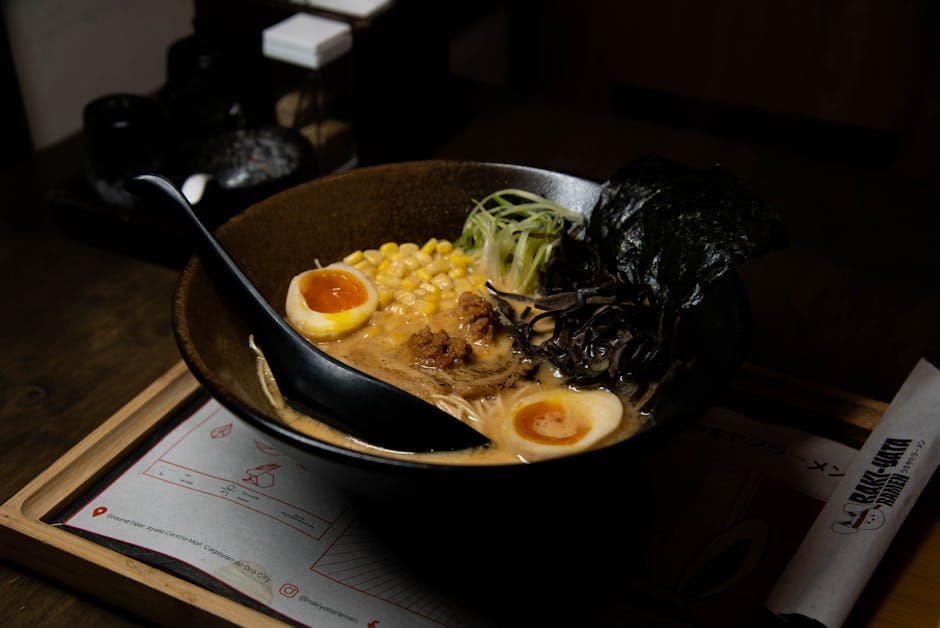
Miso Ramen — Rich, Deeply Savoury Noodle Soup
Hokkaido-style miso ramen with a creamy, complex miso tare, rich pork broth, springy noodles and classic toppings of chashu, soft-boiled egg, corn, butter and spring onion.
About This Recipe
Miso ramen originated in Sapporo, Hokkaido in the 1950s and is beloved for its rich, robust, warming character — the ideal ramen for cold climates. Unlike the delicate shio (salt) or the soy-seasoned shoyu styles, miso ramen has a depth and body that makes it uniquely satisfying. The key is the miso tare — a concentrated paste of fermented miso, sautéed aromatics and sesame that is stirred into hot broth per bowl. The characteristic Sapporo toppings of corn, a knob of butter and bean sprouts stirred in at the table are as iconic as the ramen itself.
Ingredients
Serves 2
- 2 portionsfresh ramen noodles(or 2 dried portions (150g dry weight))
- 800 mlgood pork or chicken stock(rich, preferably homemade or good-quality)
- 4 tbspwhite or mixed (shiro/awase) miso paste
- 2 tbsptahini or Japanese sesame paste (nerigoma)
- 1 tbspsoy sauce
- 1 tbspmirin
- 2 tspsesame oil
- 3 clovesgarlic(minced)
- 1 tspfresh ginger(grated)
- 1 tbspneutral oil
- 2soft-boiled ramen eggs (ajitsuke tamago)(halved)
- 4 sliceschashu pork belly(or sliced char siu)
- 80 gtinned sweetcorn(drained)
- 100 gbean sprouts(blanched 30 seconds)
- 2 stalksspring onion(thinly sliced)
- 2 tspunsalted butter(the defining Sapporo touch)
- 1 sheetnori(halved)
Instructions
- 1
Make the miso tare
In a small saucepan, heat oil over medium heat. Sauté garlic and ginger for 1 minute until fragrant. Reduce heat to low. Add miso, tahini, soy sauce and mirin. Stir to combine into a smooth, fragrant paste. Remove from heat. Add sesame oil and mix well. This is your tare — it will keep in the fridge for 2 weeks.
The tare is the soul of the miso ramen. Made right, it turns simple stock into something extraordinary.
- 2
Heat the broth
Bring the stock to a gentle simmer in a saucepan. Do not boil vigorously — miso loses its probiotic benefits and some of its nuance above a rolling boil.
- 3
Cook the noodles
Cook ramen noodles in a separate large pot of boiling water according to packet instructions (usually 1–3 minutes for fresh, 4–5 for dried). Drain well and divide between two large, warmed deep bowls.
- 4
Combine tare and broth
Add 3 tablespoons of miso tare to each bowl. Ladle in 400ml hot broth per bowl and stir vigorously to dissolve the tare completely into the broth. Taste and add more tare if a stronger flavour is desired.
- 5
Assemble toppings
Arrange chashu or char siu slices, halved ramen egg, corn and bean sprouts over the noodles. Place a small knob of butter in the centre of the bowl — the heat of the broth melts it into a rich, glossy pool. Add spring onion, nori and an extra drizzle of sesame oil.
Warm your bowls in the oven for a few minutes before serving — ramen cools quickly and should be eaten immediately.
Did you make this?
Rate it and help other cooks find the recipes that actually work.
One tap to sign in, and we'll save the rating you just picked.
Everything you need to plan your week — free
- Meal calendar
- Grocery list
- AI recipe ideas
Track what you eat
Snap your meal to log calories and macros, run fasting timers and track water in the free SnapCal app.
Pro Tips
- →
The butter is not optional for Sapporo-style miso ramen — it's what makes it distinctly Hokkaido. Don't skip it.
- →
Ramen is best eaten immediately and as fast as possible — noodles absorb the broth and soften. This is not a dish to pace.
- →
White miso gives a sweeter, more delicate tare; red (aka) miso gives deeper, saltier intensity. Awase (mixed) is the best all-rounder.
Variations
- •
Vegetarian miso ramen: use kombu-shiitake dashi broth, replace chashu with roasted mushrooms and add a soft-boiled egg.
- •
Spicy miso ramen: add 1–2 tbsp doubanjiang (spicy bean paste) or togarashi to the tare.
- •
Tan tan men (tantanmen): inspired by dan dan noodles, this miso-sesame-spicy ramen has ground pork and rayu chilli oil.
Storage
Tare keeps refrigerated for 2 weeks. Store broth, toppings and noodles separately. Assemble fresh per bowl each time for the best result. Leftover assembled ramen does not store or reheat well.
History & Origin
Miso ramen was first commercially served around 1955 at a ramen shop called Aji no Sanpei in Sapporo, Hokkaido. The owner, Morito Omiya, incorporated miso — a Hokkaido staple — into ramen broth, creating a style uniquely suited to the cold northern climate. By the 1960s, Sapporo had become synonymous with miso ramen, and the style spread across Japan. Today it is one of the 'big four' regional ramen styles alongside tonkotsu, shoyu and shio.
Frequently Asked Questions
What's the difference between miso ramen and tonkotsu ramen?
Tonkotsu is defined by its long-simmered pork bone broth (creamy white, rich with collagen). Miso ramen uses a lighter broth as a base and flavours it with a miso tare. The miso ramen can also incorporate sesame and butter for extra richness. The flavours are completely different.
Where can I buy ramen eggs?
Ramen eggs (ajitsuke tamago) are sold in some Asian supermarkets or you can make them: soft-boil eggs for 6.5 minutes, peel, marinate in a mixture of 3 tbsp soy sauce, 3 tbsp mirin and 1 tbsp sake overnight in the fridge.
Can I use instant ramen noodles?
The dried noodles from instant ramen packets work well (discard the flavour sachet). Fresh ramen noodles give a far superior texture if available.
Nutrition Facts
Per serving (750g / 26.5 oz) · 2 servings total
Time Summary
Have Questions?
Ask our AI cooking assistant anything about this recipe — substitutions, techniques, scaling.
Chat with AI Chef →Featured in Guides
This recipe is featured in the following curated guides:
More Japanese Recipes
You Might Also Like
Similar dishes from other cuisines around the world.
Browse by Ingredient
More recipes built around the same core ingredients.
Free Kitchen Tools
Calculators and converters that pair with this page — no signup needed.
Put This Into a Plan
Schedule it, shop for it, and track what you already have.
Read Next
Longer reads that go deeper on the ideas behind this dish.
Community
Join the conversation
Sign in to leave a comment and save your favourite recipes