
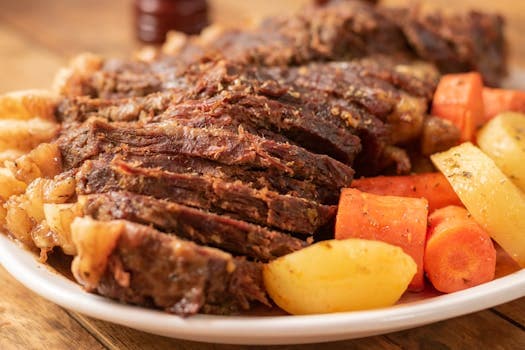
Mississippi Pot Roast
Classic American Mississippi Pot recipe.
About This Recipe
Mississippi pot roast is the internet-era classic that earned its fame honestly: a chuck roast slow-cooked with a packet of ranch seasoning, a packet of au jus gravy mix, a stick of butter, and a handful of pepperoncini. The result is shreddable beef in a tangy, buttery gravy with gentle pickled heat, and it requires almost no technique beyond patience. This version works because the roast is seared first for a browned crust the original skips, the cooking liquid is kept minimal so the gravy concentrates instead of diluting, and the pepperoncini brine is added at the end for brightness. It was invented by a home cook in Ripley, Mississippi in the 1990s.
Ingredients
Serves 4
- 3.5 lbsbeef chuck roast
- 1 packet (1 oz)ranch dressing mix
- 1 packet (1 oz)au jus gravy mix
- 0.5 cupunsalted butter(1 stick, sliced into pats)
- 8 wholepepperoncini peppers(from a jar; add 2 tbsp of their brine at the end)
- 0.5 tspblack pepper
- 1 tbspvegetable oil(for searing)
Instructions
- 1
Prepare
Pat a 3 to 4 pound chuck roast dry, season with black pepper, and sear in a hot skillet with oil for 4 minutes per side until deeply browned. The crust adds roasted depth the slow cooker cannot create.
Skip added salt at this stage; the ranch and au jus packets carry plenty.
- 2
Cook
Set the roast in the slow cooker and sprinkle the ranch and au jus packets evenly over the top, then lay a stick of butter on the roast and scatter 6 to 8 whole pepperoncini around it. Add no water.
- 3
Combine
Cover and cook on low 8 hours without lifting the lid; the roast releases its own juices, which combine with the butter and seasonings into a concentrated gravy. The meat is done when a fork twists through with no resistance.
Opening the lid releases enough heat to add 20 to 30 minutes each time; trust the timer.
- 4
Serve
Shred the beef with two forks directly in the gravy, discarding any large fat pockets, and stir in a splash of pepperoncini brine. Serve over mashed potatoes, rice, or egg noodles with the softened peppers.
Did you make this?
Rate it and help other cooks find the recipes that actually work.
One tap to sign in, and we'll save the rating you just picked.
Everything you need to plan your week — free
- Meal calendar
- Grocery list
- AI recipe ideas
Track what you eat
Snap your meal to log calories and macros, run fasting timers and track water in the free SnapCal app.
Pro Tips
- →
Chuck roast is the right cut; its connective tissue melts into gel during the long cook and keeps the meat moist.
- →
Searing first is optional in the original recipe but adds real depth for 10 minutes of effort.
- →
Do not add water or broth; the concentrated juices are the gravy, and extra liquid waters it down.
- →
Low and slow beats high heat; 8 hours on low gives a silkier shred than 4 to 5 hours on high.
- →
Taste before salting, since both seasoning packets are sodium-heavy.
Variations
- •
Make it in a Dutch oven at 300F for about 3.5 hours, covered, for the same result without a slow cooker.
- •
Use boneless pork shoulder for Mississippi pulled pork, cooked the same way.
- •
Lighten it with half a stick of butter and low-sodium packets without losing the character.
- •
Turn leftovers into sliders on Hawaiian rolls with provolone melted on top.
Storage
Refrigerate shredded beef in its gravy for up to 4 days; the gravy gels when cold and remelts smoothly. It freezes excellently for 3 months in flat freezer bags; thaw overnight and reheat gently with a spoonful of brine to revive the tang.
History & Origin
Mississippi pot roast was created in the 1990s by Robin Chapman, a home cook in Ripley, Mississippi, who adapted her aunt's roast recipe to be less spicy for her children. The recipe spread through church cookbooks and food blogs, exploded on Pinterest in the early 2010s, and was profiled by The New York Times in 2016, cementing it as a modern American standard.
Frequently Asked Questions
Do I really need the full stick of butter?
The butter emulsifies into the meat juices and seasoning to create the signature glossy gravy, so it is doing real work, not just adding richness. You can cut it to half a stick with minor loss of silkiness, but omitting it entirely leaves the gravy thin and noticeably less rounded.
Are the pepperoncini spicy, and can I leave them out?
Pepperoncini are mild, around 100 to 500 Scoville, contributing tang more than heat; even the whole peppers cooked for 8 hours stay gentle. If you omit them, the roast loses its defining brightness, so at minimum add two tablespoons of their brine or a splash of mild vinegar at the end.
Can I make this without the seasoning packets?
Yes. Replace the ranch packet with a teaspoon each of dried dill, garlic powder, onion powder, and dried buttermilk or a spoon of mayonnaise stirred in at the end, and the au jus packet with a teaspoon of beef bouillon paste and half a teaspoon of onion powder. Season with salt to taste.
Why is my roast tough instead of shreddable?
It is undercooked, not overcooked. Chuck needs to pass through the stage where collagen dissolves, typically 8 hours on low or an internal temperature holding above 195F for a while. If the fork meets resistance, put the lid back on and check again in an hour.
Nutrition Facts
Per serving (300g / 10.6 oz) · 4 servings total
Time Summary
Have Questions?
Ask our AI cooking assistant anything about this recipe — substitutions, techniques, scaling.
Chat with AI Chef →Featured in Guides
This recipe is featured in the following curated guides:
More American Recipes
You Might Also Like
Similar dishes from other cuisines around the world.
Browse by Ingredient
More recipes built around the same core ingredients.
Free Kitchen Tools
Calculators and converters that pair with this page — no signup needed.
Put This Into a Plan
Schedule it, shop for it, and track what you already have.
Read Next
Longer reads that go deeper on the ideas behind this dish.
Community
Join the conversation
Sign in to leave a comment and save your favourite recipes