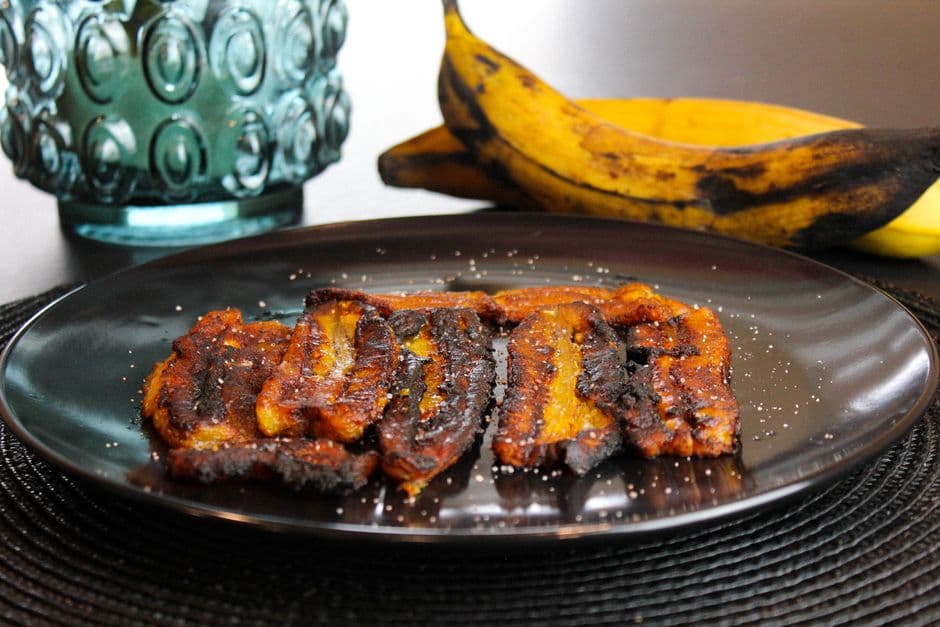
Golden, crispy-edged fried plantain slices that are one of Rwanda's most popular side dishes and snacks.
Mizuzu (also spelled misuzu) are simply fried ripe or semi-ripe plantain slices, but in Rwanda they are elevated by the use of very hot oil, careful timing and the selection of plantains at just the right stage of ripeness. Riper plantains yield sweeter, softer mizuzu; less ripe ones are starchier and more savoury. They are eaten at breakfast alongside fried eggs, as a side with brochettes and ugali, or as a standalone snack from roadside vendors. A sprinkle of salt or chilli powder is the only seasoning needed.
Serves 4
Peel the plantains and cut diagonally into slices about 1 cm thick. Diagonal cuts create a larger surface area for caramelisation.
Pour oil into a deep frying pan to a depth of at least 3 cm. Heat over medium-high heat until a small piece of plantain dropped in sizzles immediately (about 175 °C).
Fry plantain slices in batches without overcrowding. Cook for 2–3 minutes on the first side until golden underneath, then flip and cook for a further 2 minutes.
Remove with a slotted spoon and drain on paper towels. Season immediately with salt and chilli powder if using.
Serve hot as a snack on their own or alongside grilled brochettes, ugali, or fried eggs.
Very ripe plantains (mostly black skin) produce sweeter, softer mizuzu.
Do not use regular bananas — they lack the starch content needed.
Keep the oil temperature consistent to avoid soggy results.
Taste and adjust salt at the very end — flavors concentrate as liquids reduce, and a final pinch of flaky salt sharpens the whole dish.
Twice-fried mizuzu: fry once, flatten with a spatula, then fry again for extra crispiness (similar to tostones).
Dust with cinnamon and sugar for a sweet dessert version.
Serve with a dipping sauce of sour cream, lime and coriander.
Vegetarian: swap the protein for roasted king oyster mushrooms, smoked tofu or cooked chickpeas — adjust seasoning slightly upward to compensate.
Best eaten immediately. Leftovers can be reheated in a dry pan or air fryer.
Plantains have been cultivated in the Great Lakes region of Africa for over 2,000 years and are deeply embedded in Rwandan food culture. The preparation of mizuzu is a skill passed from mother to child and represents the everyday warmth of Rwandan home cooking.
The skin should be mostly yellow with brown or black patches. Fully green plantains are too starchy and bland.
Yes — most of the components can be prepared up to a day in advance and refrigerated separately. Reheat gently and assemble just before serving so textures stay distinct.
Stay close to the role each ingredient plays: swap aromatics for similar ones (shallot for onion, lime for lemon), and keep the fat-acid-salt balance intact. Spice blends can usually be approximated with what's in the cupboard.
Authenticity sits on a spectrum — what matters more is honoring the technique and balance of flavors. If the dish tastes harmonious and respects how cooks in its home region would build it, you're on solid ground.
Per serving (150g / 5.3 oz) · 4 servings total
Ask our AI cooking assistant anything about this recipe — substitutions, techniques, scaling.
Chat with AI Chef →Join the conversation
Sign in to leave a comment and save your favourite recipes
Have feedback or need help?
We read every email and reply within 1–2 business days.
© 2026 MyCookingCalendar. All rights reserved.