
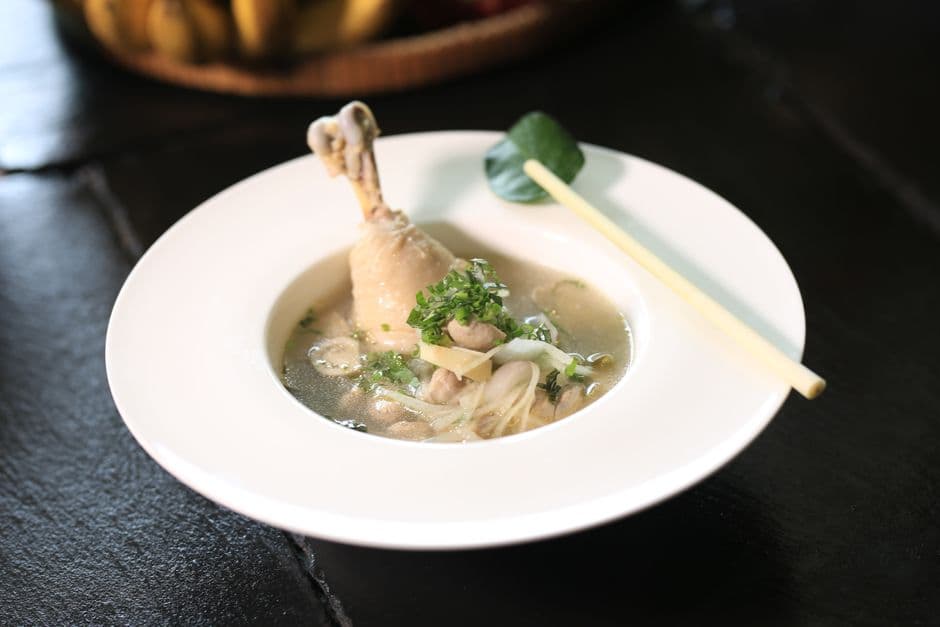
Molokhia (Egyptian Jute-Leaf Chicken Soup)
Egypt's most beloved green soup — finely chopped jute leaves in golden chicken broth, finished with garlic-cilantro takleya and served over rice.
About This Recipe
Molokhia is the national soup of Egypt, an emerald-green dish made from the finely chopped young leaves of the jute plant (Corchorus olitorius) simmered in rich chicken or rabbit broth. The texture is unusual to first-timers — slightly viscous, almost slippery, similar to okra — and that mucilaginous quality is in fact what Egyptians love about it. A proper molokhia clings to a spoon, coats rice in shining green strands, and carries the broth's depth in every silky mouthful. The signature finishing technique is takleya — fresh garlic crushed with coriander seeds and salt, then fried hard in ghee or oil until it turns mahogany-brown and screaming-fragrant, then poured sizzling into the soup at the end. This single step is non-negotiable and gives molokhia its unmistakable garlicky-toasted-coriander perfume that anyone who has lived in Egypt instantly recognizes. Served over plain white rice with shredded poached chicken on the side, often accompanied by Egyptian flatbread (eish baladi) and a small dish of vinegar-onion relish, molokhia is the comfort dish that defines Egyptian home cooking — the meal that comes back from school, that comforts during illness, that marks Friday family lunch. Once the technique is understood, it becomes one of the easiest and most rewarding soups in any kitchen.
Ingredients
Serves 4
- 500 gfrozen finely chopped molokhia leaves (or 400 g fresh, finely chopped)
- 1 smallwhole chicken, about 1.2 kg, cut into pieces
- 1 largeonion, halved
- 1carrot
- 1 stalkcelery
- 1bay leaf
- 5 podscardamom
- 1 small stickcinnamon
- 8 clovesgarlic, peeled (for takleya)
- 1.5 tspground coriander seeds (for takleya)
- 1 tspsalt, plus more to taste
- 3 tbspghee or olive oil (for takleya)
- 1 tsplemon juice (optional, for serving)
Instructions
- 1
Make the chicken broth
Place the chicken pieces in a large pot with onion, carrot, celery, bay leaf, cardamom, cinnamon stick and 2 L of cold water. Bring slowly to a simmer, skimming the foam aggressively for the first 5 minutes — this is what keeps the broth clear and clean-tasting. Simmer gently for 45 minutes.
- 2
Strain and reserve
Lift out the chicken and let cool. Strain the broth through a fine sieve into a clean pot — discard the spent aromatics. You should have about 1.4 L of golden broth. Pull the chicken meat off the bones in big chunks and set aside, covered.
- 3
Prepare the molokhia
If using frozen molokhia, let it partially thaw on the counter — it should be pliable but still cold. Fresh molokhia leaves must be picked from the stems and finely chopped by hand or in a food processor until almost pesto-like.
- 4
Cook the molokhia in broth
Bring the strained broth to a strong simmer. Add the molokhia in two batches, whisking gently so it disperses into the liquid rather than clumping. Simmer 10 minutes uncovered — the soup will turn deep green and develop a silky, slightly slippery texture. Do not let it come to a hard boil after the molokhia is added; aggressive boiling can break the texture.
- 5
Make the takleya
Crush the garlic with the ground coriander and 1 tsp salt using a mortar and pestle until you have a rough paste. Heat ghee in a small skillet over medium-high until shimmering. Add the garlic paste and fry, stirring constantly, for 90 seconds until deeply golden-brown and intensely aromatic — careful not to burn.
- 6
Pour the takleya into the soup
While the molokhia is still simmering, pour the sizzling takleya directly into the pot. It will hiss dramatically and the smell will fill the kitchen — this is the moment that makes molokhia, molokhia. Stir gently to distribute. Simmer 2 more minutes off the heat.
- 7
Serve over rice
Spoon plain steamed Egyptian rice (or any long-grain) into bowls. Pour ladles of hot molokhia over the rice. Serve the shredded chicken on the side, with extra warm flatbread, a small dish of vinegar-soaked diced onion as a relish, and lemon wedges. The dish is meant to be assembled bite-by-bite by each diner.
Did you make this?
Rate it and help other cooks find the recipes that actually work.
One tap to sign in, and we'll save the rating you just picked.
Everything you need to plan your week — free
- Meal calendar
- Grocery list
- AI recipe ideas
Track what you eat
Snap your meal to log calories and macros, run fasting timers and track water in the free SnapCal app.
Pro Tips
- →
Frozen molokhia (sold at Middle Eastern groceries — look for Egyptian or Lebanese brands like Al Wadi) is what most Egyptian families use even today. It's already finely chopped and freezes beautifully.
- →
Never let molokhia come to a hard rolling boil after adding the greens. Hard boiling breaks the texture and turns the brilliant green dull olive.
- →
Takleya must be browned almost dark — light golden is not enough. The deep mahogany color is where the flavor lives, but watch closely; it goes from perfect to burnt in 15 seconds.
- →
Egyptians love molokhia mucilaginous; if the texture really doesn't appeal, add a teaspoon of lemon juice when serving — it cuts the slipperiness slightly.
Variations
- •
Rabbit molokhia — the most prestigious version in Egypt, made for guests. Replace chicken with one whole rabbit; same method.
- •
Beef molokhia — use beef shank for a richer broth; simmer 2 hours for the stock stage.
- •
Vegetarian molokhia — substitute strong vegetable stock with extra garlic and a tablespoon of nutritional yeast for umami depth.
- •
Alexandrian-style — finish with a squeeze of fresh lemon and a sprinkle of dried red chili flakes for a brighter, coastal version.
Storage
Refrigerate up to 3 days in a sealed container; freeze 2 months. Reheat gently — never to a hard boil. The takleya aroma fades with each reheat, so for best results make a fresh small batch of takleya to drop into the reheated soup.
History & Origin
Molokhia is one of the most ancient documented dishes in human history — pharaonic tomb paintings depict molokhia leaves, and Roman-era texts describe it as a Nile valley staple. The dish was reputedly forbidden by the Fatimid caliph Al-Hakim in the 11th century for being too pleasurable for commoners, only returning after his death.
Frequently Asked Questions
Is molokhia supposed to be slimy?
Slightly slippery, yes — that's a feature, not a bug. Egyptians consider it a sign of properly cooked molokhia. A squeeze of lemon at serving tones it down if you find it too much.
Where do I buy molokhia leaves?
Middle Eastern groceries (frozen, finely chopped — easiest), or fresh from Bangladeshi/African markets (sold as 'jute leaves' or 'saluyot' in Filipino markets). Egyptian frozen is the most consistent for first-timers.
Can I use spinach instead?
No — spinach won't develop the characteristic silky texture or the deep umami of molokhia. It would be a different soup entirely (and a less interesting one).
Is molokhia spicy?
No — traditional molokhia is gently aromatic, not hot. The character comes from garlic and toasted coriander in the takleya, not chili. Some Alexandrian and Levantine versions add chili, but it's optional.
Nutrition Facts
Per serving (480g / 16.9 oz) · 4 servings total
Time Summary
Have Questions?
Ask our AI cooking assistant anything about this recipe — substitutions, techniques, scaling.
Chat with AI Chef →Featured in Guides
This recipe is featured in the following curated guides:
More Egyptian Recipes
You Might Also Like
Similar dishes from other cuisines around the world.
Browse by Ingredient
More recipes built around the same core ingredients.
Free Kitchen Tools
Calculators and converters that pair with this page — no signup needed.
Put This Into a Plan
Schedule it, shop for it, and track what you already have.
Read Next
Longer reads that go deeper on the ideas behind this dish.
Community
Join the conversation
Sign in to leave a comment and save your favourite recipes