
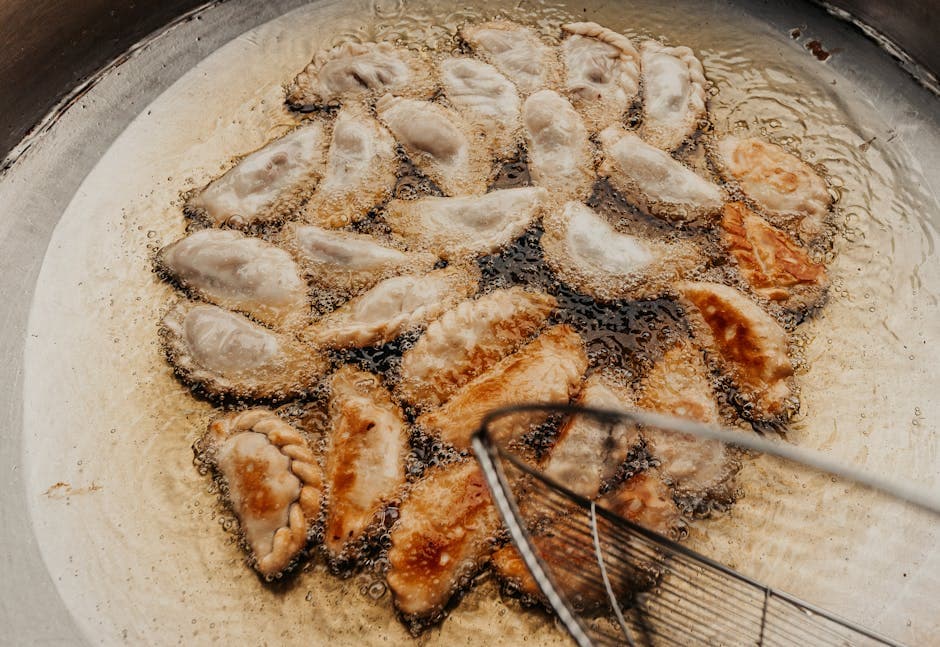
Khuushuur (Mongolian Fried Meat Pastries)
Mongolia's beloved Naadam festival snack — flat half-moon pastries stuffed with seasoned mutton and pan-fried until crackling-crisp.
About This Recipe
Khuushuur are the food of Mongolia's summer Naadam games — every family fries dozens at a time on outdoor griddles, the smell of mutton-fat smoke drifting across the steppe. The dough is unleavened, rolled paper-thin in 12 cm rounds. The filling — finely chopped mutton, onion, garlic, sometimes a little water to keep it juicy — is sealed inside and the edges crimped into a half-moon. They are fried flat in a generous pool of beef tallow or sunflower oil until both sides are blistered golden-brown. The first bite releases steam and a rush of meaty juice. Mongolian children eat them by the dozen; nomadic herders pack them cold into saddlebags for a day's ride.
Ingredients
Serves 4
- 400 gall-purpose flour
- 1/2 tspfine salt
- 230 mlwarm water
- 500 gfatty minced mutton or lamb (20% fat)
- 1 mediumyellow onion, very finely diced
- 3 clovesgarlic, grated
- 1 tspsalt
- 1/2 tspground black pepper
- 1 tspcaraway seeds, lightly crushed (optional)
- 60 mlcold water (for filling)
- 500 mlsunflower oil or rendered beef tallow, for frying
Instructions
- 1
Make the dough
Whisk flour and salt in a bowl. Pour in warm water, mixing with a wooden spoon, then knead 8 minutes on a clean surface until elastic and smooth. Wrap in plastic and rest 30 minutes.
- 2
Mix the filling
Combine mutton, onion, garlic, salt, pepper, and caraway in a bowl. Add the cold water 1 tbsp at a time, kneading with your hand for 3 minutes until the mixture turns sticky and almost paste-like.
- 3
Divide and roll
Roll the rested dough into a long rope and cut into 16 equal pieces. Working with one at a time (keep the rest covered), roll each into a 12 cm round, 2 mm thick.
- 4
Fill
Place 2 heaped tbsp filling in the centre of each round, spreading it almost to the edges in a flat oval.
- 5
Crimp
Fold the dough over into a half-moon. Press the edges firmly, then pleat or crimp tightly — no gaps, or oil will rush in and the filling will spit.
- 6
Heat the oil
Heat oil in a wide heavy pan to 175°C — a small piece of dough should sizzle steadily and rise within 4 seconds.
- 7
Fry flat
Slide in 3 khuushuur at a time. Fry 2 minutes per side until both faces are deep golden with blisters. Lift onto paper towels.
- 8
Serve immediately
Eat hot, ideally with a small bowl of cold suutei tsai (Mongolian milk tea) or pickled cabbage on the side. Bite a corner first to release steam.
Did you make this?
Rate it and help other cooks find the recipes that actually work.
One tap to sign in, and we'll save the rating you just picked.
Everything you need to plan your week — free
- Meal calendar
- Grocery list
- AI recipe ideas
Track what you eat
Snap your meal to log calories and macros, run fasting timers and track water in the free SnapCal app.
Pro Tips
- →
The cold water in the filling is what makes the bite juicy — skip it and the mutton turns dry.
- →
Roll the dough rounds slightly thicker at the centre and thinner at the edges; the edges crisp first.
- →
Use rendered beef tallow for the most authentic flavour — it gives khuushuur a steppe-meaty perfume.
- →
Test one first; if oil leaks out during frying, your crimps are too loose.
Variations
- •
Add 1 tbsp shredded cabbage to each parcel for a Buryat-style version.
- •
Use 50:50 mutton and beef for a milder filling Western palates often prefer.
- •
Modern Ulaanbaatar cafés make a cheese-and-potato khuushuur for vegetarians.
Storage
Best eaten within 2 hours of frying. Cold leftovers refresh in a 200°C oven for 5 minutes — never microwave; the dough turns rubbery.
History & Origin
Khuushuur have been documented in Mongolian texts since the Yuan dynasty (13th century) as portable food for mounted travel. They remain the defining snack of the Naadam festival, held nationwide every July since the 1206 unification under Genghis Khan.
Frequently Asked Questions
What is the difference between khuushuur and buuz?
Buuz are steamed dumplings with thicker, pleated tops; khuushuur are flat, sealed half-moons that are fried. The fillings are nearly identical but the textures and occasions differ.
Can I use beef instead of mutton?
Yes, but use the fattiest mince you can find (at least 20% fat) — lean beef makes a dry, sad khuushuur. Adding 1 tbsp grated suet or butter helps.
Why did mine burst in the oil?
Either the crimps weren't tight enough or the oil was too hot. Aim for 175°C and pleat the edges very firmly; a fork-pressed edge works if you can't pleat by hand.
Nutrition Facts
Per serving (280g / 9.9 oz) · 4 servings total
Time Summary
Have Questions?
Ask our AI cooking assistant anything about this recipe — substitutions, techniques, scaling.
Chat with AI Chef →Featured in Guides
This recipe is featured in the following curated guides:
More Mongolian Recipes
You Might Also Like
Similar dishes from other cuisines around the world.
Free Kitchen Tools
Calculators and converters that pair with this page — no signup needed.
Put This Into a Plan
Schedule it, shop for it, and track what you already have.
Read Next
Longer reads that go deeper on the ideas behind this dish.
Community
Join the conversation
Sign in to leave a comment and save your favourite recipes