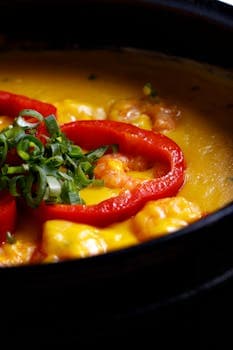
Rich Bahian fish stew with coconut milk, dendê oil, peppers and lime — a treasure of Afro-Brazilian cuisine.
Moqueca Baiana is one of the great fish stews of the world — a deeply aromatic, vibrantly colored Bahian seafood stew made with fish, shrimp or crab simmered in a fragrant sauce of coconut milk, tomatoes, onion, bell peppers, fresh cilantro and the essential dendê (palm oil) that gives the dish its distinctive golden-orange color and uniquely rich, earthy flavor. It is the crown jewel of Afro-Brazilian cooking and the most internationally celebrated dish from the state of Bahia. The dendê oil is non-negotiable for authentic moqueca baiana — its intensely fruity, earthy flavor is the backbone of the sauce, and no substitute produces the same result. West African slaves brought dendê palm oil to Brazil in the 16th century, and its integration into Bahian cooking created an entirely new cuisine that is neither African nor Portuguese but distinctly Brazilian. The cooking vessel — traditionally an unglazed clay pot (panela de barro) — releases subtle earthy mineral notes that round out the stew. Moqueca is served over white rice with pirão (a thick cassava flour porridge made from the cooking liquid) and fresh lime wedges. The combination of rich coconut and dendê with the bright, citrusy contrast of lime and cilantro is one of the most harmonious flavor combinations in all of world cuisine. Make this on a Sunday for a leisurely lunch that transports the table to Bahia.
Serves 6
Combine fish, shrimp, lime juice, garlic, salt and half the cilantro. Marinate 20 minutes.
In a clay pot or Dutch oven, layer half the onion, tomatoes and bell peppers on the bottom. Lay marinated fish on top. Layer remaining onion, tomato and peppers over the fish.
Layering without stirring keeps the fish intact — don't mix the stew during cooking.
Pour coconut milk over everything. Drizzle dendê oil on top. Bring to a simmer over medium heat, cover and cook 15 minutes.
Dendê oil is essential for authentic flavor. Find it at Brazilian, African or Latin grocery stores.
Add shrimp, cover and cook 5 minutes more until shrimp are pink and fish flakes easily.
Top with remaining cilantro. Serve directly in the pot with white rice and lime wedges.
Dendê oil is crucial — it defines moqueca. Find it at Brazilian grocery stores or online.
A clay pot (panela de barro) adds authenticity and earthy mineral notes — worth using if available.
Don't stir during cooking — the fish is delicate and should remain in pieces.
Moqueca Capixaba: the Espírito Santo style, without coconut milk or dendê — uses annatto oil and is lighter.
Shrimp Moqueca: use only shrimp for a quicker version.
Moqueca de Camarão com Leite de Coco: coconut shrimp variation with ginger and lemongrass.
Refrigerate up to 2 days. Reheat gently — fish overcooks easily on reheating. Does not freeze well.
Moqueca's origins are pre-Columbian, derived from Indigenous coastal Brazilian cooking methods. Two main styles exist: Moqueca Baiana (Bahia), enriched by West African influences through dendê oil and coconut milk brought by enslaved Africans, and Moqueca Capixaba (Espírito Santo), which follows the original indigenous recipe without these additions. The Bahian version became internationally famous through the global spread of Bahian-African food culture.
Dendê is red palm oil, extracted from the fruit of the African oil palm. It has a distinctive orange-red color and earthy, fruity flavor. Annatto oil (with added saffron for flavor) is a partial substitute for color. For closest flavor, source it from Brazilian, African or specialty grocery stores.
Firm, non-flaky fish that won't disintegrate during cooking: cod, halibut, swordfish, monkfish or grouper. Avoid thin, delicate fillets like sole or tilapia.
Per serving (350g / 12.3 oz) · 6 servings total
Ask our AI cooking assistant anything about this recipe — substitutions, techniques, scaling.
Chat with AI Chef →Join the conversation
Sign in to leave a comment and save your favourite recipes